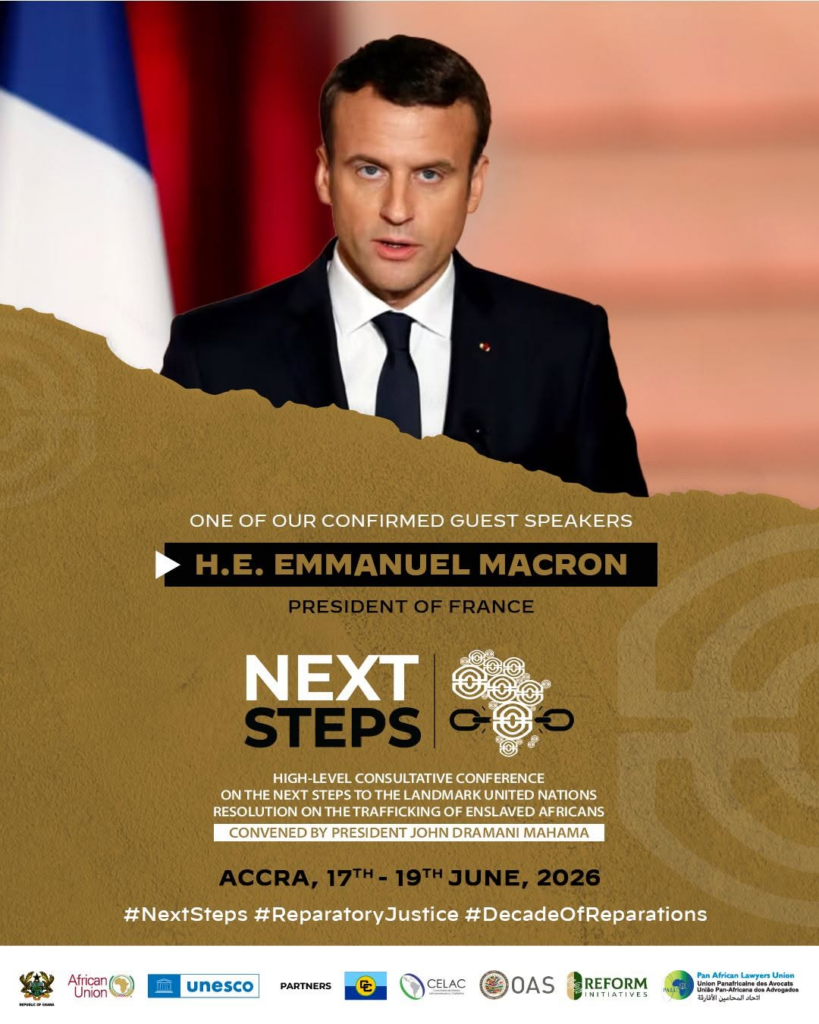



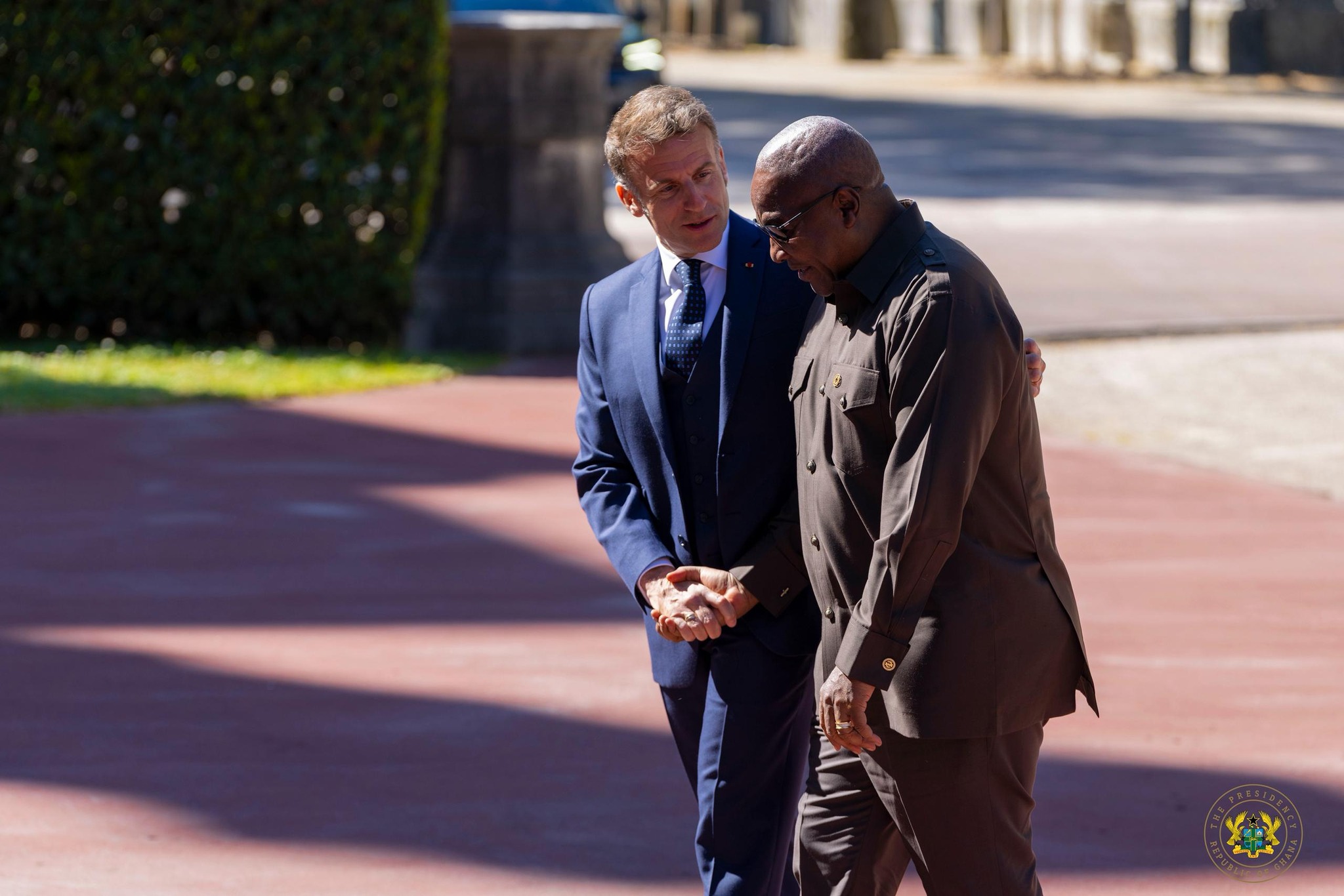
The President of France, Emmanuel Macron, is scheduled to deliver an address at the Next Steps Conference on Reparatory Justice to be held in Accra, Ghana, the Minister for Foreign Affairs, Samuel Okudzeto Ablakwa, has announced.
Mr. Ablakwa disclosed the development in a social media post on Tuesday, June 9, saying the French leader would participate in discussions aimed at advancing global conversations on reparatory justice for historical injustices, particularly those connected to the transatlantic enslavement of Africans.
The conference, which will be hosted by John Dramani Mahama, is expected to bring together world leaders, policymakers, academics and other stakeholders to explore practical pathways for addressing historical wrongs and promoting justice-focused international dialogue.
According to the Foreign Affairs Minister, Macron is expected to engage in what has been described as a good-faith dialogue on historical injustices against Africans and outline France’s position and commitments on the issue of reparatory justice.
The planned engagement comes amid renewed international attention on reparations following the adoption of a Ghana-led resolution at the United Nations General Assembly recognising transatlantic enslavement as the gravest crime against humanity.
The resolution, championed by President Mahama, was adopted during the UN General Assembly on March 25, 2026.
After intense debate on the motion, 123 countries voted in favour of the motion calling for recognition of the Trans-Atlantic Slave Trade as the gravest crime ever committed against humanity.
France was among 52 countries that abstained during the vote, a position that has drawn attention ahead of Macron’s participation in the Accra conference.
The conference is expected to provide a platform for countries to discuss issues of historical accountability, reconciliation and possible frameworks for reparatory justice, as calls for redress over the legacy of slavery and colonialism continue to gain momentum globally.
Ghana has emerged as a leading advocate for reparatory justice on the international stage, with President Mahama’s administration pushing for broader global recognition of the lasting impact of the transatlantic slave trade on people of African descent.