



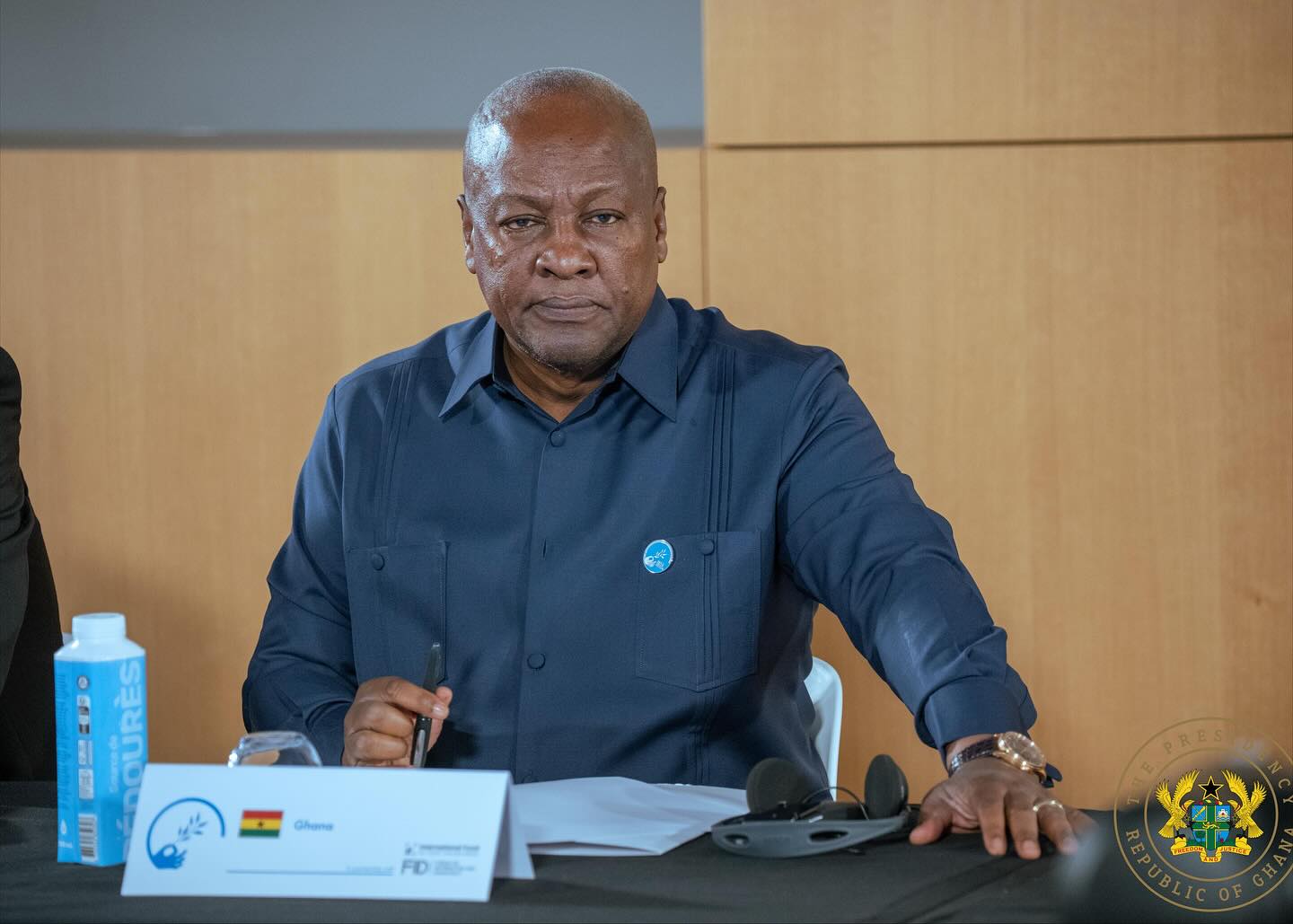
A majority of Ghanaians continue to approve of President John Dramani Mahama’s performance in office, according to a new nationwide survey conducted by the Institute of Economic Affairs (IEA), although his approval rating has declined compared to levels recorded in late 2025.
The poll, conducted in May 2026 among more than 1,000 respondents across all 16 regions, found that 58.9% of Ghanaians approve of the President’s performance, while 28.4% disapprove and 12.8% expressed no opinion.
The findings were released on Wednesday, June 10, 2026, in an IEA report assessing public sentiment on President Mahama’s stewardship 18 months after he assumed office in January 2025.
While the latest approval rating remains higher than the disapproval rate, it represents a decline from the 68% approval recorded in December 2025.
According to the IEA, the results suggest that Ghanaians remain broadly supportive of the President’s leadership but are increasingly expectant that macroeconomic gains will translate into tangible improvements in living conditions.
The survey identified the economy as the strongest driver of public support for the President.
Among respondents who approved of Mahama’s performance, 73.5% cited the economy as the main reason, while 16% pointed to road infrastructure development. Energy and electricity accounted for 2.7% of approval responses.
The IEA linked the positive assessment of the economy to improvements in key macroeconomic indicators since January 2025.
According to the report, inflation declined from 23.5% in January 2025 to about 3.4% in April 2026, while the cedi appreciated by 26% against major foreign currencies. The Bank of Ghana’s policy rate also fell from 27% to 14%, with average commercial bank lending rates dropping from about 32% to 20%.
The report further noted that Ghana’s debt-to-GDP ratio declined from 61.8% at the end of 2024 to 45.3% by the end of 2025, while international credit rating agencies Fitch, Moody’s, and S&P upgraded the country’s sovereign credit ratings.
However, the survey also highlighted concerns among respondents who disapproved of the President’s performance.
Among those, 30.9% cited the economy as their main concern, suggesting that many households are yet to fully feel the impact of the macroeconomic recovery. Electricity supply emerged as the second biggest concern, accounting for 29.9% of responses. The IEA attributed this partly to power supply challenges experienced in May 2026, which affected homes and businesses in several parts of the country.
Corruption was cited by 19.1% of disapproving respondents, reflecting continued public expectations for stronger anti-corruption measures.
Summarising the findings, the IEA said the results point to a public that remains broadly supportive of President Mahama’s leadership but expects continued progress on issues that directly affect livelihoods.
“The findings suggest that Ghanaians are broadly supportive of the President’s leadership but are expectant that the progress recorded at the macro level will increasingly be felt in their daily lives,” the report stated.