


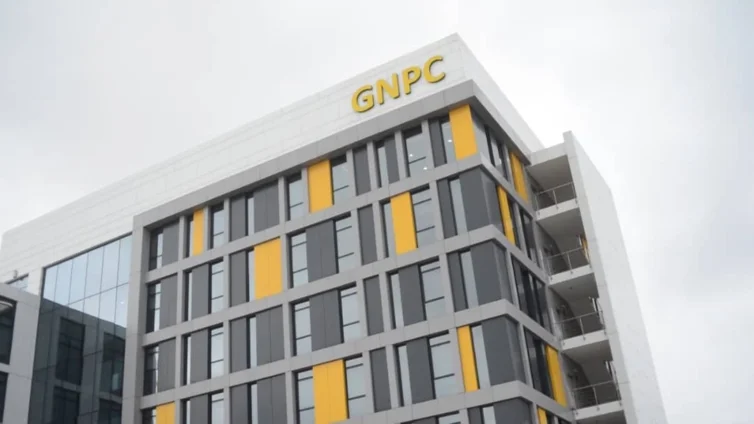
The Ghana National Petroleum Corporation (GNPC) is seeking strategic partners to help develop the Volta Basin, a vast onshore sedimentary basin estimated to hold more than 11 billion barrels of oil equivalent resources.
Deputy Chief Executive Officer of GNPC, Hamis Ussif, said the corporation is positioning itself to attract investment into the basin, which covers nearly 40 percent of Ghana’s landmass and presents significant opportunities for hydrocarbon exploration and development.
Speaking at the West African Gas Summit in Accra, Mr. Ussif described the Voltaian Basin as one of Ghana’s most promising untapped energy frontiers.
“By very conservative estimates, this can unlock over 11 billion barrels of oil equivalent,” he said. “The potential is very huge, and GNPC is looking for partners at the right time to unlock the resources that exist in this basin.”
According to him, the basin spans almost half of the country and encompasses several regions that are not endowed with major hard mineral deposits, making its development critical to broadening economic opportunities across Ghana.
Mr. Ussif noted that GNPC maintains an equity stake in all petroleum blocks in Ghana, in line with national policy, and is participating in exploration activities across the basin alongside private sector operators.
He said the development of the Voltaian Basin forms part of broader efforts to strengthen Ghana’s energy sector and support the government’s ambition of positioning the country as an energy hub for the West African sub-region.
Mr. Ussif explained that GNPC’s investments in strategic projects, including liquefied natural gas infrastructure and the West African Pipeline initiative, are aimed at facilitating the movement of energy resources across borders while enhancing Ghana’s role in regional energy trade.
“All these projects are to facilitate not only the free flow of these molecules but also to position Ghana to be able to play this role of being the hub of energy in general, not only gas,” he said.
He added that Ghana’s growing power generation capacity already enables the country to export electricity to neighboring countries, providing a strong foundation for its ambition to become a regional energy center.