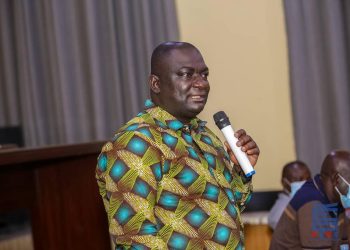
The President of the Ghana Institute of Planning, Percy Anaab Bukari, has highlighted weak urban densification and fragmented planning systems as major challenges undermining the effective development of Ghana’s cities.
Speaking at the Citi Business Festival 2026 on Monday, June 15, under the theme “Building Competitive Cities: Infrastructure, Innovation and Investment for Sustainable Economic Growth,” he expressed dissatisfaction over the country consistently producing development plans for its cities yet struggles with implementation and coordination.
“One thing that struck me was the land size of London compared to Ghana. Greater London is even larger than Greater Accra. All of this shows that it is not about space, but about how we are managing the space.”
He argued that Accra remains insufficiently densified, resulting in urban sprawl and inefficient infrastructure distribution. He explained that if the city were properly compacted, residents in outlying areas would be much closer to key urban centres, reducing long commuting distances and easing pressure on transport systems.
According to him, poor densification directly affects infrastructure delivery, as dispersed settlements force government and service providers to extend utilities and roads across wide and uncoordinated areas, increasing costs and inefficiency.
He hinted that without addressing densification and coordination challenges, Ghana’s ambition of building competitive and sustainable cities will remain constrained despite the existence of multiple development plans.