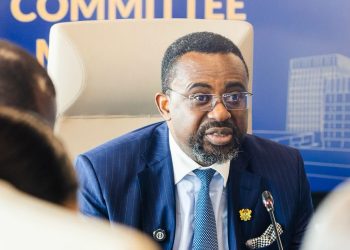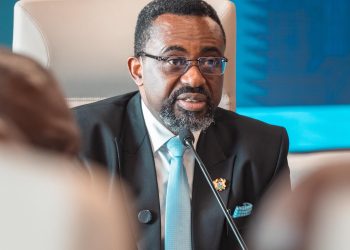
The Governor of the Bank of Ghana (BoG), Dr. Johnson Asiama, has indicated that recent developments in the Middle East could improve Ghana’s inflation outlook and create room for further monetary policy easing if current trends are sustained.
Speaking at a meeting with Heads of Commercial Banks, Dr. Asiama said the Monetary Policy Committee (MPC) is closely monitoring developments following reports of a framework agreement between Iran and the United States aimed at de-escalating hostilities.
The agreement has raised expectations that the Strait of Hormuz, one of the world’s most important oil shipping routes, could remain open to global oil shipments, easing concerns about supply disruptions and upward pressure on crude oil prices.
According to the Governor, when the MPC last met, it assessed the domestic economy as resilient despite a complex and volatile global environment. At the time, inflationary pressures remained contained, but risks associated with prolonged geopolitical tensions continued to pose a threat to the inflation outlook.
“The Committee noted that although inflationary pressures remained contained, potential risks persisted, especially those associated with prolonged geopolitical tensions,” Dr. Asiama said.
Based on that assessment, the MPC decided to maintain the policy rate at 14 percent, concluding that risks to inflation and economic growth were broadly balanced.
However, Dr. Asiama acknowledged that recent geopolitical developments have altered the outlook.
“Clearly, the outlook since yesterday has now changed, and we are monitoring events in the coming days and weeks until the next meeting of the MPC,” he stated.
Analysts say a reduction in geopolitical tensions could lower global crude oil prices by reducing risk premiums embedded in energy markets. For Ghana, lower oil prices could help moderate imported inflation, ease pressure on transport and energy costs, and support the ongoing disinflation process.
Such developments could strengthen the case for further monetary policy easing, particularly if inflation continues to decline and exchange rate stability is maintained.
While stopping short of signalling a specific policy decision, the Governor’s remarks suggest the central bank will factor the evolving global environment into its assessment ahead of the next MPC meeting.
The Bank of Ghana has eased monetary policy in recent months as inflationary pressures have moderated. Any further improvement in the external environment, particularly through lower oil prices and reduced geopolitical risks, could provide additional support for a more accommodative policy stance.
For now, Dr. Asiama stressed that the MPC remains watchful, with policymakers assessing how the latest international developments will affect inflation, growth and overall macroeconomic stability before making their next interest rate decision.