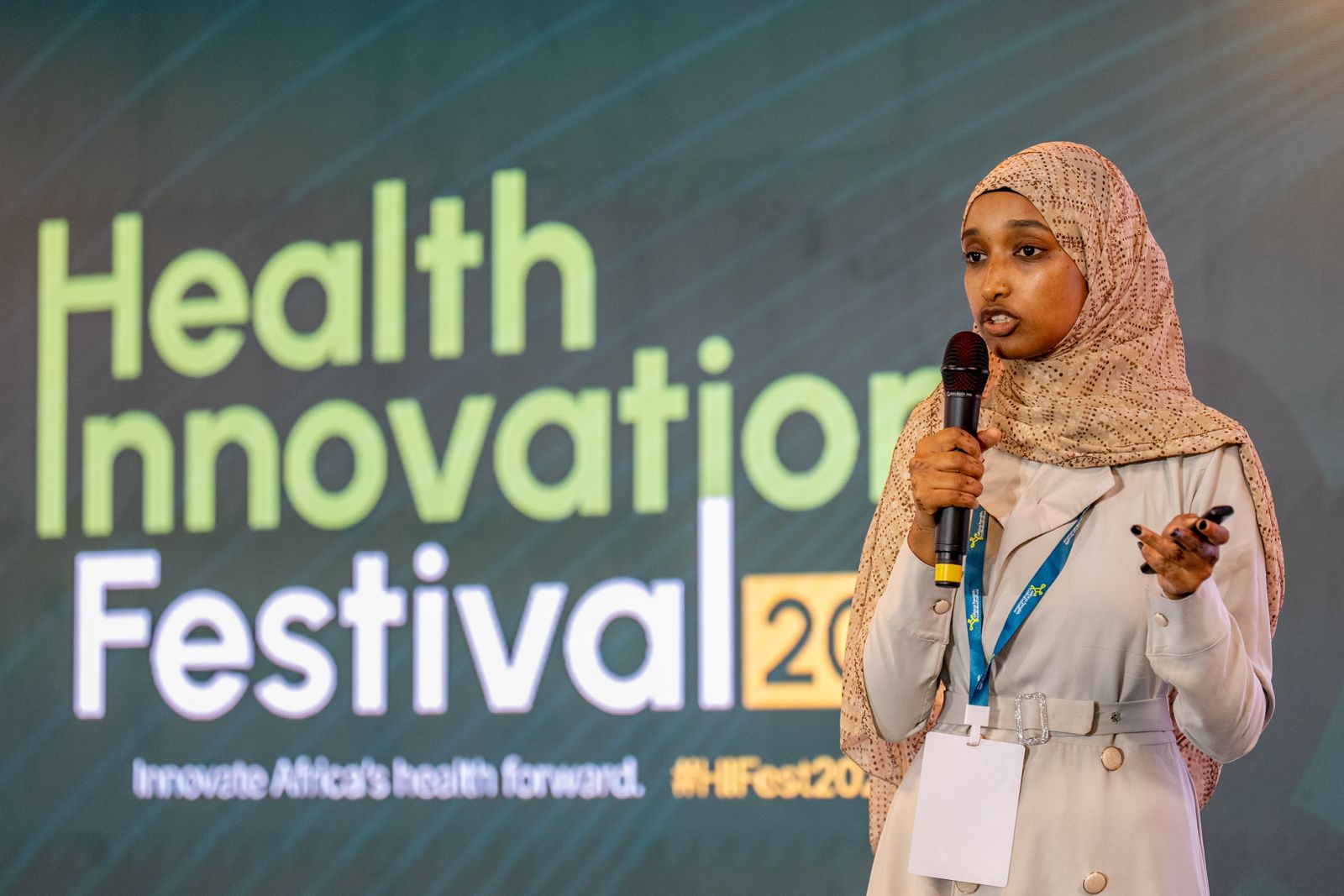
Young health innovators from across Africa and Canada were recognised for their groundbreaking solutions at the Health Innovation Festival 2026 (HIFest 2026), which concluded in Accra on June 6.
The three-day event, organised by the Africa Health Collaborative (AHC) and co-hosted by Ashesi University and Kwame Nkrumah University of Science and Technology (KNUST), brought together more than 100 participants from nine countries, including Ghana, Kenya, Rwanda, South Africa, Ethiopia, Cameroon, Senegal, Zambia and Canada.
Supported by the Mastercard Foundation, the festival featured 37 young health entrepreneurs and innovators who showcased solutions aimed at addressing healthcare challenges across the continent.
The event culminated in a competitive pitch competition in which 37 early-stage and idea-stage health ventures competed for a share of $13,000 in prize money.
In the early-stage category, Senegal-based KAARAANGE, affiliated with Amref Health Africa, won the grand prize of $3,000. Led by Mor Talla Mouhniyan Ndiaye, the venture developed an artificial intelligence-powered “Smart Bin” that automatically sorts biomedical waste and disinfects it using ultraviolet light to reduce the risk of occupational infections among healthcare workers.
In the idea-stage category, HerbIma from Addis Ababa University secured the top prize of $2,500. Founded by Iman Redwan, the project developed Iron+, a high-bioavailability supplement powder made from indigenous Ethiopian Red Teff to help combat childhood anaemia.
Other winners included StainSmart from the University of Toronto, which developed an automated slide-staining system to speed up disease diagnosis, and RiseBeyond Organisation from the African Leadership University, which created a mobile paediatric physiotherapy platform.
In the idea-stage category, Mosaan Health from Amref Health Africa in Senegal was named first runner-up for its low-resource digital microscope, while the Menstrual Empowerment Initiative from the African Leadership University was recognised for producing biodegradable sanitary pads from agricultural waste.
DamuBoost from Moi University won the People’s Choice Award for its organic blood-restoring food supplement, while DawaPoint and SnooCode Red received honourable mentions.
Participants said the festival provided valuable lessons on entrepreneurship, investment readiness and scaling innovations.
“I am very grateful for the opportunity to come to Ghana and experience the Health Innovation Festival. One of the key lessons I have learned is that when developing an idea, you must also think about the business strategy behind it and how it will generate revenue,” said Sharon Mbai, a student at Moi University and co-founder of Mind Link.
“To bring an idea to life, you need to create something tangible that solves a real problem and delivers value to users, to yourself as an innovator, and to the community in which you operate. It is also important to demonstrate how the solution can scale,” she added.
The festival also featured masterclasses and panel discussions on regulatory compliance, investment readiness and healthcare innovation.
Health innovation coach Emmanuel Seyram Duku urged innovators to incorporate regulatory requirements into product development from the outset, particularly for clinical devices and diagnostic tools.
Investor representatives from Impact Investing Ghana and the Equity Group Foundation highlighted the importance of demonstrating customer demand and sustainable growth pathways to attract long-term investment.
Healthcare practitioners at the event also stressed the need for innovations to integrate seamlessly into existing clinical workflows to ease pressure on frontline health workers.
“I truly enjoyed and benefited from the breakout sessions, where we had the opportunity to refine our value proposition, identify key resource needs, and sharpen our investment asks,” said Josue Nguinabe, a student at the African Institute of Mathematical Sciences and founder of AfriMedLink.
“Being here has also helped me better understand the investor mindset—what investors look for and what ultimately convinces them to invest. We also learned how to tell our story in a compelling way so that people can buy into our vision,” he added.
The festival also explored broader strategies for strengthening health innovation ecosystems across Africa. Participants visited Yemaachi Biotech, where they learned about advancements in genomics, artificial intelligence and precision medicine tailored to African populations.
Delivering the keynote address, the Chief Executive Officer of Ghana’s National Vaccine Institute, Dr Sodzi Sodzi-Tettey, linked youth-led innovations to continental efforts aimed at achieving health sovereignty and expanding local medical manufacturing.
In her closing remarks, Head of the AHC Secretariat, Dr Penina Lam, challenged participants to embrace three key principles: “Presence to identify local health challenges, Partnership to leverage collective expertise and resources, and Promise to scale solutions that improve health outcomes across Africa.”
The Africa Health Collaborative is a multi-year partnership involving institutions across Africa and Canada.
The initiative aims to train 30,000 primary healthcare workers, upskill 60,000 healthcare professionals, support 5,000 ventures and create 20,000 jobs as part of efforts to strengthen healthcare systems and expand employment opportunities for young people across the continent.