The Association of Ghana Industries (AGI) is urging businesses to move beyond viewing sustainability as a regulatory obligation and instead treat it as a strategic tool for growth, competitiveness and access to international markets.
The call comes as AGI, in partnership with the Confederation of Danish Industry (DI), officially launched the Sustainable African Value-Chain Initiative (SAVI)-a programme aimed at helping companies strengthen environmental, social and governance (ESG) standards.
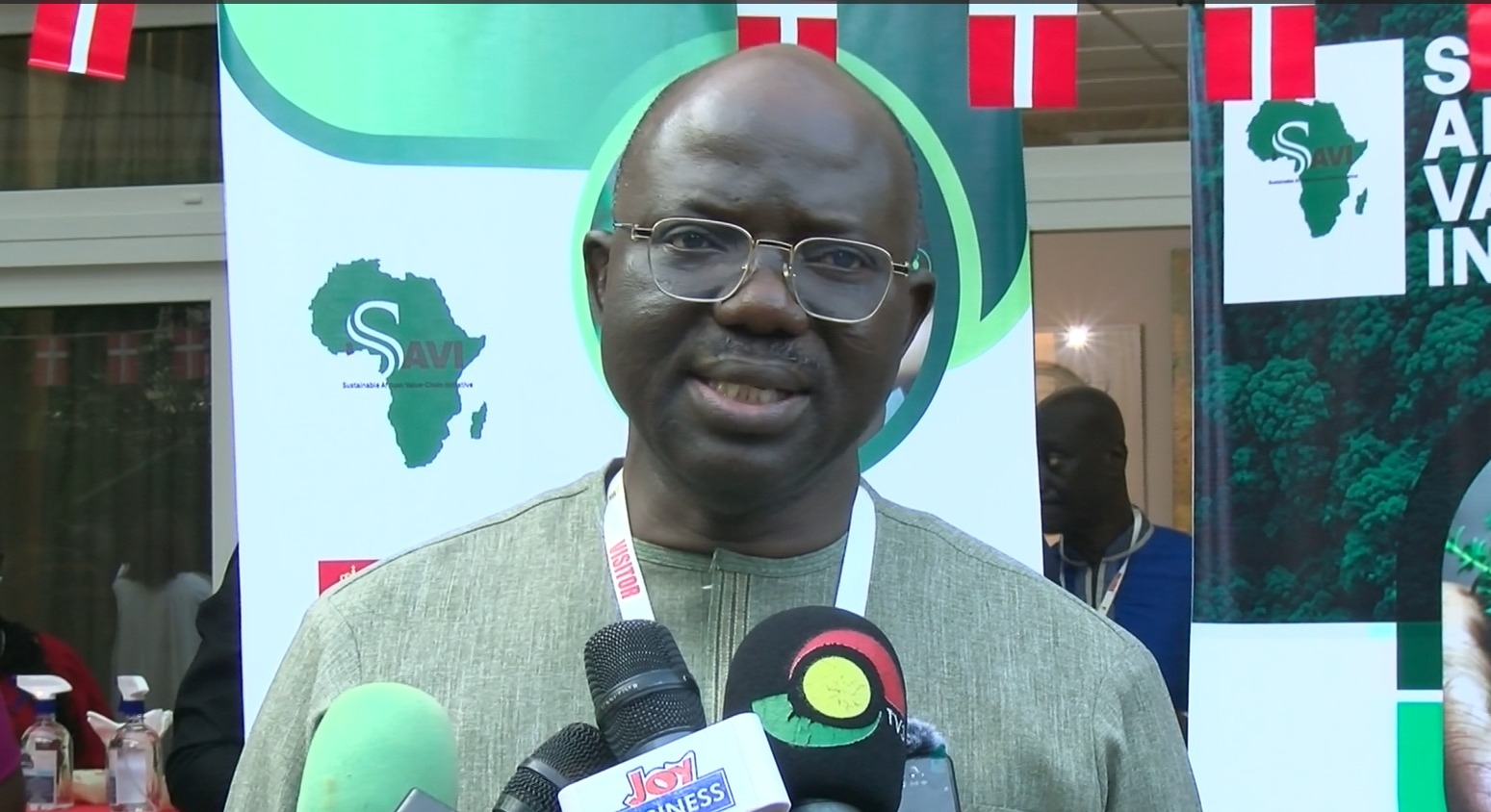
Speaking on the sidelines of the launch, President of AGI, Pharm. Dr. Kofi Nsiah-Poku, said sustainability has become a defining factor for business resilience and long-term success.
“The world is changing. Ghana also is part of climate change and we need to prepare. Especially industries, now you have to do environmental, social and governance compliance,” he stated.
According to him, ESG standards are increasingly becoming a prerequisite for participation in global trade, particularly for companies targeting export markets.
“If you want to export a product abroad, sometimes they want to make sure are you creating something that is not environmentally correct? If you are not compliant, then your products will not be acceptable,” he explained.
Dr. Nsiah-Poku noted that global supply chains are becoming more stringent, with international buyers extending compliance checks beyond finished products to include sourcing and production processes.
“Sometimes even the raw materials you are using, they want to ensure that that supplier is also compliant,” he said.
He further pointed to operational practices within some industries including unsustainable energy use, waste generation and inefficient resource management as areas requiring urgent attention.
Using Ghana’s recurring flooding as an example, he argued that sustainability must become part of both industrial and everyday decision-making.
“We are not doing our best, and therefore we need to improve… in our homes and in our factories, so that we can be compliant and reduce the flooding that is going on,” he added.
Dr. Nsiah-Poku disclosed that AGI and its Danish partners have been engaging on the initiative for two years and have now signed a three-year agreement to train companies across the country.
For his part H.E. Jakob Linulf, Ambassador of Denmark to Ghana, described SAVI as a reflection of Denmark’s commitment to building strong and mutually beneficial partnerships with African countries.
He noted that the initiative aligns with Denmark’s Africa Strategy and will create opportunities for stronger business linkages between Ghanaian and Danish companies while promoting sustainable production and trade.