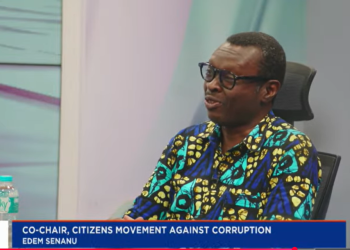
Anti-corruption campaigner and Co-Chair of the Citizens Movement Against Corruption, Edem Senanu, has called on the opposition New Patriotic Party (NPP) and former President Nana Addo Dankwa Akufo-Addo to actively encourage former Finance Minister Ken Ofori-Atta to return to Ghana to face questions over his tenure in office.
He said such a move would help restore public confidence and demonstrate accountability, especially given the circumstances under which Mr Ofori-Atta was appointed to oversee the country’s finances.
Mr Senanu made the remarks on The Big Issue on Channel One TV on Saturday, June 20, while responding to a question on what role the NPP and its leadership should play in the ongoing situation involving the former minister.
“They should be seen to actively convince him to come back,” he said.
He argued that the public would struggle to understand a situation in which a political party appoints an individual to a key national position but does not take an active role in ensuring accountability when concerns are raised.
“Honestly for the rest of us citizens of this country we will not understand that the party is saying that they selected this individual, they did the due diligence, they put him in charge of our finances and when there are questions to answer they are not compelling him, convincing him, they are not at the forefront to say he should come back,” he stated.
Mr Senanu stressed that political accountability should extend beyond appointments to include responsibility for ensuring that appointees respond to public concerns, particularly in matters involving alleged financial misconduct.
His comments come amid ongoing legal and political developments surrounding Mr Ofori-Atta, who has secured a legal victory in the United States after an immigration court approved his application for adjustment of status, paving the way for lawful permanent residency.
The former Finance Minister is facing multiple allegations in Ghana relating to financial irregularities during his tenure, including claims linked to a contract that allegedly resulted in significant losses to the state.
Although the US ruling does not affect criminal proceedings in Ghana, it has generated renewed public debate over accountability, extradition processes, and political responsibility.