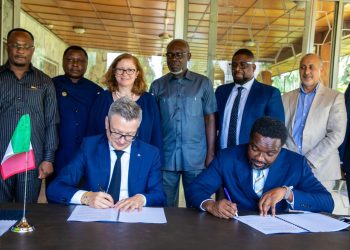
The European Union (EU) and the German Ministry for Economic Cooperation and Development have committed €415,437.78 to support the implementation of the PharmaVax Programme, an initiative designed to accelerate the growth of Ghana’s pharmaceutical manufacturing sector.
The programme seeks to strengthen the industry’s competitiveness by improving regulatory systems, encouraging investment, and creating a more enabling business environment for pharmaceutical manufacturers.
Speaking in a statement, the Director of Administration at the Ministry of Trade and Agribusiness, Yaw Sakyi, reaffirmed the government’s ambition to position Ghana as a leading pharmaceutical manufacturing hub in the West African sub-region.
He said the country’s pharmaceutical policy will establish the institutional framework needed to drive sustainable growth within the sector, while expressing gratitude to the European Union and the German government for their continued support.
The PharmaVax Programme is anchored on four strategic priorities: strengthening governance institutions in the pharmaceutical sector, deepening collaboration between government and private industry, improving conditions for foreign direct investment and trade, and enhancing transparency in investment and regulatory approval processes.
Meanwhile, the Head of the Pharmaceutical Manufacturing Development Unit at the Ministry, Godfred Gobah, said the programme will also focus on expanding engagement with private sector stakeholders and increasing Ghana’s participation in both local and international industry events to promote the country’s pharmaceutical manufacturing capacity.
According to him, these efforts are expected to improve the visibility of locally manufactured pharmaceutical products while opening new export and market opportunities for Ghanaian companies.
The Ministry believes the initiative will support the achievement of key targets by 2030, including doubling the value of pharmaceutical exports within the ECOWAS market and increasing the share of locally manufactured pharmaceutical products in the domestic market from 30% to 60%.