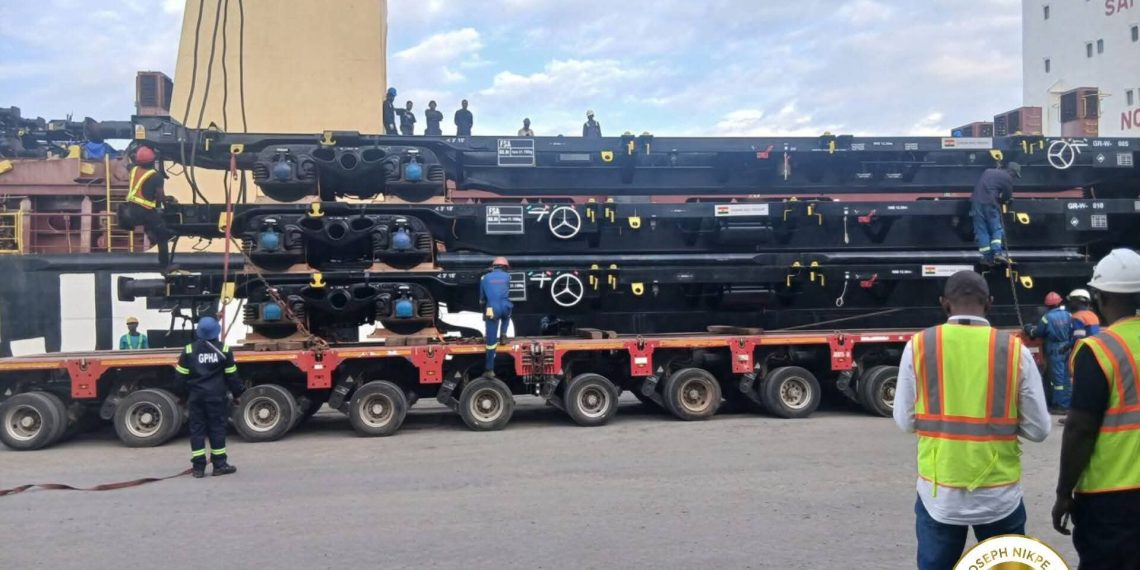
The opposition New Patriotic Party (NPP) has questioned the government’s acquisition of two refurbished diesel locomotives and 20 freight wagons, calling for full disclosure on their age, condition, cost and long-term value to Ghana’s railway sector.
In a statement issued by its Transport Sector Committee on June 25, the NPP said while it welcomed investments aimed at revitalising rail transport, the government had failed to provide critical information needed for an objective assessment of the acquisition.
“Any investment aimed at reviving rail transport, improving freight mobility, and reducing pressure on the nation’s road network is a step in the right direction and deserves commendation,” the statement said.
However, it argued that transparency was essential to determine whether the locomotives represented the most sustainable and cost-effective investment.
According to the NPP, information available to the Minority Caucus indicates that the locomotives are refurbished British Rail Class 56 diesel-electric locomotives manufactured in the United Kingdom between 1976 and 1983 and previously operated by Colas Rail.
“While refurbished locomotives can still provide useful service life when properly maintained, Ghanaians deserve full transparency regarding the age, operational history, refurbishment scope, expected remaining service life, and total lifecycle costs associated with these assets,” the statement said.
The party noted that although the British Rail Class 56 was designed for heavy freight haulage and had earned a reputation as a powerful locomotive, the equipment was built more than four decades ago and belongs to an earlier generation of railway technology.
It argued that older locomotives generally require more intensive maintenance and incur higher operating costs than modern freight locomotives.
“The critical question is therefore not simply whether locomotives have arrived, but whether they represent the most sustainable and cost-effective solution for Ghana’s railway sector over the long term,” the statement said.
The NPP also raised concerns about the long-term maintenance of the locomotives, noting that the British Rail Class 56 fleet has largely been withdrawn from mainstream service in many parts of the world.
It called on the government to disclose the arrangements it had put in place for spare parts, technical support, local capacity building and lifecycle maintenance.
“Government must therefore explain what long-term spare parts arrangements have been secured, whether a strategic stock of critical components has been acquired, what technical support agreements exist with the refurbishment contractor or specialist maintenance providers, and what training programme has been established to develop local maintenance capacity,” the statement said.
The party further compared the acquisition with the procurement of Diesel Multiple Units (DMUs) from Poland under the previous NPP administration, saying those trains were supplied new and came with a five-year maintenance and technical support framework to facilitate technology transfer and ensure operational reliability.
The statement concluded that railway investment should be assessed not only by the purchase of locomotives but also by their long-term operational sustainability.
“The acquisition of refurbished Margaret Thatcher era locomotives should not be presented merely as a symbolic achievement. Ghanaians deserve full disclosure regarding the age, cost and condition of the equipment, maintenance arrangements, spare parts availability and the government’s broader railway strategy,” it said.
Ghana Railway Authority receives 2 locomotives, 20 freight wagons