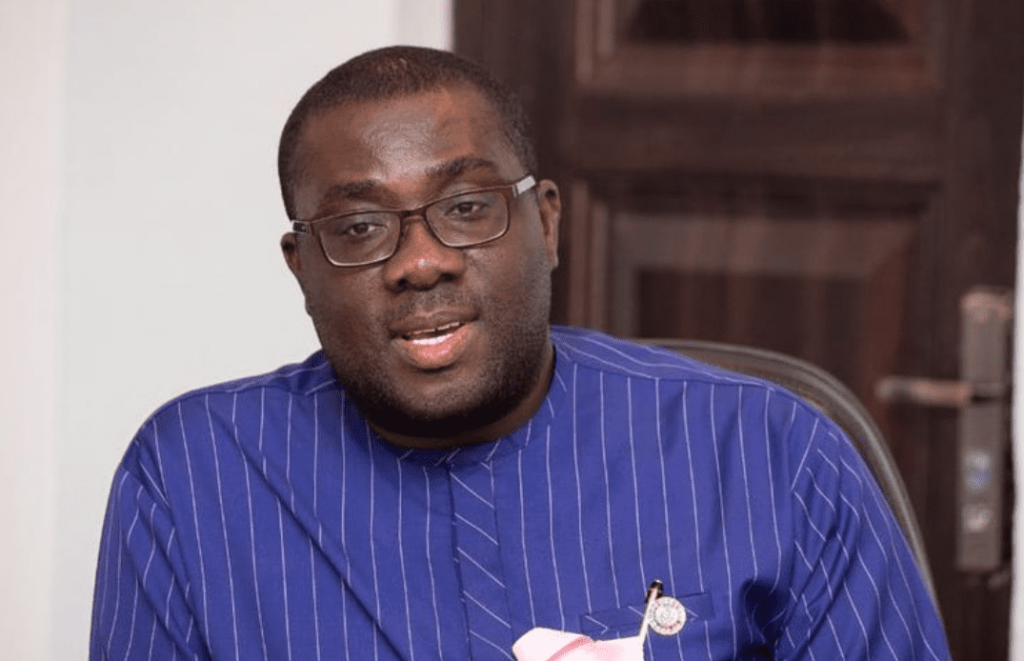
The Member of Parliament for Akuapim North, Sammi Awuku, has criticised the latest increase in electricity and water tariffs, questioning why Ghanaians continue to face higher utility bills despite government assurances of improving economic conditions.
According to him, the latest tariff adjustment, which took effect on Wednesday, July 1, 2026, places an additional burden on households and businesses already grappling with floods, recurring power outages and the rising cost of living.
This comes after the tariff regulator announced an upward review of electricity and water tariffs, with consumers set to pay more for utility services.
Under the Commission’s third-quarter tariff review, electricity tariffs have been increased by 3.49 percent across the board, while water tariffs have been adjusted upward by 0.85 per cent.
In a Facebook post on Wednesday, July 1, Sammi Awuku said it was ironic that Ghanaians marked Republic Day with another increase in utility tariffs rather than a reason to celebrate.
“How much more are Ghanaians expected to endure?” he asked.
He noted that July 1, which commemorates Ghana’s transition to a republic and symbolises the country’s freedom, resilience and self-determination, would also be remembered as the day of the fifth utility tariff increase under the current government in just 18 months.
The Akuapim North MP argued that many Ghanaians were still recovering from recent floods and continued power outages when they were confronted with another increase in electricity and water bills.
“Just when people are struggling to recover, they are being told to dig deeper into their pockets once again,” he said.
The Akuapem North MP outlined what he described as a series of tariff hikes since the government assumed office, citing a 14.75% increase in electricity tariffs and a 4.02% rise in water tariffs in May 2025.
He added that electricity tariffs increased again by 2.45 per cent in July 2025 and by a further 1.14% in October 2025.
He also pointed to the January 2026 tariff review, which saw electricity tariffs increase by 9.86% and water tariffs by 15.92%, before the latest adjustment took effect on July 1, raising electricity tariffs by 3.49% and water tariffs by 0.85%.
Awuku questioned the government’s economic narrative, arguing that repeated tariff increases contradicted claims of declining inflation and a stronger Cedi.
“Yet, this is the same government that keeps telling us inflation is down, and the Cedi is stronger. If the economy is doing so well, why are the bills of ordinary Ghanaians getting heavier with almost every tariff review?” he asked.
He said ordinary Ghanaians, including market women, barbers, cold store operators, hairdressers, welders, teachers and young entrepreneurs, bore the direct impact of the increases.
“The market woman doesn’t pay her bills with inflation figures. The barber doesn’t pay his ECG bill with exchange rate statistics. The cold store owner, the hairdresser, the welder, the teacher, the young entrepreneur, and the ordinary family all pay with money from their pockets,” he said.
Awuku maintained that citizens had been promised economic relief but were instead experiencing repeated increases in utility charges.
“At a time when many are dealing with the effects of floods, recurring power outages, and an ever-rising cost of living, the last thing they need is another increase in electricity and water bills.
“Ghanaians were promised relief. What they are experiencing instead is one increase after another. Enough is enough,” he said.