Ghana’s June inflation data reveals an increasingly fragmented price environment, with easing costs for several staple food commodities offset by persistent inflationary pressures in transport, housing, education and selected food products.
The latest figures from the Ghana Statistical Service (GSS) suggest that while improved agricultural supply conditions are beginning to moderate prices for some crops, structural cost pressures in the services sector continue to sustain household inflation.
Headline inflation rose to 5.3% in June from 3.7% in May, marking the third consecutive monthly increase.
However, inflation remains substantially below the 13.7% recorded in June 2025, indicating that the broader disinflation trend remains intact despite the recent pickup.
Price movements across agricultural commodities were far from uniform.
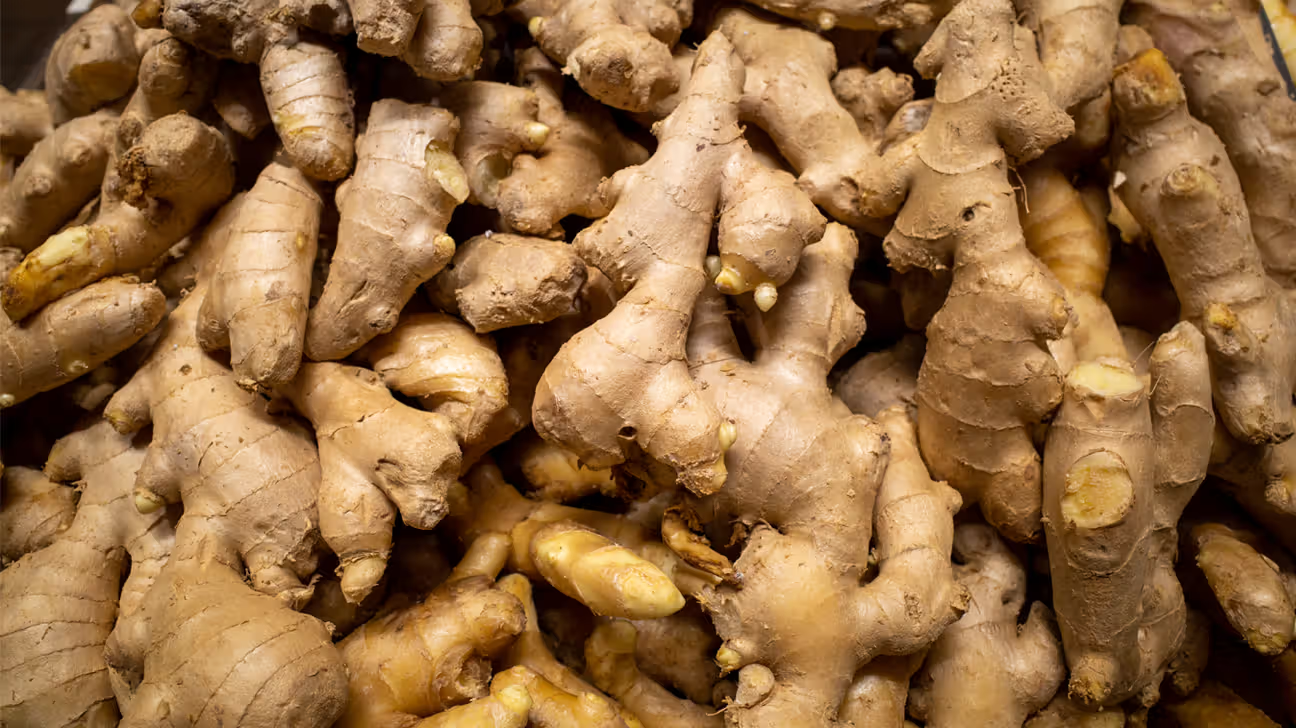
Supply shortages and seasonal factors pushed ginger prices up by 102.5% year-on-year, making it the fastest-rising item in the consumer basket.
Significant increases were also recorded for shrimps (90.8%), mangoes (87.2%), bananas (47.8%), avocado pear (43.8%), fresh coconut (39.3%) and palm fruits (37.8%).
By contrast, improved harvests and stronger market supplies drove substantial price declines for several staple crops.
Kontomire prices fell by 38%, while garden eggs, maize, millet and beans all registered double-digit declines.
The contrasting trends suggest that supply-side improvements remain commodity-specific rather than broad-based, with weather patterns, seasonality and distribution costs continuing to influence price formation across food markets.
Although food inflation edged up modestly to 3.9% from 3.3% in May, non-food inflation accelerated more sharply to 6.3% from 4.1%.
Services remained the dominant source of inflationary pressure, with services inflation reaching 9.4%, well above goods inflation, which rose to 3.7%.
According to the GSS, transport fares emerged as the single largest contributor to headline inflation, accounting for 10.5% of overall price pressures.
Rental costs followed at 8.4%, while secondary school fees contributed 7.2%, highlighting the growing influence of service-related expenditure on household budgets.
Among food items, ginger, river fish, cooked rice, fresh tomatoes and yam were the most significant contributors to overall inflation.
The latest data also reinforce the domestic nature of Ghana’s inflation dynamics.
Inflation for locally produced goods increased to 6.7% from 5.0% in May and accounted for 86.6% of headline inflation, compared with imported inflation, which rose to a relatively modest 2.3%.
Government Statistician Dr. Alhassan Iddrisu said the latest inflation profile points to persistent pressures originating from services and locally produced goods rather than imported commodities.
The findings suggest that while exchange rate stability and moderating global commodity prices have reduced imported inflation, domestic cost structures including transport, housing, education and selected food supply constraints continue to shape overall consumer prices.
Implication for Household Spending
The June inflation report indicates that Ghanaian households are experiencing two contrasting realities.
Consumers are benefiting from lower prices for several staple crops and vegetables, easing food expenditure for some families.
However, these gains are being offset by rising costs in essential services that are less discretionary and account for a significant share of household spending.
For policymakers, the data suggest that sustaining lower inflation will depend not only on improving agricultural output but also on addressing structural cost drivers within the services sector, including transportation, housing and education.
The June figures therefore point to an economy where inflation is becoming increasingly concentrated in services, even as food price pressures begin to moderate, reinforcing the uneven nature of Ghana’s ongoing disinflation process.