The government has pledged to ensure the successful implementation of a recently signed Memorandum of Understanding (MoU) with a Canadian company to convert solid waste into energy, describing the project as a major step toward addressing Ghana’s waste management challenges.
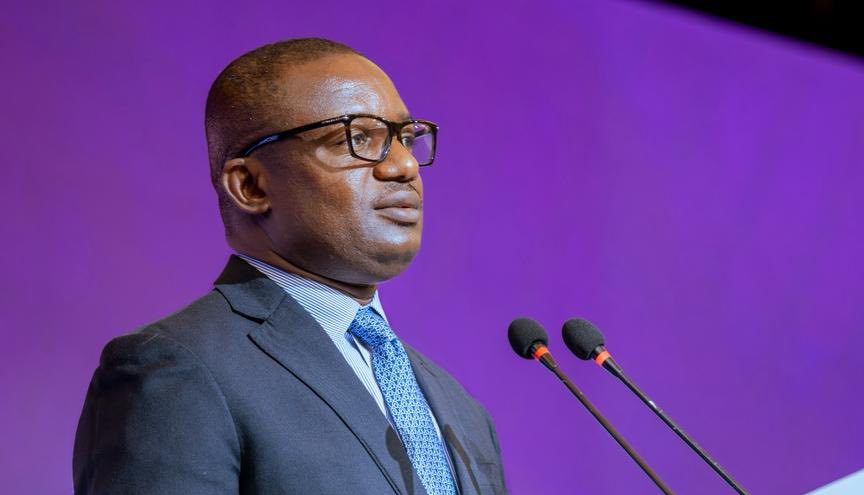
Speaking at the Canada Day Reception in Accra on Thursday, July 2, 2026, the Minister for Energy and Green Transition John Abdulai Jinapor said the government would work closely with its Canadian partners to move the agreement from the signing stage to implementation.
“I want to promise you that I will work in partnership with you to achieve and attain that objective,” Mr. Jinapor said. “To be able to convert that waste into useful energy in a sustainable manner, I think that that is commendable.”
He said the project would help tackle one of Ghana’s longstanding environmental challenges by transforming solid waste into a valuable energy resource.
“In Ghana, one of our major problems is how to deal with the waste that we generate,” he said. “It is my hope that we will move to the next level so that we can process a lot of our waste.”
Mr. Jinapor commended the Canadian High Commissioner for facilitating the signing of the agreement, describing her efforts as instrumental in bringing the partnership to fruition.
“Through your hard work and inspiration, we were able to sign that MoU,” he said. “I commend you, Madam High Commissioner, and I thank you very much.”
The minister made the remarks while congratulating Canada on its national day, praising the country for its commitment to democracy, human rights, multilateral cooperation, sustainable development and international peace.
He said Ghana and Canada have maintained strong diplomatic relations for nearly 70 years, built on shared democratic values, mutual respect, good governance and the rule of law.
Mr. Jinapor also acknowledged Canada’s longstanding support for Ghana’s development, particularly in education, health, agriculture, mining, water and sanitation, governance, clean energy, science and technology, and institutional capacity building.
He said the waste-to-energy initiative reflects the growing scope of cooperation between the two countries and expressed confidence that it would deliver environmental and economic benefits while strengthening bilateral relations.