Abstract
Torrential rains have become an increasingly significant environmental challenge across Africa, causing widespread flooding, infrastructure damage, agricultural losses, and disruptions to economic activities. While rainfall is essential for agricultural production and water resource replenishment, excessive precipitation can have severe consequences for productivity in agriculture, industry, transportation, and labor markets. This article examines the causes of torrential rains in Africa, their impacts on economic and agricultural productivity, and potential adaptation strategies to reduce vulnerability.
Introduction
Africa is highly vulnerable to climate variability due to its dependence on rain-fed agriculture, limited infrastructure, and growing populations. Recent decades have witnessed an increase in the frequency and intensity of extreme weather events, including torrential rainfall and flooding. According to the Intergovernmental Panel on Climate Change (IPCC), climate change has intensified rainfall variability and increased the occurrence of extreme precipitation events across many African regions. These events have already contributed to reduced food production, infrastructure damage, and slower economic growth (IPCC 2022).
Torrential rains are particularly common in regions such as West Africa, East Africa, and parts of Southern Africa, where seasonal rainfall patterns are becoming increasingly unpredictable. The resulting floods create significant challenges for productivity and sustainable development (IPCC 2022).
Causes of Torrential Rains in Africa
Several factors contribute to heavy rainfall events across Africa:
1. Climate Change
Global warming has altered atmospheric circulation patterns and increased the atmosphere’s capacity to hold moisture, leading to heavier rainfall events. The IPCC reports that climate change has increased rainfall variability across Africa and intensified extreme weather events such as floods and storms ( United Nations 2022).
2. El Niño and La Niña Events
The El Niño–Southern Oscillation (ENSO) significantly influences African rainfall patterns. El Niño events can trigger excessive rainfall and flooding in East Africa while contributing to drought in other regions. Historical ENSO events have been associated with widespread agricultural losses and infrastructure damage (Nature Sustainability 2024).
3. Urbanization and Poor Drainage Systems
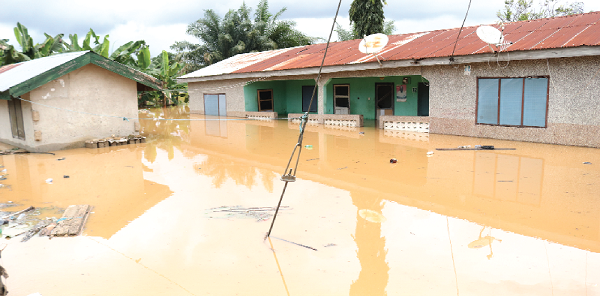
Rapid urbanization in many African cities has increased flood risks. Informal settlements, inadequate drainage systems, and unplanned development reduce the land’s natural capacity to absorb rainfall, intensifying flooding during torrential rainstorms (IMF 2020). The recent June 2026 floods in Ghana show how heavy rains coupled with poor drainage systems and the blockage of water ways and the use of wetlands for housing purposes can be very devasting to the environment and the flow of water during the rainy seasons. Growing up in Ghana in my youthful days, places like Tse Addo, areas around Sakumono Golf Club towards the beach, parts of Burma Camp, parts of la beach area (now known as Laboma), Dansoman, Kasoa, etc, and many other areas in Accra the capital were all marshy areas, lagoons (eg. Korle Lagoon) and wetlands preserved as water passages to the sea. All these places have been acquired by private developers and usurped for housing purposes.
Effects of Torrential Rains on Productivity
Agricultural Productivity
Agriculture remains the backbone of many African economies, employing a large share of the population. In Ghana for example, agriculture employs about 60% of the labour force. Thus, disruptions in this crucial sector of the economy has dire consequences for Ghana. Thus, torrential rains negatively affect agricultural productivity through:
1.Crop destruction and waterlogging.
2.Soil erosion and nutrient depletion.
3.Delayed planting and harvesting activities.
4.Livestock losses due to flooding and disease outbreaks.
Research shows that floods and extreme rainfall events significantly reduce crop yields and threaten food security throughout Sub-Saharan Africa. Climate-related disruptions have contributed to declines in agricultural productivity and growth across the continent (Omokpariola, D. O., et al. 2025).
The IPCC estimates that climate change has reduced agricultural productivity and growth in Africa by approximately 34% since 1961, representing the largest impact among global regions (IPCC 2022).
Labor Productivity
Torrential rains often limit workers’ mobility, disrupt transportation systems, and increase health risks from waterborne diseases such as cholera and malaria. Employees may be unable to reach workplaces, while agricultural laborers lose working days because fields become inaccessible or damaged. These disruptions reduce overall labor productivity and income generation (African Climate Foundation 2023).
Infrastructure and Transportation
Flooding associated with torrential rains frequently damages:
Roads and bridges.
Railway systems.
Airports and ports.
Electricity and communication networks.
The destruction of infrastructure interrupts supply chains, delays movement of goods and services, and increases operational costs for businesses. Such disruptions directly reduce economic productivity and investment potential (African Climate Foundation 2023). It perhaps true to indicate that, some of these destructions can be telling.
Indeed, in June 2026 in Ghana, the Minister of Interior had to ask Ghanaians to stay home during the heavy rains that caused destruction, the collapse of buildings and vehicular disruptions in many parts of the capital, Accra. Some of the scenes were frightening and needed critical attention from the central government, local, municipal, and regional authorities. This led to calls for the current government to take action to bring down all buildings and infrastructures impeding or obstructing the legitimate passage of water to ensure the safety of the Ghanaian people and to reduce the risk of future occurrences.
Industrial and Business Productivity
Manufacturing and service sectors also experience significant losses during severe flooding. Business closures, power outages, damaged facilities, and disrupted logistics can halt production for extended periods. Small and medium-sized enterprises, which often lack adequate insurance or disaster recovery resources, are particularly vulnerable (FAO 2025). In Ghana, the June 2026 floods led to the destruction of several shops, markets and properties worth millions of Ghanaian cedis.
Food Security and Economic Growth
Flood-induced crop failures contribute to food shortages, rising food prices, and reduced household purchasing power. These outcomes can slow national economic growth and increase poverty rates. The IPCC identifies reduced food production and stunted economic growth among the major climate-related impacts already occurring across Africa (IPCC 2022), (African Climate Foundation 2023).
Social and Environmental Consequences
Beyond productivity losses, torrential rains also generate broader societal impacts:
Displacement of communities and how vulnerable societies could be due to flooding.
Increased disease outbreaks.
Loss of biodiversity and ecosystem degradation.
Greater vulnerability among women, children, and low-income populations.
Extreme flooding events in East and West Africa have destroyed homes, damaged farmland, and disrupted public services, creating long-term development challenges (African Climate Foundation 2023), The Conversation (2026).
Adaptation and Mitigation Strategies
To reduce the impacts of torrential rains on productivity, African countries can adopt several strategies:
Climate-Smart Agriculture
Practices such as conservation agriculture, improved irrigation systems, crop diversification, and flood-resistant crop varieties can increase resilience against extreme rainfall (Omokpariola, D. O., et al. 2025).
Investment in Infrastructure
Improved drainage systems, flood-control structures, resilient roads, and climate-proof public infrastructure can reduce economic losses during flood events.
Early Warning Systems
Meteorological monitoring and early warning systems enable governments and communities to prepare for extreme weather events and minimize damage (FAO 2025), Abba Marta (2026). In this regard, The Ghana Metrological Services, TV and Radio stations have been doing a good job by informing the general public about the changing weather patterns and the occurrence of severe thunderstorms.
Policy and Institutional Support
Governments should integrate climate adaptation into national development plans, strengthen disaster risk management systems, and promote sustainable land-use planning (Omokpariola, D. O., et al. 2025), (IPCC 2022). In Ghana, for example, institutions like NADMO should be well resourced and funded so that they can be proactive and take action to support the population when disasters occur.
Conclusion
Torrential rains represent a growing challenge for Africa’s economic and agricultural productivity. While rainfall remains crucial for livelihoods and food production, excessive precipitation increasingly causes flooding, infrastructure damage, labor disruptions, and reduced agricultural outputs. Climate change is expected to intensify these challenges in the future.
Thus, strengthening climate resilience through improved infrastructure, climate-smart agriculture, early warning systems, and effective policy interventions is essential and primordial for protecting productivity and supporting sustainable development across Africa.
References
Abba Marta (2026) In Ghana, climate data tests the promise of Europe-Africa cooperation in [voxeurop.eu],
African Climate Foundation. (2023). Climate Change: What the Latest IPCC Report Means for Africa.
FAO. (2025). The Impact of Disasters on Agriculture and Food Security. Food and Agriculture Organization of the United Nations.
IMF. (2020). Regional Economic Outlook: Sub-Saharan Africa—Adapting to Climate Change. International Monetary Fund.
Intergovernmental Panel on Climate Change (IPCC). (2022). Climate Change 2022: Impacts, Adaptation and Vulnerability – Chapter 9: Africa. Geneva: IPCC.
Intergovernmental Panel on Climate Change (IPCC). (2022). Africa Fact Sheet: Sixth Assessment Report. Geneva: IPCC.
Nature Sustainability. (2024). Substantial Impacts of Climate Shocks in African Smallholder Agriculture.
Omokpariola, D. O., et al. (2025). Climate Change, Crop Yield, and Food Security in Sub-Saharan Africa. Discover Sustainability, Springer.
The Conversation (2026) A Super El Niño is coming: 5 hard‑won lessons the world can learn from Africa
United Nations. (2022). IPCC WGII Report: Impacts, Adaptation and Vulnerability—Key Takeaways
By: Kwasi Kordson Ayrakwa