



Every day, thousands of vehicles travel on Ghana’s roads, carrying workers, traders, students, and families. For most people, buying a vehicle is a personal decision based on cost, reliability, and convenience. But in Ghana today, that decision can have a much wider impact.
Choosing a locally assembled vehicle is not just about transportation. It is also an investment in Ghanaian jobs, local industry and national development.
For decades, Ghana has relied heavily on imported vehicles. The country imports about 100,000 vehicles each year, nearly 90 per cent of which are used vehicles. Although these imports have helped meet the country’s transport needs, they also come at a high economic cost.
It is estimated that Ghana spends as much as $1.5 billion annually on vehicle imports. This puts pressure on the country’s foreign exchange reserves and sends money out of the economy that could otherwise support local production and job creation.
As Ghana tries to strengthen its industries, reduce imports and retain more value within the economy, supporting locally assembled vehicles has become both an economic necessity and a strategic priority.
The effort to develop the industry gained momentum with the introduction of the Ghana Automotive Development Policy in 2019. The policy seeks to position Ghana as a regional hub for vehicle assembly and manufacturing.
It also forms part of the government’s wider Ten-Point Industrial Transformation Agenda, which includes the One District One Factory initiative and the development of Strategic Anchor Industries.
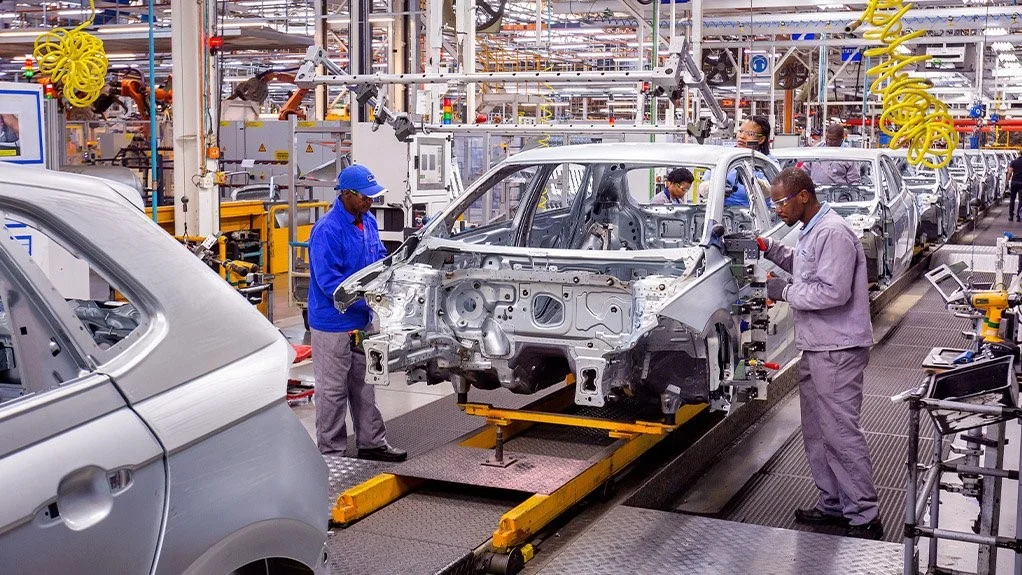
Today, Ghana’s automotive industry has ten licensed assemblers and seven active assembly plants. International brands such as Volkswagen, Toyota, and Nissan have established local operations, alongside indigenous companies such as Kantanka.
The commercial and heavy-duty vehicle sector has also recorded significant growth. Zonda Tec Ghana Limited, for instance, has gradually moved from being mainly an importer to becoming a major local assembler and manufacturer.
With support from the One District One Factory initiative, the company recently completed a $30 million expansion of its plant in Kpone-Katamanso. The expansion has increased its capacity to assemble more than 3,000 heavy- and light-duty trucks every year.
This development is helping to reduce Ghana’s dependence on imported commercial vehicles and machinery.
Behind every locally assembled vehicle is a growing network of Ghanaian workers whose livelihoods depend on the industry. The expansion of assembly plants has created more than 700 direct factory jobs and an estimated 1,000 indirect jobs in areas such as transportation, spare-parts distribution, sales and retail.
Companies are also investing in technical training schools to equip young artisans and engineers with practical skills in vehicle assembly, repairs, and maintenance. This is important because the success of the industry will depend not only on factories, but also on the availability of skilled Ghanaian workers.
The benefits of the automotive industry also extend beyond the assembly plants. A strong local industry can support businesses that produce vehicle parts, components, and accessories.
To encourage this, the government is establishing an Automotive Development Support Centre to regulate standards and help small and medium-sized enterprises participate in the production of automotive components.
There are also efforts to connect informal engineering centres with the formal automotive industry. An advanced automotive laboratory is being established at Suame Magazine in the Ashanti Region to support metal analysis, alloying and the production of vehicle components.
In addition, Ghana is expected to begin the local production of industrial fasteners such as bolts, nuts, and springs. These products will be manufactured to approved standards for use in the automotive and mining industries.
This is significant because vehicle manufacturing has often helped countries to industrialise. The sector creates demand for products such as metals, glass, rubber, plastics, electronics, and machinery. Growth in the automotive industry can therefore create opportunities for many other sectors of the economy.
Locally assembled heavy-duty trucks, concrete mixers and excavators are also important for mining, construction and road development. Through partnerships with companies such as Sinotruk and Shantui, Zonda Tec is assembling equipment needed for large-scale infrastructure and industrial projects.
The sale of this equipment is also being used to support efforts against illegal mining. By confirming that buyers have the required environmental and mining licences before completing sales, assemblers can help prevent heavy machinery from being supplied to illegal mining operators.
Perhaps more importantly, the automotive sector offers Ghana an opportunity to move beyond its long-standing dependence on raw-material exports. By connecting vehicle assembly with the local processing of metals and other materials, the country can retain more value from its natural resources.
The African Continental Free Trade Area also presents Ghana with a major export opportunity. With the AfCFTA Secretariat based in Accra, Ghana is well placed to serve as a production and distribution centre for the African market.
Ghana was the first country to complete the AfCFTA Rules of Origin certification process, signalling its readiness to participate in duty-free trade across the continent. Vehicle assemblers are therefore working to increase the number of locally produced components used in their vehicles so they can meet the required rules and qualify for export.
However, Ghana must first develop a strong domestic automotive market before it can compete effectively in other African countries. Every locally assembled vehicle purchased today contributes to building that foundation.
The growing number of assemblers also means that no single company controls the market. Increased competition can help improve quality, encourage innovation and gradually make vehicles more affordable for consumers.
Ultimately, buying a Made-in-Ghana vehicle should not be viewed only as an act of patriotism. It is a practical contribution to the country’s economic transformation.
It supports jobs, attracts investment, promotes skills development and technology transfer, and reduces Ghana’s dependence on imported vehicles.
When Ghanaians choose locally assembled vehicles, they are doing more than buying a means of transportation. They are helping to build a stronger, more productive and more prosperous Ghana.






![Naa Yeb'Nanton Naa Mahamadu V [left]](https://www.citinewsroom.com/wp-content/uploads/2026/07/FAMILY-YAA-NAA-4-75x75.png)








