• About Us
  • Privacy Policy
  • Terms of Use
  • Breaking News
  • Explainers
  • Listen Live
Thursday, July 23, 2026
Citinewsroom - Comprehensive News in Ghana
Advertisement
  • Home
  • News
    • Regional News
      • Ahafo Region
      • Ashanti Region
      • Bono East Region
      • Bono Region
      • Central Region
      • Eastern Region
      • Greater Accra Region
      • Northern Region
      • North East Region
      • Oti Region
      • Savanna Region
      • Upper East Region
      • Upper West Region
      • Volta Region
      • Western Region
      • Western North Region
  • Sports
    • World Cup
  • Politics
  • Business
  • Entertainment
  • Articles
  • Explainers
  • Editorials
No Result
View All Result
Citinewsroom - Comprehensive News in Ghana
  • Home
  • News
    • Regional News
      • Ahafo Region
      • Ashanti Region
      • Bono East Region
      • Bono Region
      • Central Region
      • Eastern Region
      • Greater Accra Region
      • Northern Region
      • North East Region
      • Oti Region
      • Savanna Region
      • Upper East Region
      • Upper West Region
      • Volta Region
      • Western Region
      • Western North Region
  • Sports
    • World Cup
  • Politics
  • Business
  • Entertainment
  • Articles
  • Explainers
  • Editorials
No Result
View All Result
Citinewsroom - Comprehensive News in Ghana
No Result
View All Result

31 Faecal treatment plants not operational

Jonas NyaborbyJonas Nyabor
July 6, 2018
Reading Time: 2 mins read
ShareShareShareShare

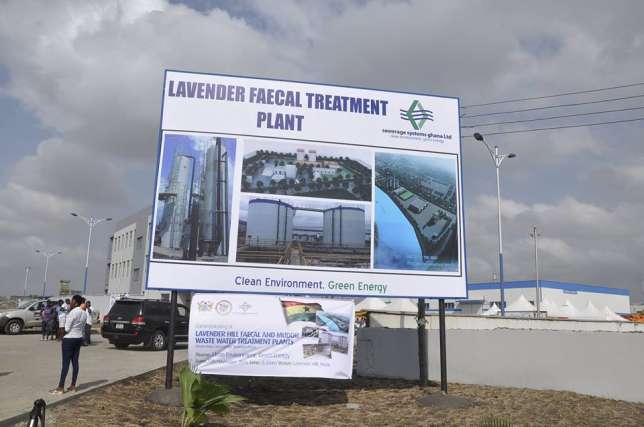
Out of the 35 institutional faecal treatment plants in the country, only four are currently operational.

“This implies that only one per cent of the sewage generated in Ghana is treated,” the Deputy Director-General of the Council for Scientific and Industrial Research (CSIR), Professor Rose Emma Entsua-Mensah, has said.

At a three-day Sustainable African Cities conference in Accra yesterday on the topic: “Sustainable Urban Ecological Management in Accra, Ghana: A Mirage or Reality?”, she said almost 97 per cent of all publicly owned and managed sewerage faecal plants were not functional, while 23 per cent of households in the country practised open defecation.

“In terms of basic sanitation, it is reported that 54 per cent of households use shared facilities which are generally unhygienic and 13 per cent have access to unimproved toilets.

“The result of this situation has been the intense increase in diarrhoeal diseases due to contaminated water and problems with food hygiene infections,” she stated.

Sanitation, flooding

Quoting the National Disaster Management Organisation (NADMO), Prof. Entsua-Mensah said sanitation issues also contributed to floods through the extension of tertiary and secondary drainage system as a result of urbanisation.

“The poor maintenance of existing drainage systems, the challenges of poor sanitation and siltation, planning deficiencies as well as the poor enforcement of building regulations and bye-laws are also contributory factors,” she stated.

The CSIR deputy director-general also attributed the annual flooding of the city of Accra to too many paved areas which prevented water from seeping into the soil, while scarce and expensive spaces had forced people to build in vulnerable areas, leading to further loss of space for interventions.

Stakeholder engagement

For his part, a professor of Botany at the Department of Plant and Environmental Biology, University of Ghana, Prof. Alfred A. Oteng-Yeboah, said “Accra will be ready when opportunities exist for cross-fertilisation of knowledge to optimise the use of technology and support coherence for the 2030 Global Agenda and the 2063 Africa We Want Agenda.”

He recommended that stakeholders should be properly engaged to properly understand the concept of a sustainable city or eco-city in order to effect a change in attitudes and behaviour.

“Many citizens are not aware that these come from actions that they engage in which cause the effects that are being witnessed now. Many are not aware that these can be addressed with their cooperation,” he said.

–

Source: Graphic.com.gh

Tags: CSIRFaecal treatment plantGhana News
ShareTweetSendSend
Previous Post

Sack Frances Essiam if she’s guilty– COPEC demands

Next Post

Ghana Post ready to tap into growing e-commerce services

Related Posts

Business

Access Bank Ghana wins two prestigious honours at Euromoney Awards for Excellence

July 23, 2026
Ashanti Region

Fire destroys Adoma Fashion training centre in Kumasi

July 23, 2026
Featured

87 projects underway under Big Push Programme – Ato Forson

July 23, 2026
Business

Gov’t to scrap 20% excise duty on locally made fruit juices – Ato Forson

July 23, 2026
Business

We are spending responsibly, not starving the economy – Ato Forson

July 23, 2026
Featured

Govt to build 10 new SHSs, upgrade 50 others under $300m education plan – Ato Forson

July 23, 2026
Next Post
Minister of Communication, Ursula Owusu-Ekuful

Ghana Post ready to tap into growing e-commerce services

ADVERTISEMENT
Citinewsroom - Comprehensive News in Ghana

CitiNewsroom.com is Ghana's leading news website that delivers high quality innovative, alternative news that challenges the status quo.

Archives

Download App

Download

Download

  • About Us
  • Privacy Policy
  • Terms of Use
  • Breaking News
  • Explainers
  • Listen Live

© 2024 All Rights Reserved Citi Newsroom.

No Result
View All Result
  • Home
  • News
    • Regional News
      • Ahafo Region
      • Ashanti Region
      • Bono East Region
      • Bono Region
      • Central Region
      • Eastern Region
      • Greater Accra Region
      • Northern Region
      • North East Region
      • Oti Region
      • Savanna Region
      • Upper East Region
      • Upper West Region
      • Volta Region
      • Western Region
      • Western North Region
  • Sports
    • World Cup
  • Politics
  • Business
  • Entertainment
  • Articles
  • Explainers
  • Editorials

© 2024 All Rights Reserved Citi Newsroom.