A girl’s hygiene cannot be looked down on, especially when it has to do with her genitals. In this civilized century, some girls find it difficult to take care of themselves during their period. It has become a monster to deal with, mostly in rural and deprived areas.
Being a major phenomenon in a girl’s life, menstruation can affect major aspects of her life ranging from dignity, education, health, emotional and psychological instability.
Despite the abundance of sanitary pads in Ghana, most girls in rural and deprived areas face challenges due to ignorance, lack of information, facilities or sanitary products, financial factors and superstitions.
According to the United Nations (UN) reports, one out of ten girls in Sub-Saharan Africa miss school during their menstrual cycle, equaling as much as twenty percent of a given school year. Many girls drop out of school altogether, once they begin menstruating. This harsh reality can be dealt with when the necessary processes are duly effected.
On May 28, annually, the world raises awareness and battles taboos associated with menstrual hygiene, as it celebrates Menstrual Hygiene Day (MH Day).
Reports indicate that, globally, more than half of women are of reproductive age—and menstruation is a monthly reality.
Meanwhile, many women all around the world, do not get access to menstrual hygiene products or sanitation facilities, for some reasons; maybe limited availability or excessive cost.
It is pathetic to note that myths and stigmas by the opposite sex, surrounding the monster called menstruation, cause some women and girls to miss school, work or totally isolate themselves. But, if both genders are made aware of the importance of menstrual hygiene through an open dialogue and education at home and in school to foster engagement with this often-unspoken issue, it would scare away that monster.
The theme for Menstrual Hygiene Day 2019 -‘It’s Time for Action’ stresses the urgency of this public health issue.
It also brings to the fore the transformative power of improved menstrual hygiene to empower the world’s women and girls and unlock their economic and educational opportunities.
MH Day assembles non-profit organisations, government agencies, the private sector, the media, and individuals to advocate for and promote the importance of good menstrual hygiene management (MHM).
MHM is a critical aspect of addressing women and girls’ empowerment by alleviating a major constraint to their participation in education and public life.
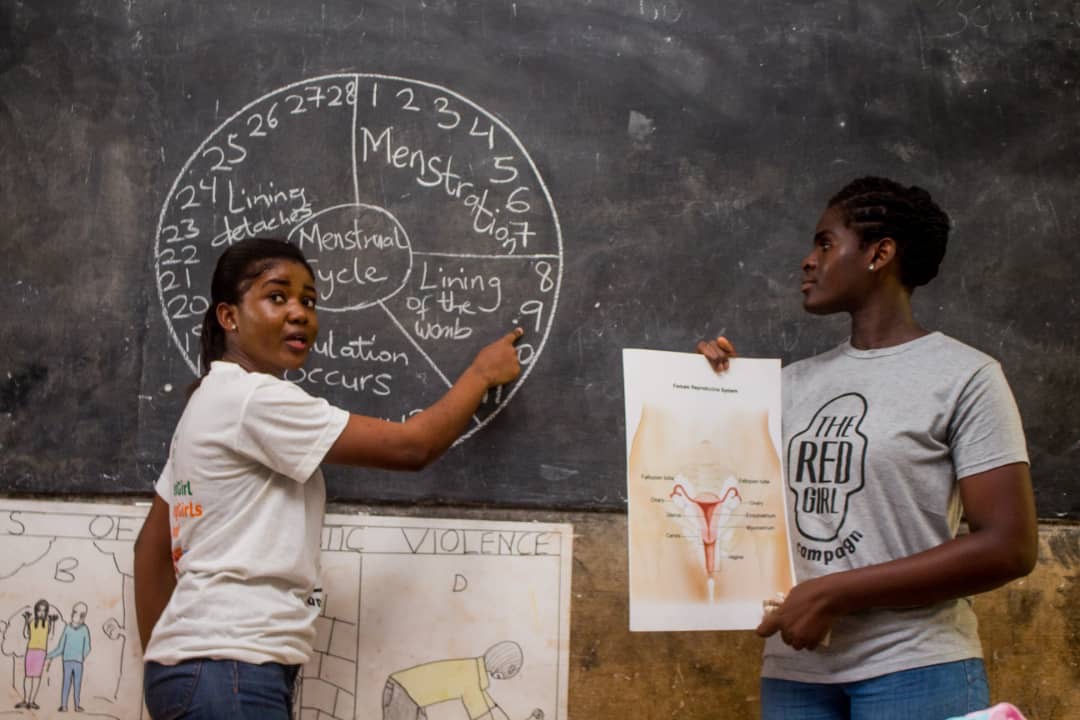
In an attempt to end period poverty, there should be enough education and awareness conversations around menstruation.
Another way is for government to reduce the 20% tax placed on sanitary pads or abolish it. Condoms which are for sex are tax free but sanitary pads are not. Sex is by choice, menstruation is a natural occurrence.
Every girl must be able to afford a sanitary pad, but due to its price the rural folks cannotafford it. If the tax is reduced or abolished, all girls will face their period with pride and dignity.
Government should also give incentives to sanitary pads companies to establish factories for mass production in Ghana. With this, it will be affordable for every girl to buy pads.
Rural poverty, an inhibiting factor which prevents most people from having access to pads can be addressed when more jobs are created in those areas.
School curriculum should include compulsory study of menstrual health to open up the minds of girls in their puberty stage. In this vain, stigmatisation caused by boys will be addressed at an early stage to avoid it being a canker.
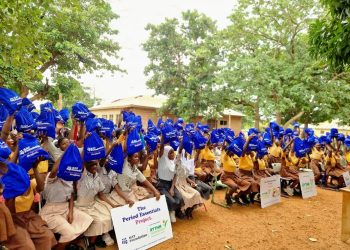
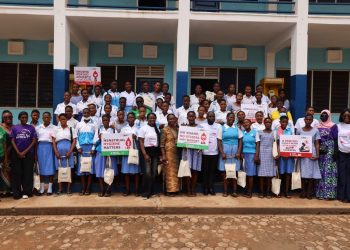
It is in that regard that the Heidi Health Foundation, with its RedGirl Campaign, is helping to keep these vulnerable girls in school, during their period.
Since its inception, barely a year ago, the Red Girl campaign has impacted over 1000 girls across Ghana.
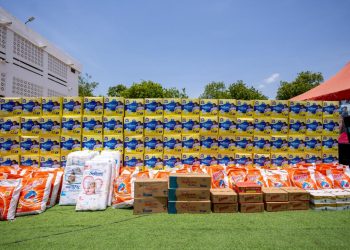
With various education and donations by the Heidi Health Foundation, with its Red Girl Project, it is interesting to know that some girls have not seen a sanitary pad before, neither have they used any.
In some parts of Ghana, girls are forbidden to stay around others during their period. A village in the Upper Denkyira East district in the Central region forbids girls from crossing a river when they are menstruating. A river god prevents these girls because it is a taboo. This restricts them from going to school during that time.
Also, in Krutiase in the Eastern Region, women are made to stay away from school during their period and come back when they have finished. This affected female teachers because they were banned as a result of disobeying the rules. With the intervention of some activists, women are now allowed to stay during their time. All these are violation of girls right to education.
Within these few months, the Foundation has been to 5 school across the country, namely Berekusu Presby School in the Eastern Region where about 200 girls were given sanitary pads. Christian Home School in Accra where 150 girls benefitted from the campaign.
Matsekope Presby Primary & JHS in Matsekope-Ada, 200 girls were given pads. In Okuapeman Basic in Akropong, Eastern Region of Ghana, 150 girls received free sanitary pads. In Sentinel Preparatory in Akropong, 20 girls received sanitary pads.
In total, we have reached over 1500 boys and girls as participants in our campaign, though it is only the girls who receive the sanitary pads.
In the fight against climate change and environmental degradation it is time we consider switching from the disposable sanitary pads which are made mostly of plastic materials to eco-friendly reusable ones.
Reusable pads aren’t only cheap and affordable, they are environment-friendly and also help to advance the fight to end period poverty in Africa which is mostly caused by rural poverty.
On this Menstrual Hygiene Day, it is prudent that we help end period poverty in Ghana to bring back dignity of girls during menstruation.