In East Baltimore, an old tobacco warehouse at 1103 North Washington Street is being transformed into a cutting-edge hub for artificial intelligence, advanced manufacturing, and workforce development. But behind the architectural renderings and visionary plans lies an important story — how this ambitious project secured the funding needed to get started.
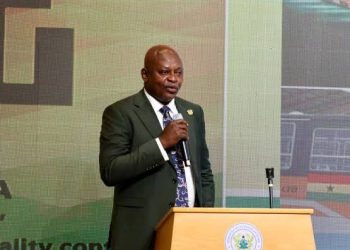
At the core of that story is Dominic Kwadwo Okyere Boapea, a finance and strategy leader whose meticulous attention to detail and relentless determination have secured nearly $1 million in grants for the Artificial Intelligence and Materials Manufacturing Workforce Development Academy (AIMM-WDA) initiative. Collaborating closely with Johns Hopkins University, Morgan State University, Riggle Capital, and City Life Community Builders, Dominic has helped develop not just a project — but a model for how cross-sector collaboration, financial discipline, and community vision can come together to create enduring economic opportunities.
From Vision to Viability
The AIMM-WDA initiative is a bold response to one of Maryland’s biggest challenges: preparing a diverse workforce for the rapidly changing fields of manufacturing, robotics, and artificial intelligence. The project plans to transform the 23,000-square-foot warehouse into a modern makerspace and workforce academy, where Baltimore residents can learn high-value technical skills, start small businesses, and take part in the state’s growing innovation economy.
Even the best ideas need resources to succeed. When discussions began between Hopkins and Morgan, the concept was visionary — but funding options were uncertain. That’s where Dominic’s expertise became crucial. As Finance Lead, he took charge of the challenge, coordinating the complex process of identifying, pursuing, and securing the necessary funding to turn plans into real progress. Using his background in corporate finance and data-driven strategic planning, Dominic carefully crafted the project’s financial roadmap, turning ambitious goals into numbers that convinced funders to invest.
In less than a year, his efforts paid off. Through a combination of state and federal applications — including the TEDCO Equitech Growth Fund, the Maryland Makerspace Initiative Program, MD DCHD CORE, EDA PWEAA, and other targeted opportunities — Dominic and his team have secured nearly $1 million in grants. These funds now support architectural design, planning, and early-phase renovation of the facility at 1103. N Washington Street.
A Champion of Strategic Funding
Dominic’s approach to funding goes far beyond paperwork. Each grant application he crafts tells a story about people, community impact, and the power of inclusive innovation.
“Fundraising is never just about money,” he explains. “It’s about aligning vision with opportunity. Every application we submit must make funders feel that this is a sound investment and a moral and economic imperative.”
His method blends rigorous financial analysis with a deep understanding of community development dynamics. For AIMM-WDA, that has meant framing the project as both a technology accelerator and a social equalizer — an initiative that bridges academic excellence with neighborhood revitalization. By doing so, he’s helped position the project to attract a unique mix of funders, from technology agencies to community impact programs.
Dominic’s leadership has ensured that the project’s financial structure supports long-term sustainability. His models integrate capital and operating budgets, monitor match requirements across multiple funding sources, and forecast return on investment through workforce outcomes. This level of sophistication, which is rare in community-based projects, has made AIMM-WDA stand out as a well-managed, highly accountable initiative.
The Power of Partnership
The strength of the AIMM-WDA project comes from its collaboration. Johns Hopkins University offers cutting-edge research capabilities. Morgan State University provides deep expertise in engineering and workforce training. City Life Community Builders brings local engagement, construction experience, and community trust.
Riggle Capital acts as the financial bridge between these groups, ensuring the collaboration stays fiscally cohesive and strategically aligned. Dominic’s ability to translate between the academic, public, and nonprofit sectors has been key to keeping the project moving forward.
“Every partner brings incredible value,” he says. “My job is to ensure that our collective efforts are financially synchronized —maximizing impact while fully complying with each funder’s expectations.”
Through his leadership, the team has demonstrated technical readiness and financial credibility, two factors that have made AIMM-WDA increasingly attractive to state agencies, philanthropic investors, and federal partners.
Why It Matters Now
The timing of AIMM-WDA could not be more urgent. Across the country, industries are racing to integrate artificial intelligence and advanced manufacturing technologies. Yet too often, underserved communities are left behind in this transition. Baltimore — with its legacy of manufacturing, its research institutions, and creative workforce — is uniquely positioned to lead, but only if initiatives like AIMM-WDA are adequately supported.
“Almost all of the grants we’ve received or applied for are capital-based,” Dominic notes. “They help us build walls and buy equipment, but we also need operational funding — the resources that keep the lights on, pay instructors, and sustain programs. That’s why we’re advocating for $400,000 in operating support from the state to ensure the project realizes its full potential.”
That advocacy — and Dominic’s skill in communicating the project’s urgency to policymakers — highlights his role as a financial manager and a strategic voice shaping Maryland’s innovation policy landscape.
Leadership Rooted in Purpose
Dominic’s journey to this role is anything but typical. With over ten years of experience in finance, accounting, and strategy, he has held leadership positions in the energy, investment, and community development sectors. His background combines the analytical precision of a Chartered Certified Accountant (ACCA) with the forward-thinking mindset of an MBA graduate from Johns Hopkins University’s Carey Business School.
Yet, what distinguishes him most is his firm belief in finance as a tool for empowerment. Whether structuring intricate deals for Riggle Capital or creating budgets for community revitalization projects, Dominic approaches each task with the same core idea: equitable access to capital is essential for sustainable development. His work on AIMM-WDA exemplifies this belief — a chance to demonstrate that transformative projects can arise from historically disinvested neighborhoods when the right combination of expertise, passion, and partnership come together.
A Catalyst for Inclusive Innovation
As the AIMM-WDA project approaches groundbreaking, Dominic remains focused on more than just starting the project; he aims for its success. His team keeps working on securing new funding sources, exploring public-private partnerships, and establishing the foundation for long-term financial independence through program revenue and innovation collaborations.
“The goal,” he says, “is not just to build a facility but to create a movement — one that empowers people, attracts investment, and redefines what innovation looks like in Baltimore.”
If the past year is any indication, that movement is already progressing — driven by visionaries like Dominic Kwadwo Okyere Boapea, whose financial leadership helps turn potential into progress and ambition into impact.