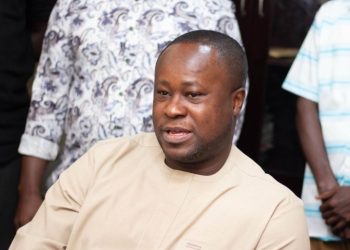
A retired media practitioner in Tarkwa, Western Region, Toni Nkrumah-Boateng, has painted a stark picture of the worsening galamsey menace and its devastating impact on Takoradi’s water supply and surrounding communities.
His account reveals a multi-layered crisis that stretches far beyond environmental damage.
Below are some insights:
1. Complete Collapse of Municipal Water Supply
The Bonsa River headworks, in operation since 1975, has been completely shut down for the past month due to intense illegal mining activity.
According to Toni Nkrumah-Boateng, “For the last month, there’s not been any flow of water through our pipes.” Residents who lack boreholes now rely on water from Aboso, marking what he says is the first water crisis of this scale in nearly three decades of living in the area.
2. Direct Mining in the Bonsa River
Illegal miners are now excavating directly from the riverbed, a significant escalation from past operations. “They are digging deep into the Bonsa River. They’re extracting the gold under the water… they virtually need to destroy everything in their way to get to the gold,” Nkrumah-Boateng described on the Citi Breakfast Show on Wednesday, September 17.
The river, once a clean and stable water source, is now a site of unregulated mining, threatening not only water quality but the structural integrity of the ecosystem.
3. Community and Leadership Know the Source — But Little Is Done
Nkrumah-Boateng described the situation as an “open secret” — widely known but largely unchecked. “Everybody knows where the problem is coming from,” he said. “The regional minister is aware. The manager there is aware. The municipal chief executive is aware.” Despite widespread awareness among both citizens and local officials, the operations continue unimpeded.
4. Mining-Dependent Economy Hinders Enforcement
Efforts to crack down on galamsey face a difficult economic reality. The region’s economy is deeply entangled with mining. “Everything revolves around the mining activity,” Kromabwe noted, adding that any serious enforcement would mean “shut[ting] the whole town down.” This dependence makes it challenging to enforce anti-galamsey policies without triggering economic instability.
5. Impact Spreads Beyond Water — Agriculture, Education, and Markets Affected
The damage extends far beyond water systems. Illegal mining is now affecting farms, schools, markets, and plantations. “They’re mining beneath the market,” Nkrumah-Boateng reported, adding that even areas near the University Basic School are not spared.
He also noted that both locals and outsiders are involved in the activity, saying it has become **”part and parcel of the system.”
The situation in Takoradi, as described by Nkrumah-Boateng, highlights the urgency of a coordinated response. Galamsey is no longer just an environmental issue — it’s a social, economic, and governance crisis with long-term consequences for the Western Region and Ghana as a whole.