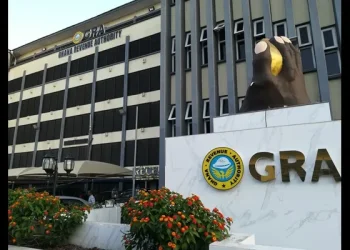
The Ghana Revenue Authority (GRA) has rolled out a new Modified Taxation Scheme (MTS) designed to make tax registration and payment easier, faster, and more transparent for businesses in the informal sector.
The initiative, launched alongside a Sustained Tax Education Programme, aims to bring thousands of small and medium enterprises (SMEs) into the tax net while deepening understanding of tax compliance nationwide.
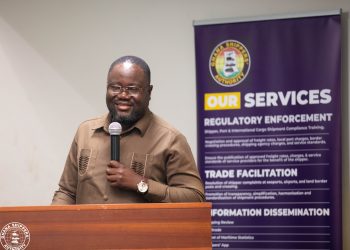
Speaking at the launch in Accra, Commissioner-General of the GRA, Anthony Kwasi Sarpong, said the MTS reflects the Authority’s commitment to modernising tax administration through technology and simplicity.
“The Modified Taxation Scheme offers a fair, predictable, and convenient way for micro, small, and medium businesses to comply with tax laws. It reduces bureaucracy, limits discretion, and builds trust between taxpayers and the GRA,” Mr. Sarpong stated.
Under the scheme, individuals and businesses with annual incomes not exceeding GH¢500,000 will pay a flat rate of 3 percent. For instance, a business earning GH¢200,000 annually will pay GH¢6,000, while someone earning GH¢25,000 will contribute GH¢750 in taxes.
Mr. Sarpong explained that the MTS simplifies every step of compliance — from registration to payment — making it easier for traders, artisans, and small shop owners to fulfil their civic responsibilities without the usual bureaucratic hurdles.
“This will bring convenience to small enterprises and enhance domestic revenue mobilisation for national development,” he added.
The Sustained Tax Education Programme, also unveiled at the event, seeks to nurture a culture of voluntary tax compliance. Through a three-year national plan, the programme will equip citizens with practical knowledge on how to register, file, and pay taxes correctly and on time.
The education campaign goes beyond traditional outreach — targeting markets, schools, universities, professional associations, and digital platforms. The goal, according to the GRA, is to make tax education part of Ghana’s social consciousness.
“When citizens understand the value of paying taxes, compliance becomes a natural choice — not an obligation enforced by law,” Mr. Sarpong emphasized.
Deputy Minister of Finance, Thomas Nyarko Ampem, praised the initiative, noting that it targets Ghana’s vast informal sector, which accounts for about 80 percent of the economy.
“Compliance has been low over the years, but with the MTS and sustained tax education, we are changing that narrative,” he said.
He added that improving domestic revenue collection is key to achieving Ghana’s medium-term fiscal goals, stressing that tax compliance is a shared national responsibility involving government, private businesses, traditional authorities, and citizens alike.
Chief of Staff, Julius Debrah, who represented President John Mahama as the guest of honour, commended the GRA for its innovation in tax collection and expressed confidence in achieving this year’s target of GH¢189 billion in revenue.
He revealed that as of September 2025, the Authority had already collected GH¢180.6 billion, and the new schemes were expected to help close the gap.
“With the launch of the MTS and the tax education drive, I am confident we will meet our target,” Mr. Debrah said.
He also reminded citizens that taxes are the backbone of national development.
“We build roads, equip our security agencies, and drive growth through the taxes we pay. National development depends on our collective contribution, he added.
How the MTS Works
The Modified Taxation Scheme is not a new tax but a simplified form of personal income tax targeted at informal sector players whose incomes are generated solely within Ghana and who are not registered for VAT.
The digital platform — accessible through the MTS mobile app or by dialling *880# — allows users to register using their Ghana Card, digital address, phone number, and business details. Payments can be made conveniently via mobile money.
Through this initiative, the GRA hopes to transform tax compliance into a simple, transparent, and technology-driven process — one that makes every cedi paid count toward Ghana’s development.