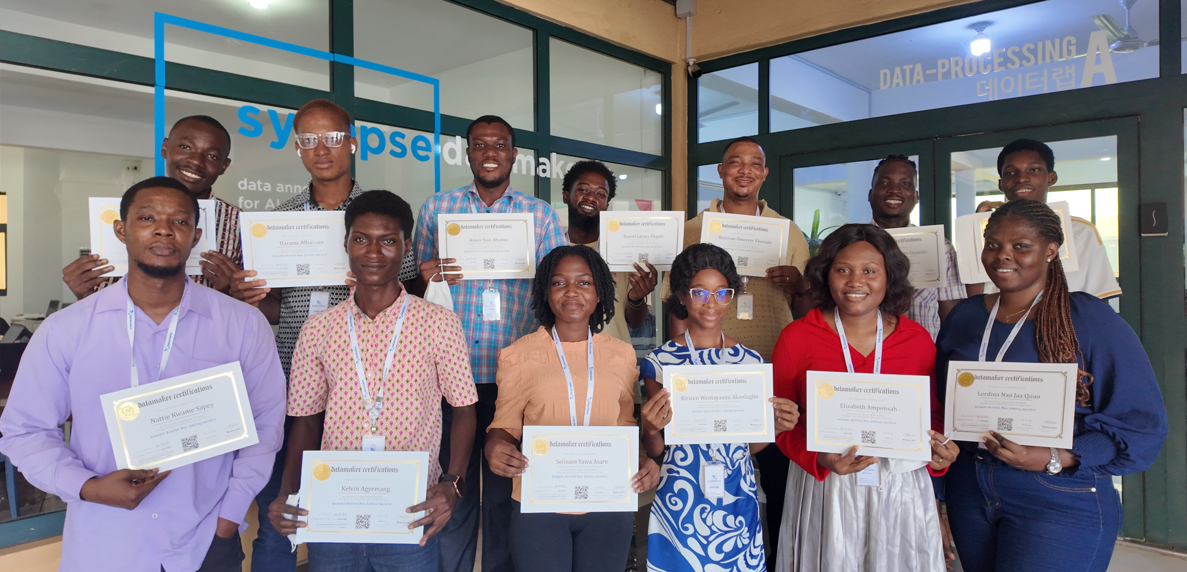
Datamaker Ghana Limited’s partnership with the Korea International Cooperation Agency (KOICA) through the IBS Programme has trained over 1,200 Ghanaian youth in information and communications technology and artificial intelligence since its inception in 2021. Through this initiative, the company has created over 500 direct and indirect jobs, the first of its kind within the Ghanaian ecosystem.
Beyond the numbers, KOICA’s investment has focused on preparing young people for non-contact jobs and the future of work. By building advanced digital and AI skills in Ghana, KOICA has supported youth to gain employment and participate in global technology value chains.

(Enoch Lee, CEO of Datamaker Ghana Ltd)
Institutional Framework and Programme Launch
Under the leadership of CEO Enoch Lee, Datamaker Ghana Limited operates as a Ghana Free Zones Enterprise with its headquarters in South Korea, a designation it has held for the last five years. Officially beginning operations in Ghana in 2021, the company’s mission has been singular: Equipping Ghanaian youth with ICT skills.
The inaugural graduation ceremony, attended by the Korean Ambassador to Ghana, KOICA’s Country Director, and University of Ghana officials, certified 27 trainees, 20 male and seven female participants, marking the beginning of the partnership.
The presence of KOICA leadership and diplomatic stakeholders signalled the programme’s role as a long-term development intervention rather than a short-term skills project, establishing confidence in its sustainability and relevance.
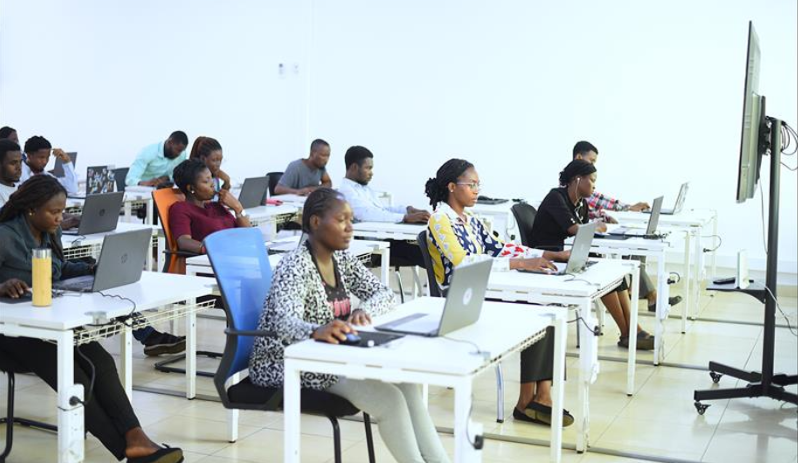
By early 2023, the programme had equipped over 300 youths with AI-related ICT competencies. The curriculum included data annotation, machine learning fundamentals, cybersecurity protocols, and data protection compliance.
Addressing Multiple Demographics Through Targeted Initiatives
Datamaker has implemented several targeted programmes to reach different groups within Ghana’s youth population. In March 2022, the company conducted an all-female training edition, certifying 20 women in core ICT skills. This initiative directly addressed gender disparities in technology, reinforcing the partnership’s commitment to inclusion, women’s economic empowerment, and equitable access to emerging industries.
Between 2022 and 2025, a special scholarship programme named the BOP Program (Bottom of the Pyramid) focused on economically disadvantaged individuals with little to no knowledge or access to computers. Programme participants received covered tuition costs, transportation allowances, and snack provisions during training periods. For many BOP participants, this was their first engagement with digital technology. Graduates gained access to employment opportunities within Datamaker and partner organisations. KOICA’s support helped transform beneficiaries from digital exclusion to employability.
Leveling the Playing Field
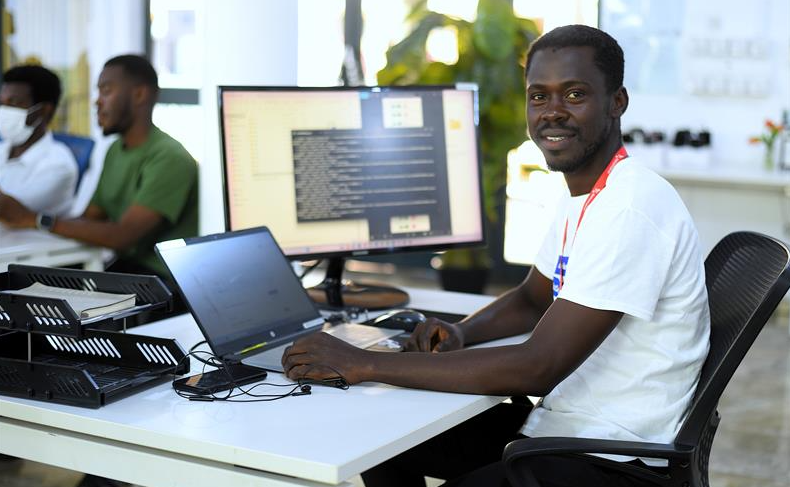
In May 2024, Datamaker launched online ICT scholarship training to extend programme accessibility beyond the Greater Accra Region. This was the first time in Ghana that data annotation training and certification were conducted online.
Documented Graduate Outcomes and Career Progression
Graduate success stories reflect consistent outcomes of a structured, demand-driven training model supported by KOICA.
Emmanuel Owusu Appiah completed his Master’s degree in Computer Science from the University of Ghana while advancing from a data annotator position to Project Manager, Training Facilitator, and eventually IT/Facilities Manager within the organisation.
Rita Kwadjoti’s story shows the programme’s reach to non-traditional candidates. Rita had left formal education at Junior High School and worked in janitorial roles before learning ICT skills through the programme. She gained employment and now serves as a Training Facilitator.
These cases show how KOICA’s investment has created upward mobility and career pathways for youth who might otherwise remain excluded from the digital economy.

Discovering Ghana’s AI Data Labeling Potential Through Datamaker
In 2024, Datamaker embarked on an NLP LLM data labelling project. Participants contributed linguistic expertise, cultural nuance, and attention to detail to train language models. Their quick adaptation to technical requirements showed Ghana’s capacity to participate in global AI supply chains, not just as a consumer of digital technologies but as an active contributor.
With Datamaker’s support, Ghana is building a data labeling industry capable of nurturing local talent while serving global AI markets.
Programme Structure and Operational Model
The training model combines classroom instruction with practical application. Participants work on live projects, including data annotation for international AI models, providing exposure to industry-standard workflows. The programme’s zero-cost structure removes financial barriers, whilst stipends for transportation and snack provisions address attendance obstacles.
Datamaker’s partnership with the University of Ghana and its Department of Computer Science provides academic validation, ensures alignment with industry requirements, and facilitates graduate placement in private sector and research roles.
Addressing Documented Skills Gaps in Ghana’s ICT Sector
Ghana’s information technology sector faces documented skills gaps as digital transformation accelerates across public and private institutions. The National Digital Economy Policy identifies ICT skills development as critical to achieving the country’s digitalisation objectives. Datamaker’s KOICA-supported programme directly addresses this priority by producing job-ready graduates with specialized AI and ICT competencies.
By 2025, the initiative has strengthened Ghana’s human capital base. With youth unemployment remaining a persistent economic challenge, linking skills acquisition to employment pathways offers a practical solution.

A Partnership That Delivered Results
The five-year collaboration between Datamaker Ghana Limited and Korea International Cooperation Agency (KOICA) demonstrates what is achievable when international development partnerships focus on practical skills and real employment outcomes. KOICA’s strategic support made it possible to train over 1,200 youth, create more than 2,000 job opportunities, and give many Ghanaians their first opportunity in technology careers.
The impact has been visible across diverse communities. Targeted interventions enabled women to access and succeed in technology-driven roles. Economically disadvantaged youth, who had never used computers, progressed into skilled data annotators contributing to real AI projects. Through the introduction of online training, young people from regions beyond Greater Accra were able to participate and build future-ready skills. Throughout the programme, KOICA and Datamaker maintained a shared commitment to youth empowerment, providing not only training but the institutional support required to translate learning into sustainable careers. Collectively, the partnership has demonstrated that with the right investment and vision, Ghana’s youth are well-positioned to compete and contribute in the global digital economy.
![Archbishop of Canterbury, Sarah Mullally [seated] -Photo credit Neil Turner / Lambeth Palace](https://www.citinewsroom.com/wp-content/uploads/2026/07/ARCH-22-350x250.png)