The Minister for Energy and Green Transition, Dr. John Abdulai Jinapor, says government will sustain close engagement with key stakeholders in the power sector as it intensifies efforts to tackle long-standing inefficiencies within electricity distribution, particularly at the level of billing and revenue collection.
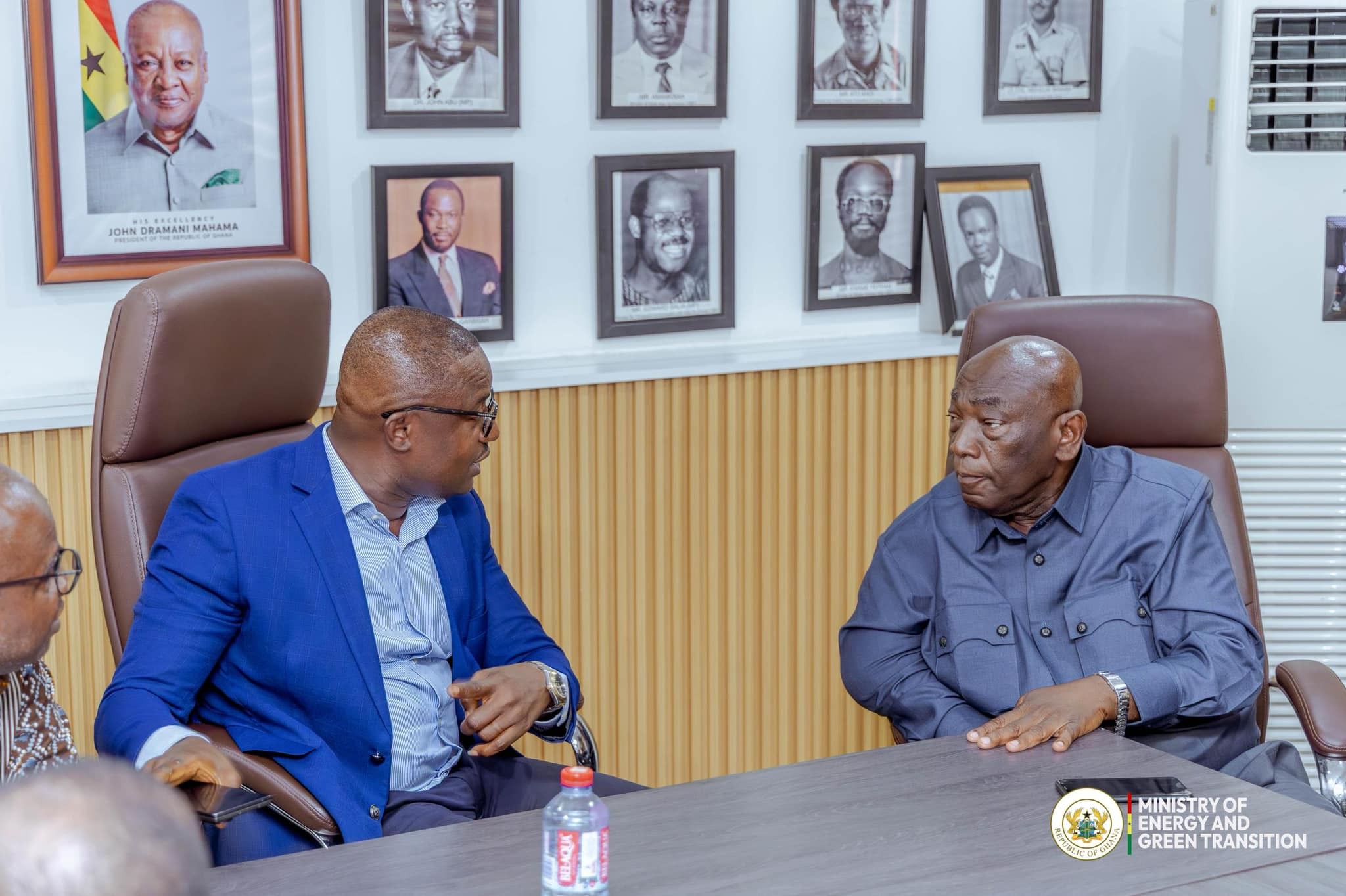
In a statement shared on social media on Wednesday, January 21, the Minister disclosed that he had held consultations with the Trades Union Congress (TUC), the Public Utilities Workers’ Union (PUWU), the Northern Electricity Distribution Company (NEDCo), and representatives of other utility institutions on ongoing discussions around private sector participation in the Electricity Company of Ghana (ECG) and NEDCo.
Dr. Jinapor described the meeting as “frank, constructive and driven by data,” noting that evidence-based dialogue remains central to building consensus around reforms that can restore financial viability and operational efficiency in the power sector.
According to the Minister, government views sustained stakeholder engagement as essential to delivering reforms that are both technically sound and socially sustainable, particularly in a sector where labour concerns, service delivery and fiscal risks are closely intertwined.
He acknowledged that the distribution segment remains the weakest link in Ghana’s power value chain, citing persistent problems with billing accuracy, revenue leakages and collections.
“What is not in doubt is that there is a major challenge within the distribution chain of the power sector, particularly in the areas of billing and collections,” Dr. Jinapor said, warning that prolonged inaction could place the entire sector under strain.
The Energy Minister assured stakeholders that government is committed to addressing these structural weaknesses decisively, stressing that reforms will be guided by transparency, data and continuous consultation with labour unions and affected institutions.
“Our focus is to protect the power sector and ensure a reliable, continuous electricity supply to homes, businesses and all citizens,” he stated.
The engagement comes as government weighs deeper private sector involvement in ECG and NEDCo, a move seen by analysts as critical to improving efficiency, reducing losses and stabilising the sector’s finances amid rising demand and mounting fiscal pressures.