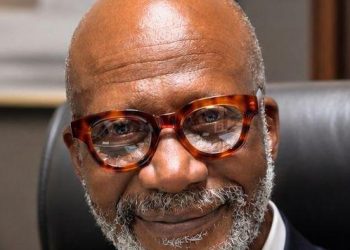
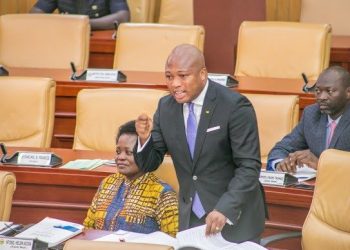
The Deputy Minister for Finance, Thomas Nyarko Ampem, has directed all Ministries, Departments, and Agencies (MDAs) to obtain new Commitment Authorisations for all expenditures in 2026, noting that authorisations issued in 2025 have expired and are no longer valid for this year’s procurement activities.
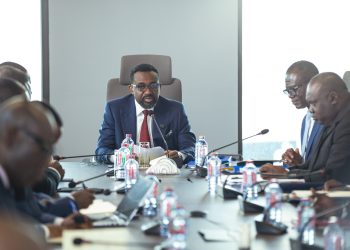
Addressing Chief Directors, Heads of Covered Entities, and Chief Executives of Public Institutions during a meeting on the Modalities for Commitment Authorisation for 2026 on Thursday, January 29, Mr Ampem stressed that all spending must strictly remain within approved budgetary ceilings.
The Deputy Minister, who also represents the Asuogyaman Constituency in Parliament, announced a new two-week turnaround target for the Ministry of Finance to process and approve Commitment Authorisation requests, provided all required documentation is correctly submitted.
To streamline the process, he instructed that all requests be routed through the relevant Sector Ministers. However, to minimise bureaucratic delays, MDAs are also required to submit copies directly to the Ministry of Finance, which will commence processing while awaiting formal referral.
Mr Ampem further clarified that MDAs with ongoing projects from 2025, where contracts have been awarded but payments are still pending, must fully disclose these obligations. Such commitments, he said, will be treated as a first charge on their 2026 budgets before approval is granted for any new expenditure.
Explaining the purpose of the Commitment Authorisation system, the Deputy Minister noted that it was introduced to prevent public institutions from committing the state to projects without approved budget allocations.
He observed that in the past, significant financial commitments were made without the Ministry of Finance’s knowledge, contributing to the country’s rising public debt.
“Enforcing these measures is critical to curbing unauthorised spending and forms part of a mandatory framework aimed at restoring budgetary discipline and ensuring debt sustainability under Ghana’s IMF-supported programme,” he said.
“If this country had respected the budget and committed the state only when funds were available, we would not have found ourselves where we are today,” Mr Ampem added.