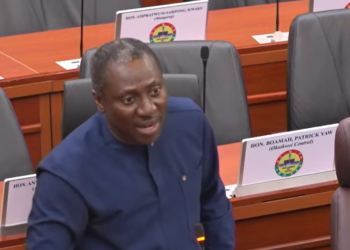
Alexander Afenyo-Markin, Minority Leader and Member of Parliament for Effutu, has urged Ghanaian youth to take personal responsibility for creating and managing opportunities after graduation.
He also warned that some youth abuse the very opportunities meant to empower them.
Delivering the keynote address at the Beyond the Degree Conference 2026, Afenyo-Markin observed, “While the limited availability of opportunities is a genuine national concern, there is another issue we must confront honestly.
“Political leaders must be prepared to speak truth to power and also speak truth to our own people. I say this without fear of contradiction: one of the growing concerns in our country today is the abuse of opportunities by some of the very youth these interventions are meant to empower.”
Reflecting on his own constituency work since 2013, Afenyo-Markin cited initiatives including the distribution of over 10,000 industrial and hand-sewing machines, scholarships for students, apprenticeship programs in trades like tiling, carpentry, and tailoring, and the provision of vehicles and tricycles under work-and-pay arrangements. These programs aimed to equip youth with skills, tools, and independence.
However, he noted that some beneficiaries misused these opportunities: “Some of the sewing machines provided to start livelihoods were sold. Some apprentices abandoned their training halfway. In some cases, some simply lost interest in the very opportunities that were meant to transform their lives.”
Afenyo-Markin highlighted the challenges facing young people in a country where formal employment is limited.
He emphasised that certificates alone do not guarantee success and that entrepreneurship, innovation, applied skills, and civic engagement are essential for building livelihoods.
“In my office alone, I have over 2,000 CVs of young people seeking employment,” he said, pointing to the scarcity of formal jobs.
Afenyo-Markin urged young Ghanaians to take ownership of their futures, stressing that success depends not only on access to resources but also on commitment, discipline, and responsible decision-making.