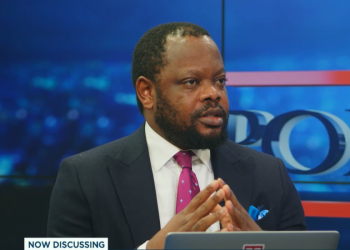
The Special Prosecutor, Kissi Agyebeng, has called for a deliberate restructuring of Ghana’s education system to ensure that it preserves the country’s cultural heritage while also driving innovation and leadership development.
Speaking at the Accra Academy 95th Anniversary Speech and Prize Giving Day, Mr Agyebeng said education must not only focus on academic achievement but also serve as a tool for safeguarding national identity and cultural continuity.
“Our educational system must securely preserve our heritage for any meaningful desirable impact on our condition. Without such a quest, we lose our very selves – our legacy, our traditions, our achievements, our beliefs, our history, our thoughts, our identity,” he said.
He warned that Ghana risks cultural erosion if its education system continues to neglect indigenous identity, noting that language, names, and traditions are increasingly being displaced by foreign influences.
According to him, the preservation of heritage is directly linked to innovation and leadership development, arguing that societies that lose their identity weaken their capacity to create and lead.
“My thesis is that the preservation of heritage drives innovation, which in turn empowers future leadership. Therefore, we should employ and characterize education as the catalyst for preserving heritage, driving innovation, and empowering future leadership to assure for ourselves gratifying existence.”
Mr Agyebeng further observed that Ghana’s education system still bears traces of its colonial foundation, which he said was originally designed to produce a workforce for colonial administration rather than to develop independent African identity and creativity.
“Our education was modelled on what the colonialists thought fit to churn us out as their half-baked appendages – not for our sakes – but to suit their purposes,” he stated.
Citing Accra Academy’s founding philosophy, he praised the school’s guiding principles, including Esse Quam Videri (to be, rather than to seem), Non Sibi Sed Aliis (not for self, but for others), and Non Scholae Sed Vitae Discimus (we do not learn for school, but for life), describing them as a model for national education reform.
He also highlighted the importance of integrating culture into learning, stressing that education must go beyond passing examinations to preparing individuals for real-life challenges.
Mr Agyebeng posits that Ghana’s future development depends on an education system that preserves its heritage while equipping learners to innovate and lead in a rapidly changing world.