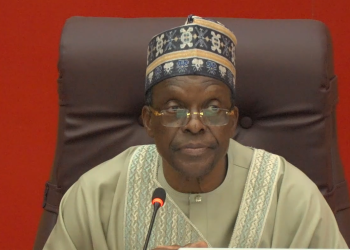
The Majority Leader, Mahama Ayariga, has cautioned the Minority Leader, Alexander Afenyo-Markin, to desist from what he described as persistent verbal attacks on the Deputy Minister of Health, Dr Grace Ayensu-Danquah.
The warning followed a sharp critique of Dr. Ayensu-Danquah, who is also Member of Parliament for Essikado-Ketan, by Afenyo-Markin during parliamentary proceedings on the Governance Advisory Council Bill, 2025.
The tension arose when Dr. Ayensu-Danquah moved a motion for the bill to be read a second time.
“I move that the Governance Advisory Council Bill 2025 be now read a second time,” she said.
Her motion was immediately challenged by Afenyo-Markin, who questioned her approach on the floor of Parliament.
“We want to understand what is happening in this chamber, we want to know if this House is no longer a House of procedure. What did the Deputy Minister of Health just do? We don’t understand what she just did.
“We should understand what is happening. Move the motion to what effect? That what? If the Majority wants someone to do it, they should teach the person to do it the right way,” Afenyo-Markin said.
In response, Ayariga described the remarks as part of a pattern of attacks on the Deputy Health Minister and urged the Minority Leader to stop.
“I think this attitude of always attacking this particular Member of Parliament [Grace Ayensu-Danquah] by the Minority Leader must stop. At every opportunity, he tries to attack her. Mr Speaker, what is the meaning of this? What has she done to him? What don’t we know? Tell us. Is there something we need to know? If there’s, let us know. To always attack her the way you do is not fair. Whatever it is, we can help you,” Mahama Ayariga stated.
Despite the exchanges, Parliament proceeded to pass the Governance Advisory Council Bill, 2025. The legislation is expected to strengthen accountable governance by promoting collaboration among institutions, enhancing stakeholder engagement, and providing strategic policy guidance.
The Council will also support evidence-based decision-making, monitor governance performance, and promote transparency and participatory democracy in the country.