On a quiet Tuesday morning, April 14, what should have been an ordinary day in Mefe Agorkpoe, a community in the North Tongu District, unfolded into a painful reminder of the harsh realities residents endure daily.
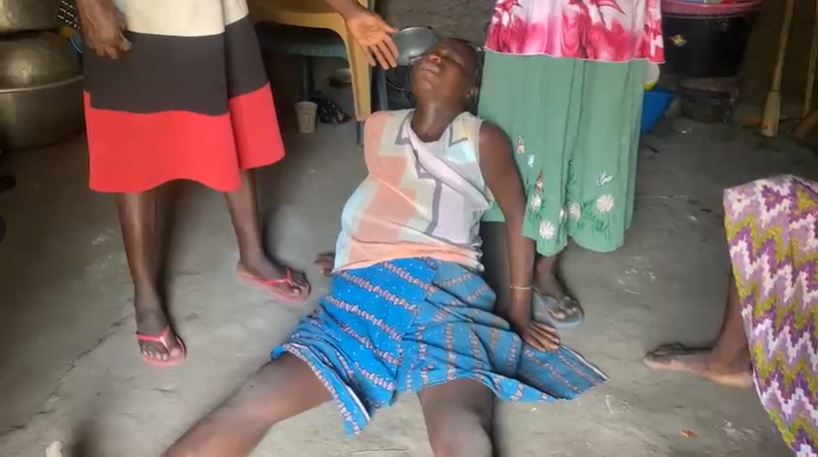
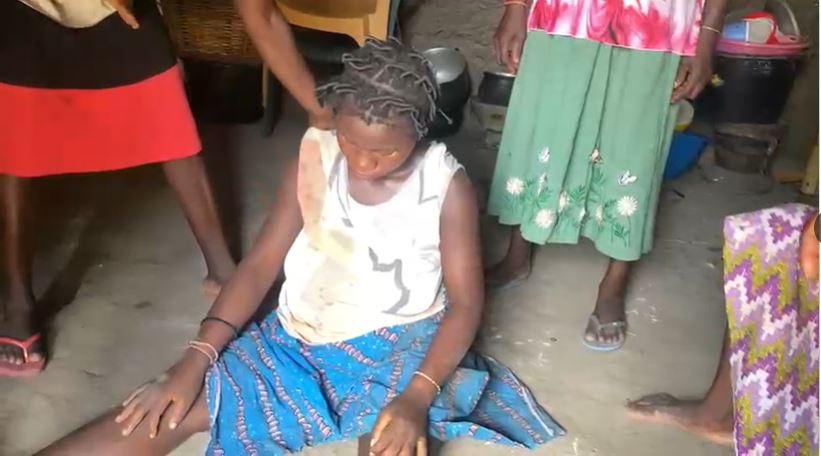
At the doorstep of a modest home, a young woman lay on the bare ground, her dress soaked in dust, her body writhing in agony. Around her, elderly women knelt, gripping her arms gently but firmly, doing all they could to ease her suffering.
The woman, identified as Seyram Avu, was in labour. For four hours, she had battled intense contractions without access to professional medical care. Her cries of “Ageii, Ageii,” a local expression of deep pain, pierced the air, drawing the attention of neighbours who gathered, not out of curiosity, but out of concern and urgency.
A closer look by Channel One TV reporter Desmond Aggor revealed a situation that speaks volumes about the infrastructural neglect facing the community. Despite the severity of her condition, there were no ambulances, no nearby health personnel, and no accessible road to transport her swiftly to a health facility.
Instead, the women surrounding her became her only support system, offering comfort in the absence of formal care.
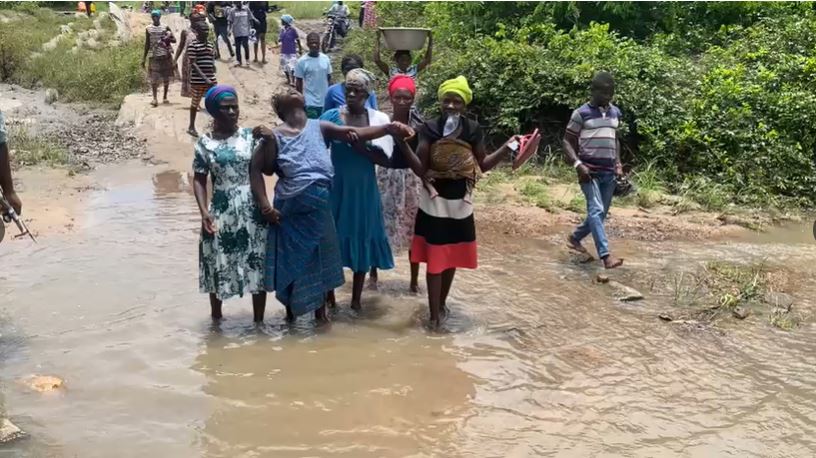
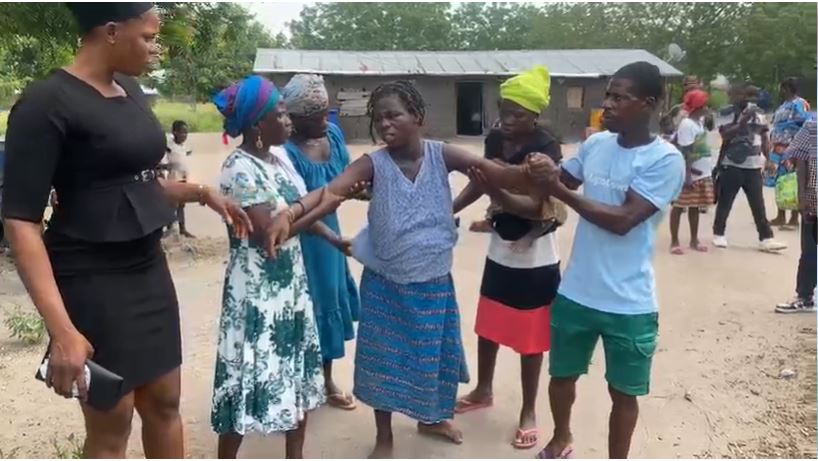
 After some time, the women helped her to her feet. Weak and trembling, she began a painful journey, each step a struggle, each pause a desperate attempt to manage the waves of labour. For more than 20 minutes, she walked in agony, supported by those around her, navigating an unforgiving path in search of help.
The journey was far from over. To reach the nearest point accessible by vehicle, they had to cross a river, an ordeal that added to her already fragile state. The trek from the village to the river alone took over 20 minutes.
It was only through the intervention of benevolent residents that a vehicle, stationed about five minutes away from the riverbank, became available to transport her to a clinic located more than 20 kilometres away.
In total, the journey to access healthcare stretched close to 30 minutes on foot, not by choice, but by necessity. For many residents, especially the vulnerable, even this is not an option. Those too weak to walk are often carried in makeshift hammocks across the same difficult terrain, an exhausting and risky alternative that underscores the absence of basic infrastructure.
 In Mefe Agorkpoe and surrounding communities, this is not an isolated incident. It is a lived reality. Pregnant women in labour, the sick, and the elderly routinely endure these perilous journeys in a desperate bid to access healthcare. With no proper roads and limited transport options, the path to survival is often paved with pain, uncertainty, and delay.
The story of Seyram Avu is not just about one woman’s struggle; it is a reflection of a wider systemic gap. It highlights the urgent need for government intervention in road construction, transportation access, and healthcare delivery in remote parts of the country.
Until these gaps are addressed, residents will continue to walk through pain, hoping each step brings them closer to help and not further from hope.
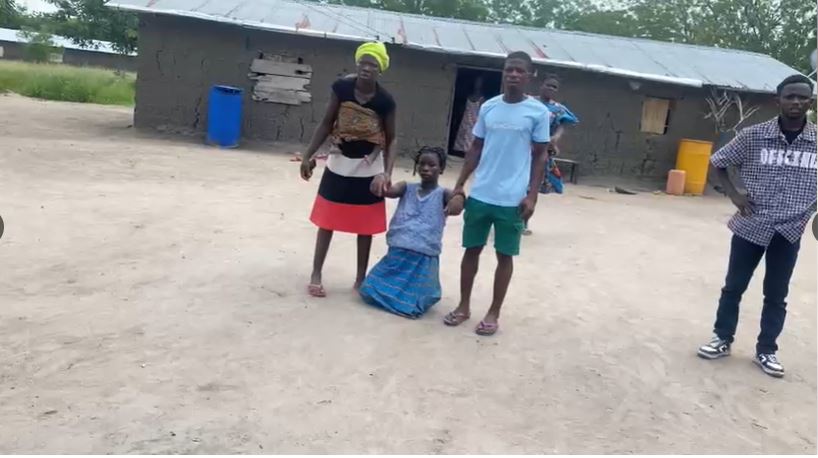
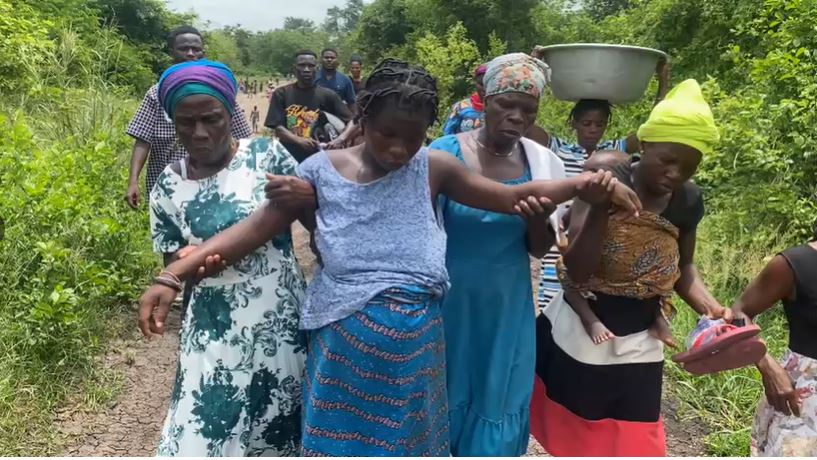
Residents of Mefe Agorkpoe and nearby communities in the North Tongu District are facing severe healthcare access challenges, with the nearest facility over 20 kilometres away.
A 16-year-old, Seyram Avu, was forced to walk in labour for over 20 minutes before residents… pic.twitter.com/i1yshXZHc3
— CITI FM 97.3 (@Citi973) April 14, 2026