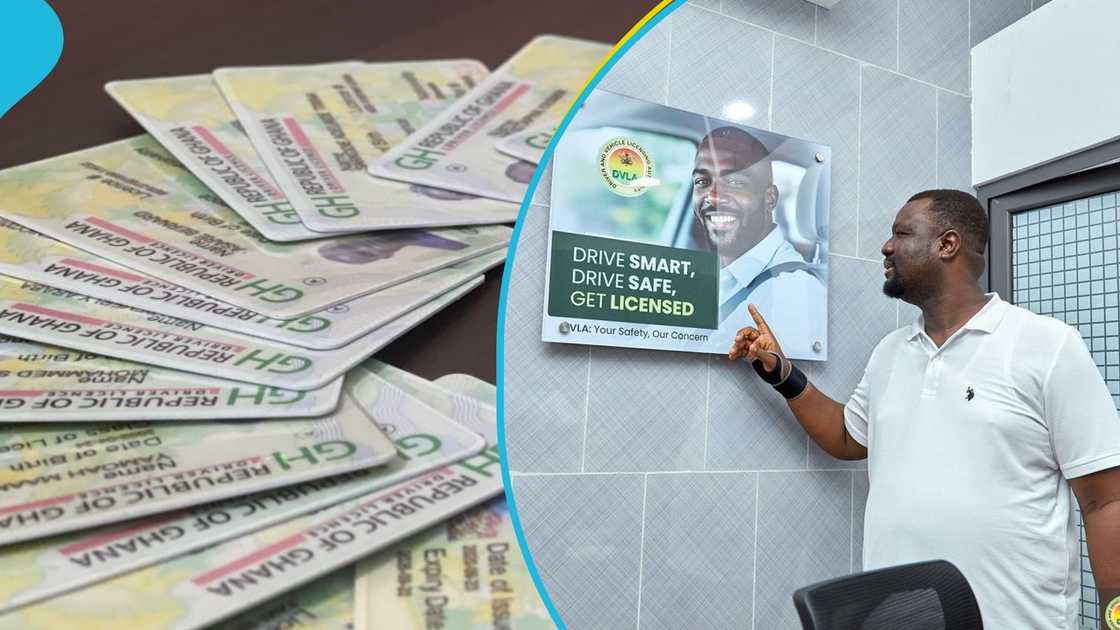
Securing a driver’s license in Ghana has evolved significantly over the years, transitioning into a digitized, biometric-secured process managed by the Driver and Vehicle Licensing Authority (DVLA).
Whether you are a first-time driver, an expatriate settling into the country, or a dual citizen returning home, the DVLA has streamlined its protocols to align with international standards.
Here is a comprehensive breakdown of how to acquire a driver’s license in Ghana under the current system, divided into three categories: for nationals, foreigners, and dual citizens.
Part 1: Acquiring a License as a Ghanaian National
For local citizens, the journey from a learner to a fully certified driver is governed by Law L.I. 2180, which mandates a structured pathway of education, medical vetting, and standardized evaluation.
1. Meet the Age and Identity Requirements
The minimum age to obtain a private passenger car license (Class B) is 18 years, while heavy-duty and commercial licenses (Classes C, D, and F) require the applicant to be at least 25 years old. The foundational requirement for any licensing transaction is the presentation of your Ghana Card, which the DVLA uses to verify your identity against the National Identity Register.
2. Complete a Mandatory Eye Test
You can no longer take your vision test at the DVLA office. Applicants must undergo an eye examination at a DVLA-accredited third-party optical center or eye clinic. This ensures that visual pathologies are identified by certified optometrists before you get behind the wheel.
3. Enroll in a Certified Driving School
First-time applicants must complete a mandatory 48-hour training course at a DVLA-certified driving school. These schools provide a regulated syllabus balancing theoretical knowledge of the Ghana Highway Code with practical vehicle handling.
4. Pass the DVLA Examinations
Upon completing your driving school curriculum, you must pass a Computer-Based Test (CBT) covering road signs, traffic rules, and defensive driving, requiring a minimum passing score of 70%. Successful candidates then take a practical driving test with a DVLA instructor in both controlled site conditions and real-world traffic.
5. License Issuance
Once passed, you will receive a temporary “cover note” while your biometric smart card is processed, which typically takes two to four weeks. For expedited processing, applicants can utilize the DVLA’s Premium or Prestige services offered at “Ultra Centres,” which dramatically reduce wait times.
Part 2: Driving and Acquiring a License as a Foreigner
Ghana accommodates international travelers and expatriates with rules that differentiate between short-term visits and long-term residency.
Short-Term Visitors (Up to 90 Days) Tourists and short-term visitors can legally drive in Ghana using their home country’s driver’s license, provided it is accompanied by an International Driving Permit (IDP), generally the 1949 Geneva Convention version. This privilege is strictly capped at 90 days.
Long-Term Residents (Over 90 Days) Foreigners staying beyond 90 days are legally regarded as residents and must convert their foreign license to a Ghanaian one. The conversion process bypasses the 48-hour driving school requirement but involves strict documentation:
• Non-Citizen Ghana Card: You must first acquire a Non-Citizen Ghana Card from the National Identification Authority (NIA), which costs $120.
• Document Authentication: Your foreign license must be authenticated by the issuing authority or your country’s embassy in Ghana.
• Translation: Licenses in languages other than English must be translated by the Ghana Institute of Languages or a state university.
• Clearance & Testing: You must provide proof of residency or a work permit, obtain conversion approval from the DVLA, take the mandatory eye test at an accredited clinic, and occasionally pass a road signs test.
Part 3: Acquiring a License as a Dual Citizen
The licensing protocol for dual citizens was largely shaped by the landmark Supreme Court ruling in Asare v. Attorney General (2012).
Treated as Sole Citizens
The Supreme Court ruled that dual citizens possess all inherent rights of citizenship by operation of the constitution and do not require a mandatory “Dual Citizenship Card” to exercise their rights. Therefore, if you are a dual citizen, you follow the exact same procedural roadmap as a sole Ghanaian citizen. You simply use your standard Ghana Card as your primary identity document to apply for or renew your driver’s license.
The Foreigner Exception
It is important to note that if a dual citizen chooses to exclusively use their foreign passport and foreign identity while in Ghana, they will be subjected to the protocols for foreigners. In that scenario, they would be required to obtain a Non-Citizen Ghana Card and adhere to the 90-day IDP limit before converting their license.
Frequently Asked Questions (FAQs)
Q: How much does it cost to get a new driver’s license?
A: As of the latest fee structures, a standard New Driving License for Category B (passenger cars) costs GHS 565.00. If you opt for the expedited Prestige service, the cost is GHS 935.00. Converting a foreign license costs GHS 487.00 for the standard service or GHS 842.00 for Prestige.
Q: How often must I renew my Ghanaian driver’s license?
A: Currently, driver’s licenses must be renewed every two years from the date of issue. This includes taking a mandatory eye test for every renewal cycle.
Q: What happens if I fail to renew my license on time?
A: The DVLA implements a strict delinquency penalty structure. If you are late by 1 to 6 months, an additional fee of GHS 77.00 applies. This penalty scales up the longer the license is expired, reaching GHS 277.00 for licenses expired for 4 years or more.
Q: Can I skip driving school if I already know how to drive?
A: No. Under the current legislative framework, every candidate applying for a first-time driver’s license in Ghana must complete a 48-hour course at a DVLA-certified driving school before they are eligible to take the DVLA computer-based and practical tests.
Q: Does the DVLA issue smart plates for cars?
A: Yes. Under the 2026 License Plate Reform, the DVLA introduced smart plates embedded with Radio Frequency Identification (RFID) microchips, acting as a “digital passport” to prevent cloning and to allow remote monitoring by police and road cameras. Furthermore, license plates now belong to the individual owner rather than the vehicle