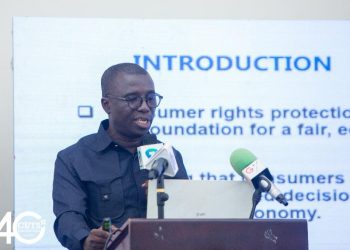
I recently had the honour of being invited by the Ghana Chamber of Mines to lead a strategic session on a topic that is rapidly redefining corporate leadership: Public Relations in 2026 and its implications for Ghana’s mining industry.
The timing could not have been more appropriate. Mining has become one of the most talked-about sectors in both local and international media. This attention is largely driven by Ghana’s status as a leading gold producer in Africa, coupled with record-high global gold prices. As the value of Ghana’s mineral resources rises, so too does scrutiny of the sector.
For an industry often caught between its economic importance and complex public perceptions, the rules of reputation management have fundamentally changed. Deepened digital connectivity, evolving societal expectations, and global visibility mean that traditional PR approaches are no longer sufficient.
New media is controlling the narrative
The era when traditional media served as the sole gatekeeper of public narrative is over. While newspapers, radio, and television still hold influence, they no longer control the conversation. Today, narratives are shaped in real time by communities, activists, employees, and everyday citizens.
With over 25 million Ghanaians online, the volume of information is unprecedented. Ghana ranks among the leading countries globally for social media engagement, creating a highly dynamic and participatory media environment. This has given rise to what can be described as “social tribes,” digital communities built around shared interests and often led by micro-influencers who command significant trust. For mining companies, this means that a single viral post from a local community member can carry more weight than a carefully crafted press release.
Crisis is becoming constant
Too much to share. Everyone needs attention with many people connected. Crisis communication is no longer reactive. It is a permanent state of readiness. Issues now emerge from anywhere, often through “citizen journalism”, bloggers, content creators, and firsthand accounts shared online. These incidents can escalate into national crises within hours.
What makes modern crises particularly challenging is their decentralised nature. There is no single source to address, no single narrative to correct. Instead, multiple conversations unfold simultaneously across platforms.
To respond effectively, mining companies must invest in real-time listening tools and rapid response systems. More importantly, PR is evolving beyond tracking mentions to understanding sentiment. Through tools powered by Natural Language Processing (NLP), organisations can map emotions, identifying whether public reactions are driven by fear, anger, distrust, or hope.
From SEO to GEO
As Artificial Intelligence becomes the primary interface for information discovery, we are moving from Search Engine Optimisation (SEO) to Generative Engine Optimisation (GEO). In practical terms, this means content must now be structured not only for search engines like Google but also for AI systems that synthesise and deliver answers directly to users.
For mining companies, this has profound implications. When an AI tool is asked about the environmental or social impact of a mining operation in Ghana, the response will be drawn from available digital data. If a company has not established a credible, transparent, and authoritative digital footprint, the narrative may be shaped by incomplete or biased third-party sources. Owning the digital narrative is now a strategic necessity.
The rise of digital newscards
Another defining shift is the evolution of content formats. In an age of shrinking attention spans and mobile-first consumption, long-form press releases are increasingly ineffective.
Enter the “newscard,” a concise, visually driven format designed for rapid consumption. Newscards combine bold headlines, key data points, and simple visual elements to communicate complex information quickly and clearly.
With millions of Ghanaians consuming content on mobile devices daily, this format is particularly effective in cutting through digital noise. For mining firms, newscards offer a powerful way to communicate operational updates, sustainability initiatives, and community impact in a way that is accessible and shareable.
Intense international media coverage
Ghana’s mining sector is now under constant international observation. Global media outlets such as Bloomberg, Reuters, and the Financial Times of the UK are no longer focused solely on gold output or commodity prices. Increasingly, they are analysing governance standards, regulatory consistency, environmental performance, and community relations.
This means that local actions can have global consequences. A community dispute in a remote mining area can quickly become an international headline, influencing investor confidence and stakeholder trust.
Mining companies must therefore operate with a global communications mindset, ensuring that their practices and narratives can withstand international scrutiny at all times.
Wrapping up
Ultimately, the future of public relations in Ghana’s mining industry comes down to one defining principle: trust. Trust and credibility are now the most valuable assets any mining company can hold. Public Relations is no longer a support function brought in during crises—it is a strategic core of the business.
Simple advice: Those who fail to shape their narrative risk losing control of it entirely.
About the Writer
Ekow Quandzie is a Communications Executive with 14 years of experience in Public Relations, Entertainment, Media, and Journalism. He is the Lead Curator of the World Public Relations Day Festival, a series of events uniting PR professionals around a shared agenda, shaping a deeper understanding and utilization of Public Relations. Ekow is currently the Head of Public Relations and Sustainability Lead at Global Media Alliance, a leading PR Agency in Ghana.