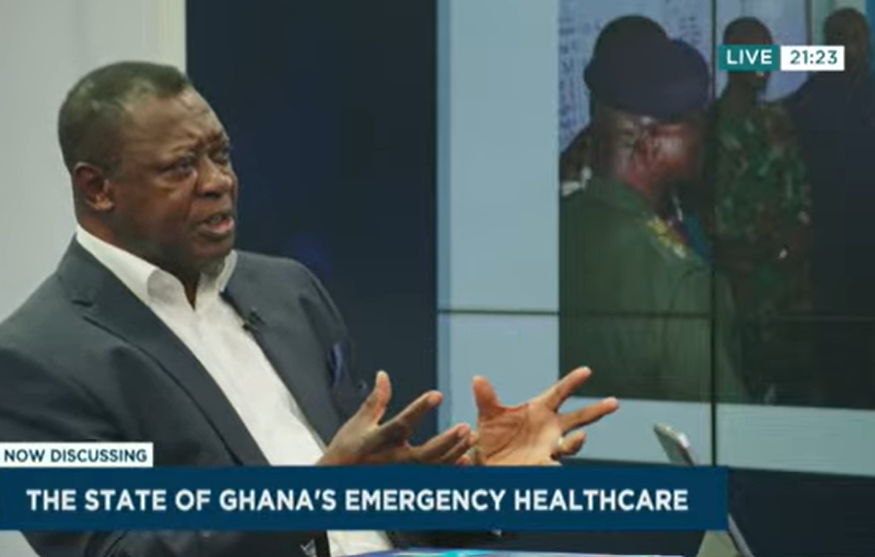
Prof. Agyemang Badu Akosa, Chairman of the committee that investigated the death of engineer Charles Amissah, has defended the findings of the report, insisting that the team strictly worked within its terms of reference and did not exceed its mandate.
His comments come amid public and professional debate over the committee’s conclusions, with some stakeholders questioning the interpretation and scope of the report.
Speaking on Channel One TV’s The Point of View on Wednesday, May 20, Prof. Akosa said the committee’s work was guided by two clear objectives set by the Ministry of Health.
He explained that the team focused on establishing the cause of death and examining the circumstances surrounding the denial or delay of emergency care.
“…..What we did was to respond to the two major objectives we were set: a comprehensive, independent assessment of the cause of death and the reasons for the denial,” he said.
The committee’s report, submitted earlier in May 2026, found that Mr Amissah’s death followed a motorcycle accident in February and was largely due to failures in emergency response across multiple health facilities.
It concluded that the victim died from exsanguination, or severe blood loss, caused by a deep upper arm injury that damaged major blood vessels. The report further stated that timely emergency intervention at various stages could have saved his life.
According to the findings, the patient was taken to the Police Hospital, the Greater Accra Regional Hospital and the Korle Bu Teaching Hospital but did not receive immediate stabilisation at any of the facilities. He was later pronounced dead after being moved between hospitals.
The report also highlighted gaps in ambulance care, delays in triage and weak coordination between emergency units, describing the outcome as avoidable.
However, publication of the findings has generated debate within the medical community, with some stakeholders arguing that the committee’s language and conclusions risk being interpreted as a judicial determination of guilt.
Despite the controversy, Prof. Akosa maintains that the committee acted strictly as a fact-finding body and confined itself to its assigned mandate, leaving any disciplinary or legal processes to the appropriate regulatory institutions.