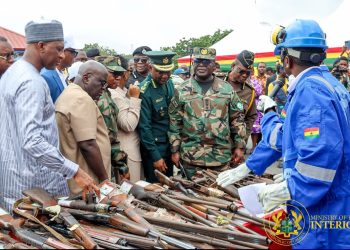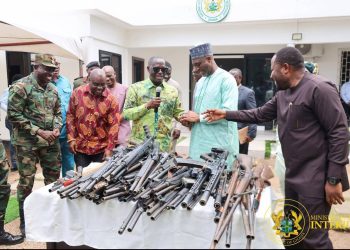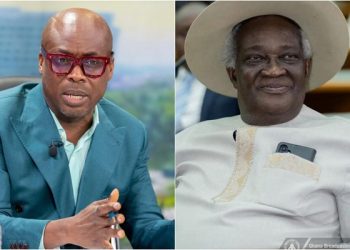
The National Commission on Small Arms and Light Weapons has defended its decision to destroy thousands of seized illegal weapons instead of reselling or reallocating them, insisting the move is required under Ghanaian law and ECOWAS regulations.
Executive Director of the Commission, Adam Bonaa, said all confiscated firearms undergo a strict verification and tracing process before they are marked for destruction to ensure they never return into circulation.
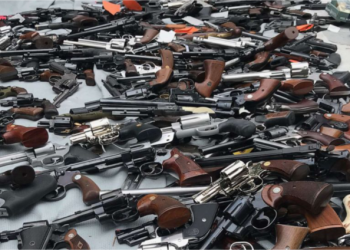
This comes after the commission announced plans to destroy over 4,000 illegal weapons collected through a nationwide amnesty exercise as part of efforts to reduce the circulation of illicit arms and strengthen national security.
Speaking on the upcoming destruction exercise on Citi Eyewitness News on Monday May 25, Mr. Adam Bonaa explained that the weapons include guns seized from armed robbers as well as firearms intercepted at airports, seaports and land borders.
According to him, every seized weapon is carefully documented and traced to determine its origin before destruction is approved.
“When weapons are seized, there has to be arrest, prosecution and then the weapons are officially handed over to the Small Arms Commission because we have the mandate to destroy them,” he said.
He explained that the Commission first marks and records all weapons in a database before they are destroyed to prevent any possibility of the firearms resurfacing in criminal activities.
“The expectation is that once the weapon is destroyed, that weapon is dead. It should never be resuscitated or resurrected and used in any form of crime,” he stated.
Mr. Adam Bonaa disclosed that thousands of weapons surrendered during the nationwide gun amnesty exercise are currently being processed, with some earmarked for regularisation and others for destruction.
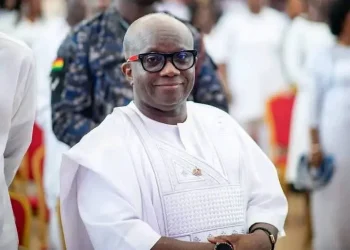
He said the Interior Minister, Muntaka Mohammed Mubarak, will officially announce the final number of weapons to be destroyed after the verification process is completed.
The Commission is expected to hold a ceremonial destruction exercise either on June 25 or July 9.
Responding to suggestions that some of the seized firearms could be sold legally or handed over to security agencies for use, Mr. Bona said the law does not permit such actions.
He cited the ECOWAS Convention on Small Arms and Light Weapons and Ghana’s existing laws, which require illicit weapons confiscated by the state to be destroyed.
“At the moment, our laws are clear that these weapons must be destroyed,” he said.
He further noted that many of the seized weapons had been used in violent crimes, including murders and robberies, making their destruction necessary for public safety.
“Some of these weapons are bloodied. They’ve been used to commit murders and all manner of crimes,” he added.