


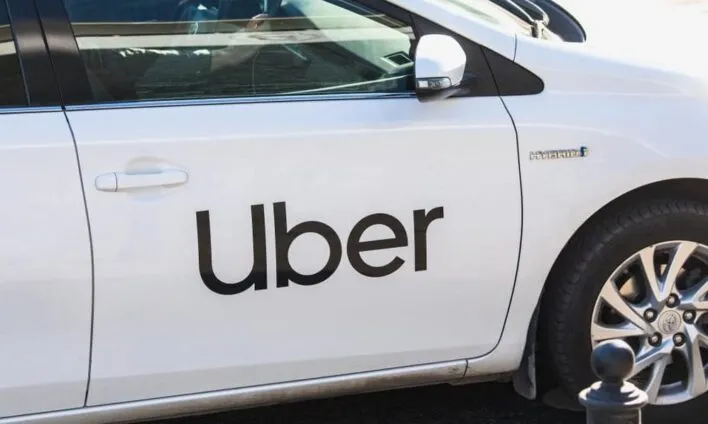
When Uber launched in Ghana on June 8, 2016, it felt less like a commercial transport service and more like a breath of fresh air. For riders, it introduced unprecedented safety, upfront pricing, and absolute convenience. For traditional taxi drivers, it was a wake-up call. And for those of us who stepped up as pioneer drivers, it was a source of pure pride and sustainable livelihood.
I started driving on Uber in February 2018. Looking back, that era feels like a different world. My riders didn’t feel like random economic transactions; they felt like old friends. The atmosphere inside my small Daewoo Martiz was defined by mutual respect and genuine human connection. The days when a passenger would look at me and say, “Edem, why don’t you park the car and let’s have a drink?”. My very first time stepping into Honey Suckle in Accra was entirely the courtesy of a rider.
A rider makes a food stop and returns with an extra pack of food for you.
I remember I drove a complete stranger from Dansoman to a shrine in Ada in the dead of night without a second thought. I took that risk because I was happy behind the wheels.
Today the ride-hailing space in Ghana has degraded into an ecosystem of resentment, desperation, and gridlock. Drivers are no longer smiling behind the wheel; they are driving grudgingly, trapped by a lack of alternative employment options. We are all witnessing a tense, broken industry on the ground.
How did we get here?
When Uber held a functional monopoly in the early years, their algorithm and corporate policies maintained a sustainable equilibrium. The base fare was pegged at GH₵ 1.70, plus GH₵ 1.30 per kilometer and GH₵ 0.30 per minute, with a strict GH₵ 5 cancellation fee that fairly compensated drivers for their time and fuel. The price of fuel at the pumps back then hovered around a manageable GH₵ 4.12 per litre.
Then came the race to the bottom.
Taxify (now Bolt) entered the market, undercutting prices and stripping away driver-side cancellation protections to aggressively court riders. The situation hit rock bottom when Yango launched in 2019, introducing mind-bogglingly low base fares — charging as little as GH₵ 2.00 for an entire trip.
To maintain this price war, the digital platforms shifted the entire financial burden onto the hdrivers. Today, fuel prices have skyrocketed exponentially, yet the proportional rate per kilometer paid to drivers has been aggressively suppressed.
The disrespect is so high that today, drivers are not even aware what goes into the standard pricing now. Unlike the early years when a driver is fully aware of fare per kilometre and per minute. As a driver, my efforts to get this basic fact from Bolt ended with me feeling like I was asking for a top US government secret.
Day in day out, platforms squeeze drivers with commission rates that effectively hit 30% once hidden platform fees, booking fees, and “creative nomenclatures” are fully tallied.
Worse still are the predatory algorithmic punishments. If a driver rejects a financially unviable trip on Bolt, their acceptance rate is penalized, a few more refusals and you are blocked. If they accept the trip and subsequently cancel because the pickup distance makes no economic sense, they face app blocks and disciplinary penalties. Drivers are forced into a corner: accept a ride that loses you money, or face losing your livelihood. So drivers are punished even for not accepting your ride request but a rider who deceives a driver to waste his resources for ten minutes and cancels the trip bears no consequences.
The inevitable result is a driver arriving at your doorstep with a visible frown, exhausted and resentful before the journey even begins.
This is not just an economic issue; it has become a matter of public safety and national security.
When an industry suppresses its workforce to woo consumers, everyone bears the consequences. When drivers are unhappy, vehicles are poorly maintained, fatigue-related accidents rise, and vital emergency transportation disappears when citizens need it most.
When drivers work under intense mental stress and grudge, the real-world consequences can be fatal. I would cautiously estimate that one in three road accidents would probably involve a ride-hailing vehicle.
What if the algorithm hadn’t created an environment where drivers feel so suppressed?
What do we do now?
The Ministry of Transport and the National Road Safety Authority cannot remain passive spectators while multinational tech giants dictate the survival terms of Ghanaian workers.
While institutions like the DVLA and the GRA have been quick to introduce levies and taxes on the industry, there is a distinct lack of legislative frameworks to protect the industry.
We urgently need robust state intervention. Government regulation must establish a mandatory price floor per kilometer that scales dynamically with pump fuel prices, reintroduce rider cancelation fee and cap total platform commissions at a fair standard, and ban punitive algorithmic blocks on drivers who are simply exercising their right to refuse unprofitable labour.
Ten years ago, ride-hailing brought a beautiful transformation to Ghana. It can be saved, but only if we remember a foundational truth: you cannot build a sustainable service on the backs of broken, angry workers. It is time to regulate the apps and restore dignity to the Ghanaian driver.
This article is written from a driver’s perspective.
Explore the world of impactful news with CitiNewsroom on WhatsApp!
Click on the link to join the Citi Newsroom channel for curated, meaningful stories tailored just for YOU:
https://whatsapp.com/channel/0029VaCYzPRAYlUPudDDe53x
No spam, just the stories that truly matter! #StayInformed #CitiNewsroom #CNRDigital