



Water they say is life, a simple necessity many people depend on every single day without a second thought. It flows through taps for cooking, bathing, washing and drinking, sustaining homes and communities alike. But in Gbetsile, a community in the Kpone-Katamanso Municipality, the absence of water has turned daily survival into a painful struggle.
For months, residents have lived with dry taps, forcing families, especially women and children, to walk long distances in desperate search of water. It was during one of these desperate searches that six-year-old Abi lost her life.
What should have been an ordinary Sunday morning for the little girl turned into a tragedy that has left an entire community in mourning. Abi had only stepped out to fetch water so she could bathe and prepare for church. Instead, her search ended in heartbreak after she reportedly fell into an uncovered septic tank near a neighbour’s house.
Now, behind the grief and tears of her family lies a painful question many residents are asking: should a child have to die simply because a community has no water?
For the people of Gbetsile, life without water has become a daily nightmare. Residents say for nearly five months, not a single drop of water has flowed through their taps. What used to be a normal part of life has now become a constant struggle for survival.
Every morning, women and children are seen carrying gallons and buckets through dusty roads in search of water from nearby communities. Some walk long distances under the scorching sun, while others spend hours moving from house to house hoping to get just enough water for cooking, bathing and washing.
The situation has become so severe that many families have resorted to using sachet water for domestic chores. Not because they can afford it, but because they simply have no choice. For struggling families, buying sachet water to cook or bathe has become an added burden on already difficult living conditions.
Residents say the crisis has affected almost every aspect of their lives. Children often go to school late after spending hours searching for water, while parents struggle to maintain proper hygiene in their homes.
But amid the suffering came the tragedy that has shaken the entire community.
According to her mother, little Abi had been left at home when her mother went to the market. Wanting to prepare for church, the six-year-old reportedly went in search of water near a neighbour’s house at Liberty Estate.
Moments later, tragedy struck.
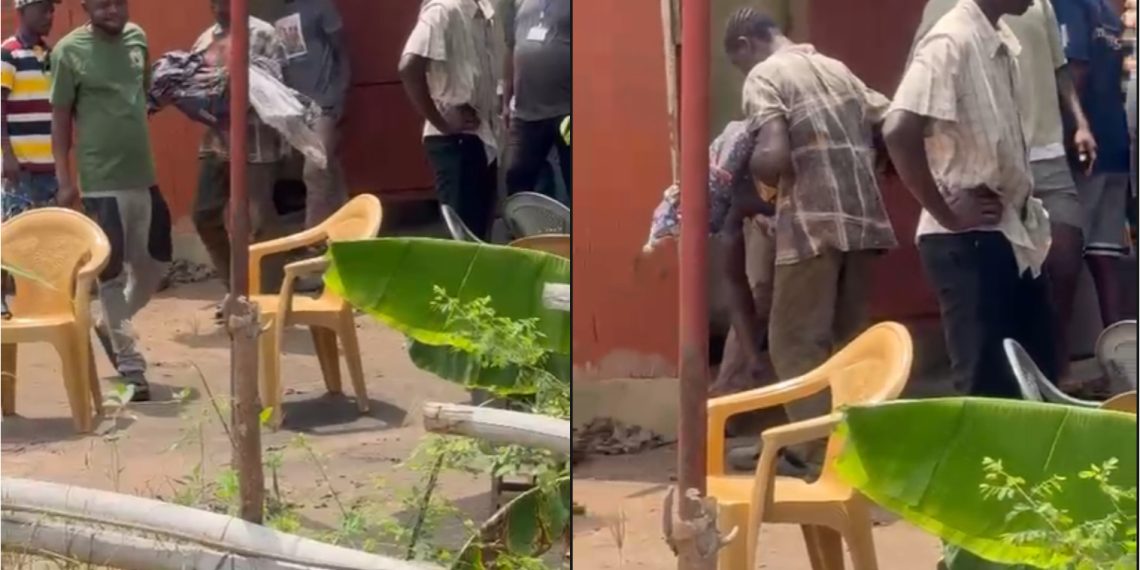
Abi was later found lifeless inside an uncovered septic tank within an uncompleted building. Residents say the concrete tank had only been covered with pieces of wood, leaving it dangerously exposed.
The heartbreaking news spread quickly across the community, drawing shocked neighbours and grieving relatives to the scene. Cries filled the air as family members struggled to accept the painful reality that the little girl they had seen only moments earlier was gone forever.
Her mother, overwhelmed with grief, could barely speak as tears rolled down her face. What began as an ordinary trip to the market had turned into the darkest day of her life.
For Abi’s siblings and loved ones, the pain remains unbearable. The dreams of a little girl full of life and innocence have been cut short not by illness or fate, but by circumstances many believe could have been prevented.
Abi’s death is a painful reminder of the dangers communities face when access to basic necessities such as water becomes a struggle. No child should risk their life simply to fetch water.
The tragedy has since renewed calls for government intervention. Community members are pleading with authorities to urgently restore water supply to the area and ensure proper safety measures around abandoned structures and septic tanks.
To them, the death of little Abi must not become just another forgotten story.
As the people of Gbetsile continue to mourn, one painful truth remains clear water is not just a necessity for life; its absence can also lead to death.