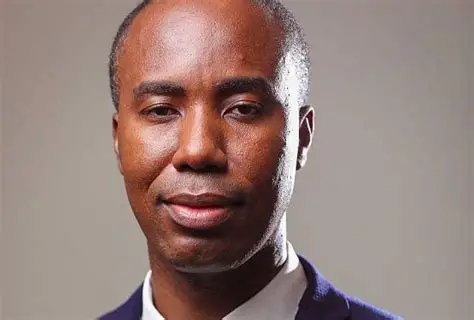
Lead investigator with the Economic and Organised Crime Office (EOCO), Frank Marshall Cromwell, has told the High Court that former National Signals Bureau Director-General, Kwabena Adu Boahene, and his wife, Angela Adjei Boateng, issued three cheques totalling US$7 million into an account jointly owned by them.
The disclosure was made during proceedings in the ongoing GHS49.1 million theft case when Cromwell was cross-examined by Deputy Attorney-General, Justice Srem-Sai.
According to the investigator, court records show that in February 2020, the accused persons made a payment of US$1.75 million to an Israeli company, ISC Holdings, for the procurement of a cybersecurity defence system.
Cromwell testified that the payment was the only transaction made from the account for the stated purpose. He further informed the court that shortly after the transaction, the accused persons instructed the bank to close the accounts used in the deal.
The investigator also told the court that the remaining funds in the accounts were subsequently transferred to another account at UMB Bank belonging to Angela Adjei Boateng.
The testimony forms part of ongoing efforts by the prosecution to trace the movement of funds and establish the circumstances surrounding the alleged misappropriation of public funds in the case.
The matter has been adjourned as proceedings continue.
Adu Boahene and his wife are standing trial on charges including stealing, conspiracy to steal, defrauding by false pretences, wilfully causing financial loss to the state, using public office for profit, collaboration to use public office for profit, obtaining public property by false statements, money laundering and conspiracy to commit money laundering.
According to the prosecution, Mr Adu-Boahene, who was the immediate past Director of NSB, unlawfully obtained GH¢49.1 million from the National Security Coordinator’s Special Operations Account and transferred the funds into the account of a private company, BNC Communications Limited.
The prosecution contends that the funds were subsequently used for the private benefit of the appellants.