


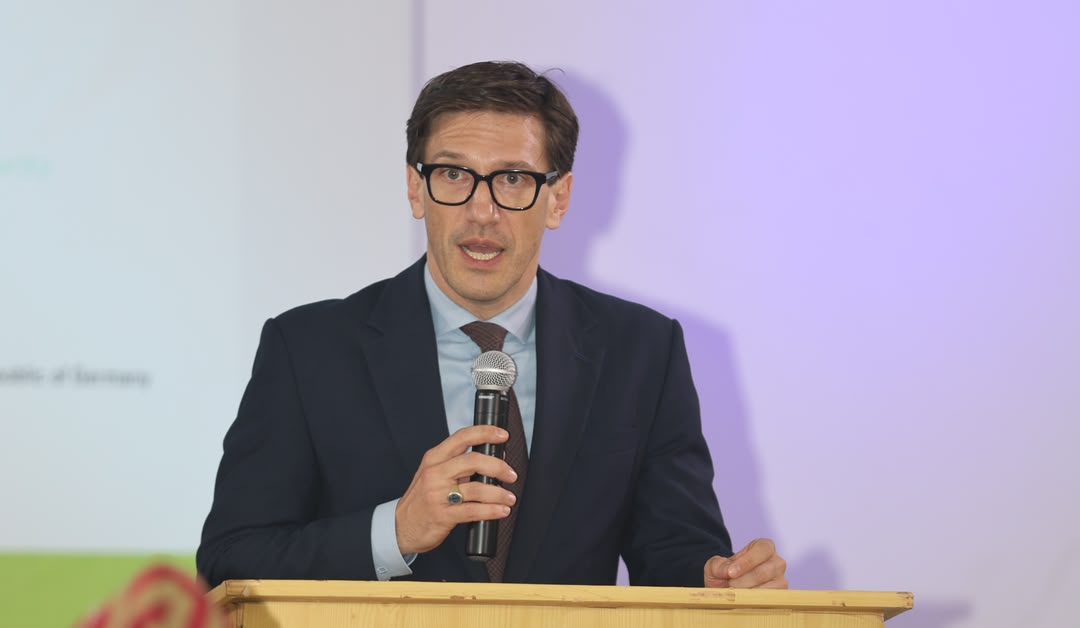
German Ambassador to Ghana, Frederik Landshoeft, has underscored the growing importance of climate change as a security concern for the future.
According to him, while climate change does not automatically lead to conflict, climate-related pressures on food and other natural resources can worsen existing vulnerabilities, heighten tensions, and make communities more difficult to manage.
Speaking at the launch of the maiden edition of Climate Talks 2026 in Tamale, he noted that building climate-security resilience requires strengthening the capacity of communities, institutions, and local actors to prevent conflict, manage risks, and foster a more peaceful and secure future.
The event brought together government officials, security institutions, traditional authorities, civil society organisations, researchers, youth representatives, and development partners to address the growing link between climate change and security in Northern Ghana.
Held under the theme, “Climate-Induced Conflicts and Community Resilience in Northern Ghana,” the dialogue focused on how environmental stress, competition over natural resources, and socio-economic vulnerabilities are affecting peace, stability, and livelihoods across the northern regions.
Northern Ghana continues to face climate-related security challenges, including farmer-herder conflicts, disputes over land and water resources, and increasing competition for natural resources. These dynamics underscore the urgent need for stronger conflict prevention mechanisms, improved resource governance, and enhanced community resilience.
“Together, we can build a better understanding of the challenges we face and the solutions that already exist within our communities. Resilience starts with knowledge, grows through communication, and succeeds through coordination,” he said.
As a longstanding partner of Ghana, Germany remains committed to supporting peacebuilding, conflict prevention, and sustainable development. Through Climate Talks 2026, the German Embassy seeks to promote evidence-based dialogue and practical solutions to emerging climate-security risks.
The Tamale session featured contributions from the Coastal State Stability Mechanism, the West Africa Network for Peacebuilding, and the Northern Regional Security Council, which shared insights on conflict prevention, resource governance, and community-level resilience building.
Climate Talks 2026 will continue throughout the year, providing platforms for sustained engagement among policymakers, security actors, researchers, civil society organisations, and local communities to strengthen Ghana’s resilience to climate-related security challenges.