Former Chairman of Parliament’s Energy and Mines Committee, Dr Kwabena Donkor, has called for the revival of the State Gold Mining Corporation as an asset-holding entity to enable Ghana to retain ownership of major mining assets while outsourcing operations to competent local contractors.
According to Dr. Donkor, Ghana’s mining industry has matured sufficiently to support a model in which the state maintains ownership of mines while private operators undertake day-to-day extraction activities.
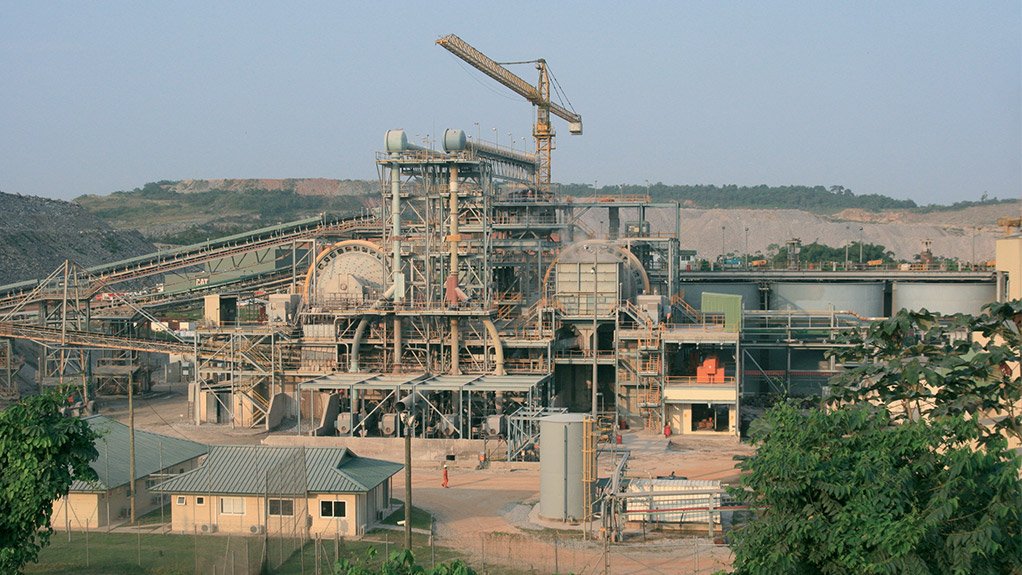
His comments come amid efforts by Gold Fields to secure a 20-year extension of its mining lease in Tarkwa ahead of the lease’s expiration in 2027. The South African mining company has operated in Ghana for more than three decades.
But Dr Donkor argued, in an interview on Thursday, June 4, 2026, that Ghana has come of age in the mining sector, noting that local contractors already carry out much of the mining work and that Ghanaian mining professionals are increasingly sought after in other countries.
As a result, he believes the country should move to reclaim greater control over its mineral assets by reviving the State Gold Mining Corporation, which previously held the Tarkwa mine before it was leased to Gold Fields.
“I strongly recommend that the previous owner, State Gold Mining Corporation, be revived. But in a limited capacity to be an asset owner and not an operator, and this is consistent with current practice,” he said.
But Dr. Donkor explained that the state-owned entity should function solely as a lease holder and asset manager, leaving mining operations to be undertaken by Ghanaian and, where necessary, foreign contractors through competitive contracts.
He noted that the model mirrors the arrangement currently used by Gold Fields, where the company retains ownership and administrative control while subcontracting much of the actual mining work.
“Gold Fields does the administration and the ownership. The actual mining operations are done by subcontractors. So the Ghanaian state can use that model,” he said.
The former Power Minister stressed that he was not advocating a return to direct state operation of mines, citing the historical challenges that contributed to the decline of the former State Gold Mining Corporation.
He recalled that the corporation’s poor operational performance was one of the reasons the Tarkwa mine was divested to private investors.
“That is why we should not go back to State Gold Mining Corporation or the Ghanaian state running the mine,” he said.
Instead, he proposed the establishment of a lean State Gold Mining Company with a workforce of no more than 50 employees, tasked with holding mining leases, developing long-term plans for mining assets, and overseeing contractual relationships with operators.
Under the arrangement, Ghanaian mining firms would undertake extraction and processing activities, while the state-owned company would retain ownership of the asset on behalf of the people of Ghana.
Dr. Donkor argued that such a structure would align with constitutional provisions that vest the country’s mineral resources in the President on behalf of the people.
Drawing parallels with Ghana’s petroleum industry, he said the state could establish a commercial vehicle to manage mining assets while leaving operations to specialist firms.
He further suggested that contractors could raise financing for mining projects using guarantees from the state-owned asset holder, with support from local and international banks, development finance institutions, and capital markets.
“Once you are mining gold, and the gold will also be used as security, you raise the funds,” he stated.
Dr. Donkor said the proposed model would allow Ghana to leverage the expertise developed by local mining companies while ensuring that ownership of strategic mineral assets remain in Ghanaian hands.
“We should get back to a situation where we can say that we have come of age as a country that exports high-quality mining labour,” he added.
His comments come amid ongoing national discussions about the future ownership and management of key mining concessions and how Ghana can derive greater value from its natural resources.