The Ghana Investment Promotion Centre (GIPC) has moved to reassure investors that Ghana remains firmly open to foreign investment in the mining sector, even as debate intensifies over the future ownership of some of the country’s strategic mineral assets.
The Centre maintains that efforts to increase Ghanaian participation in large-scale mining should not be interpreted as hostility towards foreign investors but rather as the next phase in the evolution of the country’s mining industry.
This comes amid ongoing discussions over the renewal of Gold Fields’ mining lease for the Tarkwa Mine, one of Ghana’s largest gold-producing assets. The issue has sparked national debate, with some policy groups calling for greater Ghanaian ownership of the mine when the current lease expires in 2027, while industry players warn that investor confidence could be affected by uncertainty surrounding the renewal process.
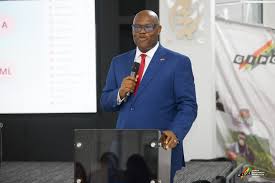
Speaking during a recent media engagement, Chief Executive Officer of the GIPC, Simon Madjie, argued that Ghana’s long mining history has created a strong base of local companies capable of playing a bigger role in the sector.
“Ghana has been mining gold for a very long time, maybe 120 years, 130 years. And throughout this period, we have seen the natural growth of Ghanaian businesses that have done well in the mining services sector. Some of them are contractors to major mining firms,” he said.
According to him, the country has reached a stage where indigenous firms should be given the opportunity to transition from providing mining services to undertaking mining operations themselves.
“So, it is only a matter of time that at some point, those that have the ability to do this mining will step up,” he noted.
Simon Madjie was, however, quick to dismiss suggestions that the growing conversation around local ownership signals a retreat from foreign direct investment.
“You would also agree with me that it doesn’t mean that the country is anti-foreign direct investment. We are pretty much pro-foreign direct investment into the mining sector,” he stressed.
He explained that government is seeking to test the capacity of Ghanaian private sector players to assume a greater role in mineral extraction after decades of state ownership and foreign-led investment.
“We’ve only gotten to a point where we want to see if Ghana’s private sector can really also take up the mandate of mining to see what the prospects will be for us.”
Describing the current period as a turning point for the industry, Madjie said Ghana is entering “that defining moment in history where we want to see Ghana’s private participation in the mining sector.”
His remarks come as government pursues broader reforms aimed at increasing local participation and value retention in the extractive sector, while insisting that Ghana remains an attractive destination for international mining capital. Recent decisions on mining leases and ownership structures have placed the balance between investor confidence and resource nationalism at the centre of policy discussions.
“Ghana has always been a place where foreign businesses are welcome,” Madjie added, signalling that any push for greater local ownership is intended to complement not replace foreign investment in the country’s mining industry.
![Archbishop of Canterbury, Sarah Mullally [seated] -Photo credit Neil Turner / Lambeth Palace](https://www.citinewsroom.com/wp-content/uploads/2026/07/ARCH-22-350x250.png)