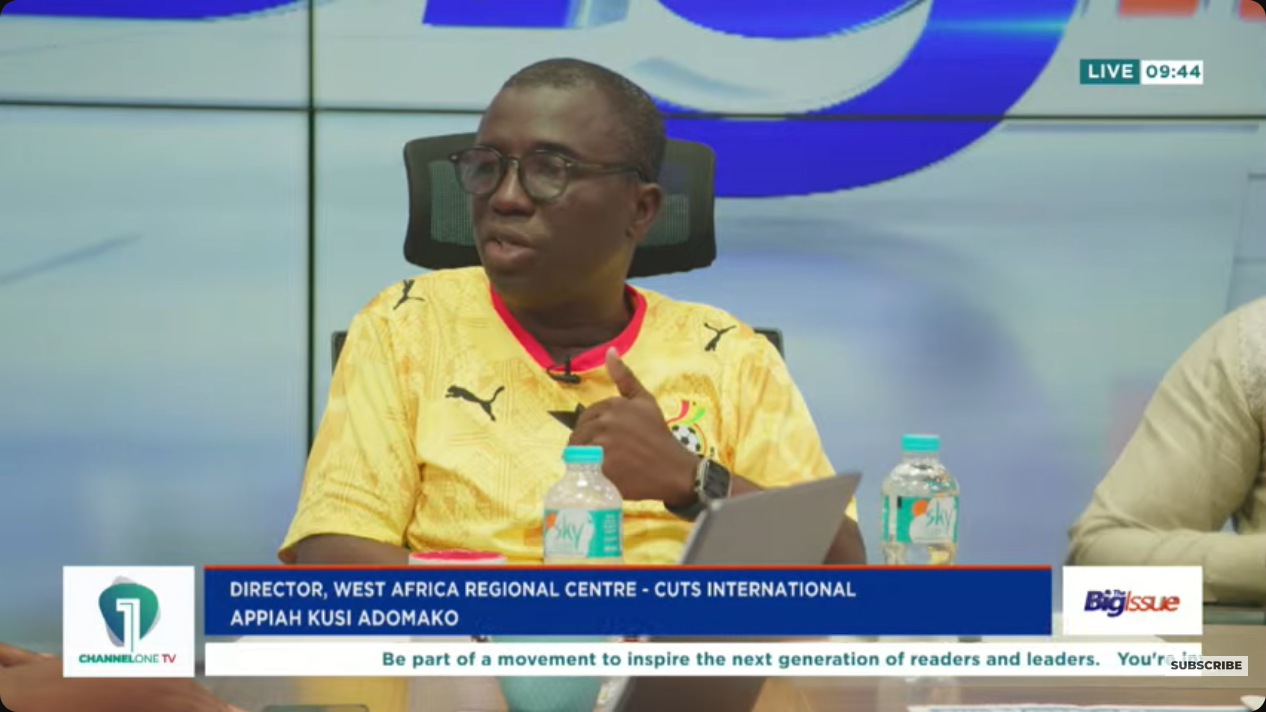
The Director of the West Africa Regional Centre of CUTS International, Appiah Kusi Adomako, has urged authorities to prioritise tackling power theft and reducing commercial and technical losses across Ghana’s electricity value chain, arguing that these reforms would have a greater impact on electricity costs than the routine adjustment of tariffs.
According to him, while quarterly tariff reviews are necessary to reflect prevailing economic conditions, the country’s broader conversation should focus on addressing inefficiencies within the power sector that continue to impose significant financial burdens.
Speaking on The Big Issue on Channel One TV on Saturday, June 27, 2026, Mr. Adomako said commercial losses remain one of the biggest challenges facing the electricity sector and called for bold reforms, including greater private sector participation in electricity billing, revenue collection, and auditing.
“Commercial losses are where we’ve not done very, very well. That is why the privatisation of ECG’s billing system, the collection of revenue, and even the auditing of institutions is very, very key,” he said.
He argued that widespread electricity theft and weak revenue collection continue to deprive the sector of much-needed revenue, forcing compliant consumers to shoulder higher electricity costs.
“There is a belief that power theft is so high, and ECG is not doing enough. If we get the private sector to audit individual facilities, people will stop cheating on tariffs. In the long run, the gains we make from identifying power theft will rather reduce how much we pay at the utility end,” he stated.
Mr. Adomako also stressed the need for greater investment in the national electricity grid to reduce technical losses, which he estimated currently stand at between 10 and 12%.
“With proper interventions and investment into the grid, we’ll be able to reduce some of our technical losses. For a developing country like Ghana, around five to seven percent would be a good target,” he said.
He maintained that while periodic tariff adjustments are largely driven by factors such as exchange rate movements and the country’s dependence on thermal power generation, long-term reforms aimed at reducing losses across the electricity value chain would help improve the sector’s financial sustainability and ease pressure on consumers.