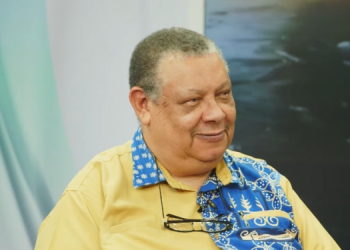
Governance analyst, Prof. Baffour Agyemang-Duah, has raised concerns over the increasing number of award schemes targeting public officials in Ghana, warning that many lack transparency, clear criteria, and public legitimacy.
Speaking on the Channel One Newsroom on Monday, June 8, he described some of the awards as questionable, particularly when they are organised in mass ceremonies recognising government appointees without clear justification.
According to him, while public officials are eligible to be recognised for good performance, the growing trend of privately organised awards raises important questions about credibility and purpose.
“Some of these awards are very questionable but more importantly public officials certainly are eligible to be awarded for good performance,” he noted.
Prof. Agyemang-Duah argued that when award schemes become widespread and primarily focused on government appointees, it creates room for doubt about their legitimacy.
He further questioned the transparency of such initiatives, stressing that organisers often do not provide clear criteria for how recipients are selected.
He also drew a distinction between awards in the creative arts and those involving public officials, arguing that the latter requires higher scrutiny due to the nature of public service.
In his view, public office is fundamentally about accountability, and therefore recognition should be rooted in transparent and verifiable performance indicators.
His comments come amid growing public debate over the credibility of awards given to state officials by private organisations, following the the Ghana Ministers of State Excellence Honours.
The ceremony has drawn mixed reactions after recognising several public officials, including the Greater Accra Regional Minister, Linda Ocloo as the Best Performing Regional Minister.
The issue has gained further attention after the Presidency directed all Ministers of State, Chief Executive Officers of state institutions, and other political appointees to refrain from accepting awards from private organisations without prior approval from the Office of the President.
The directive, issued by the Secretary to the President, Callistus Mahama, follows concerns raised over the rising trend of public officials being honoured as “best-performing” or “most influential” by organisations whose credentials and assessment criteria are often unclear.