• About Us
  • Privacy Policy
  • Terms of Use
  • Breaking News
  • Explainers
  • Listen Live
Thursday, June 18, 2026
Citinewsroom - Comprehensive News in Ghana
Advertisement
  • Home
  • News
    • Regional News
      • Ahafo Region
      • Ashanti Region
      • Bono East Region
      • Bono Region
      • Central Region
      • Eastern Region
      • Greater Accra Region
      • Northern Region
      • North East Region
      • Oti Region
      • Savanna Region
      • Upper East Region
      • Upper West Region
      • Volta Region
      • Western Region
      • Western North Region
  • Sports
    • World Cup
  • Politics
  • Business
  • Entertainment
  • Articles
  • Explainers
  • Editorials
No Result
View All Result
Citinewsroom - Comprehensive News in Ghana
  • Home
  • News
    • Regional News
      • Ahafo Region
      • Ashanti Region
      • Bono East Region
      • Bono Region
      • Central Region
      • Eastern Region
      • Greater Accra Region
      • Northern Region
      • North East Region
      • Oti Region
      • Savanna Region
      • Upper East Region
      • Upper West Region
      • Volta Region
      • Western Region
      • Western North Region
  • Sports
    • World Cup
  • Politics
  • Business
  • Entertainment
  • Articles
  • Explainers
  • Editorials
No Result
View All Result
Citinewsroom - Comprehensive News in Ghana
No Result
View All Result

Reparations must restore humanity, not just provide compensation – Prof Wole Soyinka

William NarhbyWilliam Narh
June 18, 2026
Reading Time: 2 mins read
ShareShareShareShare

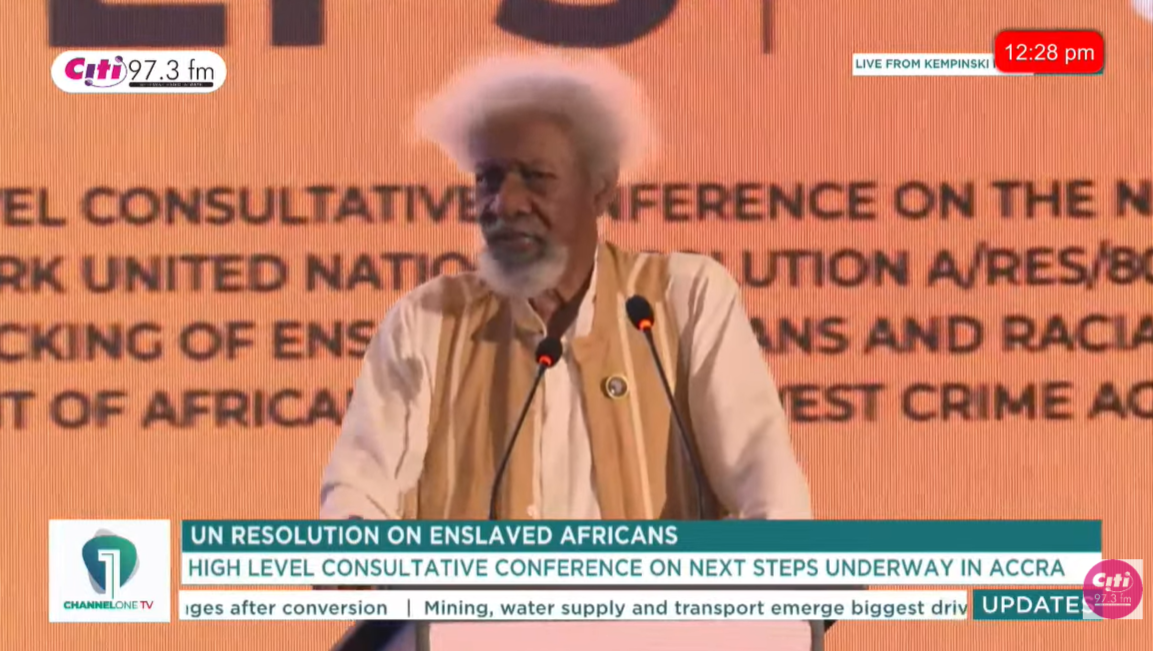
Nobel laureate and renowned Nigerian playwright Professor Wole Soyinka has called for reparatory justice efforts to move beyond financial compensation and symbolic gestures.

He argued that the deeper challenge is the restoration of humanity, dignity, and identity damaged by slavery.

Speaking at the opening of the Next Steps Conference on Reparatory Justice in Accra on Thursday, June 18, 2026, Prof. Soyinka said the legacy of the transatlantic slave trade continues to affect the psychological and cultural well-being of people of African descent and must be addressed as part of any meaningful reparations agenda.

“As that any means that enable us to recover the re-humanization collectively, even of memory, not just of the present, but even of memory is essential to the development, collective development of those who’ve been traumatized as a people by this iniquitous commodity in human beings,” he said.

Prof. Soyinka urged governments, institutions, and advocates to pursue a more dynamic approach to reparatory justice, one that extends beyond commemorative events and economic discussions.

“Let us move mentally and practically towards the dynamizing of the commemoratives which exist,” he said. “We have to move now beyond just the performances, the discussions, the rhetoric, even the economic aspects of a retrieval of an egalitarian relationship between them and us.”

The Nobel laureate argued that slavery’s impact was not limited to economic exploitation but also altered how affected communities perceive themselves and their place in the world.

“We have to recognize the fact that even our mental conditioning is involved and in the diaspora in particular,” he said.

Prof. Soyinka described the African diaspora as a critical component of the reparatory justice movement, stressing that efforts to reconnect descendants of enslaved Africans with the continent carry significance beyond symbolism.

According to him, initiatives such as the Door of Return represent opportunities to reclaim values and identities that were distorted or erased by the experience of slavery.

“It is a return to certain values, certain human values, which were distorted or simply totally wiped out of our collective appreciation of a reality of the world we inhabit,” he said.

Prof. Soyinka’s remarks came as political leaders, scholars, activists, and representatives of the African diaspora gathered in Ghana for the Next Steps Conference on Reparatory Justice, a forum aimed at advancing global conversations on reparations and addressing the enduring consequences of the transatlantic slave trade.

He argued that true reparatory justice must seek not only historical recognition and economic redress but also the restoration of the humanity and dignity of people whose lives and identities were shaped by the legacy of enslavement.
Tags: Ghana NewsNext Steps ConferenceProfessor Wole SoyinkaReparation
ShareTweetSendSend
Previous Post

DNA results show I am 46% Ghanaian – Gramps Morgan reveals

Next Post

Avoid violence or face prosecution after WASSCE – Police warn students

Related Posts

Education

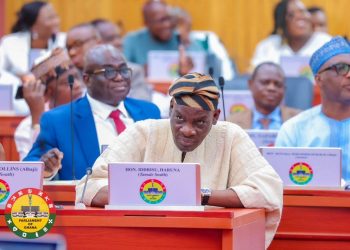
Ghana’s education sector short by up to 90,000 teachers – Haruna Iddrisu

June 18, 2026
President of the Republic of Senegal, Bassirou Diomaye Faye
Featured

Senegal President: Time to move from words to action on reparations agenda

June 18, 2026
Education

312,448 Students benefit from ‘No Fees Stress’ policy at GHC888m

June 18, 2026
General

GPHA holds sensitisation forum on environmental impact assessment permit for Keta Port project

June 18, 2026
Missing Tema West Constituency Women’s Organiser, Paulina Lamisi-Akanbodiipo
Featured

Missing Tema West Women’s Organiser’s salary still paid to family – NDC

June 18, 2026
Featured

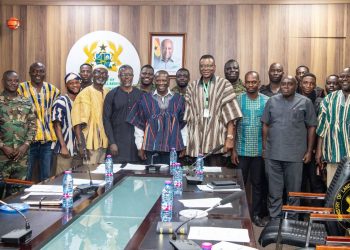
Lands Minister inaugurates 20-member taskforce to protect public lands in Greater Accra

June 18, 2026
Next Post

Avoid violence or face prosecution after WASSCE - Police warn students

ADVERTISEMENT
Citinewsroom - Comprehensive News in Ghana

CitiNewsroom.com is Ghana's leading news website that delivers high quality innovative, alternative news that challenges the status quo.

Archives

Download App

Download

Download

  • About Us
  • Privacy Policy
  • Terms of Use
  • Breaking News
  • Explainers
  • Listen Live

© 2024 All Rights Reserved Citi Newsroom.

No Result
View All Result
  • Home
  • News
    • Regional News
      • Ahafo Region
      • Ashanti Region
      • Bono East Region
      • Bono Region
      • Central Region
      • Eastern Region
      • Greater Accra Region
      • Northern Region
      • North East Region
      • Oti Region
      • Savanna Region
      • Upper East Region
      • Upper West Region
      • Volta Region
      • Western Region
      • Western North Region
  • Sports
    • World Cup
  • Politics
  • Business
  • Entertainment
  • Articles
  • Explainers
  • Editorials

© 2024 All Rights Reserved Citi Newsroom.