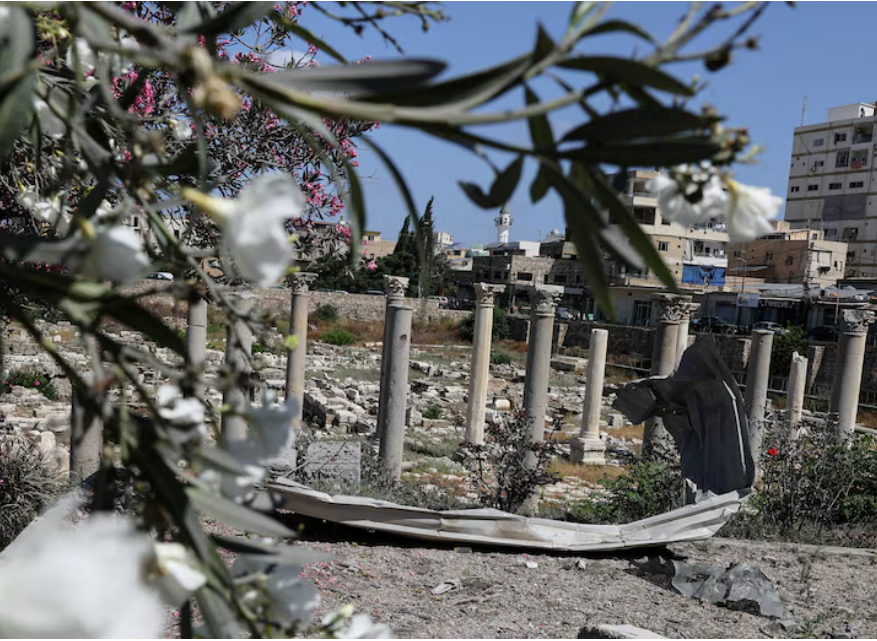
Ancient heritage sites across southern Lebanon have suffered extensive damage following months of Israeli air and ground operations targeting Hezbollah positions, according to Lebanon’s Culture Minister Ghassan Salame.
A crown was reportedly blown off an ancient column at the UNESCO-listed archaeological site in Tyre, while a pilgrimage site revered by both Muslims and Christians was destroyed in another southern town. In Nabatieh, Israeli strikes hit the Mamluk-era market, and several centuries-old border settlements were razed during the military campaign.
Minister Salame told Reuters that Israel’s nearly four-month operation has left a trail of destruction across culturally significant areas, including revered religious and archaeological landmarks. He said the full extent of the damage remains unclear as Israeli troops continue to occupy a buffer zone stretching about 10 kilometres into Lebanese territory, restricting access to affected sites.
“We cannot work under the shadow of occupation,” he said, adding that the restricted zone includes historic sites such as the medieval Beaufort Castle and several ancient villages that once hosted Christian, Shi’ite and Sunni communities alongside their places of worship.
According to Salame, entire villages have been “completely bulldozed,” while airstrikes have also hit towns outside the restricted zone, including Tyre and Nabatieh. He added that heavy bombing in Tebnin has raised concerns over possible damage to its Crusader fortress.
He stressed that Lebanon’s heritage extends beyond classical antiquities, noting that historic buildings and culturally significant structures also form part of the country’s identity.
“Heritage is not only Roman and Phoenician antiquities,” he said. “Heritage is also historic buildings, archaeological sites, and buildings with a cultural function.”
In response to Reuters, the Israeli military said it does not seek to cause excessive damage to civilian infrastructure, adding that its operations are guided by military necessity and considerations for civilian safety. It also said it takes “sensitive sites” into account and follows a strict approval process, while accusing Hezbollah of using sites such as Beaufort Castle for military purposes—an allegation Lebanese authorities deny.
Modern-day Lebanon, located at a crossroads of ancient civilisations including Phoenician, Byzantine, Mamluk and Crusader influences, is home to thousands of years of layered heritage. Tyre, nearly 5,000 years old, is among its most significant archaeological sites and is recognised for its Roman ruins and ancient island fortress later connected to the mainland by Alexander the Great.
Much of the city has now been left in ruins following the recent fighting, with damaged columns, shattered mosaics and debris scattered across the archaeological landscape. Protective barriers installed around the site were reportedly displaced by blast impacts.
“It is as if it all exploded from underneath, as if an earthquake hit it,” said Adnan Istanbouli of Lebanon’s antiquities department, while standing near a damaged Roman mosaic.
Local officials have warned that internationally protected heritage sites are increasingly being drawn into conflict zones. Alwan Charafeddine, deputy mayor of Tyre, said such locations should never be targeted in any military confrontation.
UNESCO has expressed concern over damage to World Heritage Sites in southern Lebanon, including Tyre, which is currently under enhanced protection status. The organisation has also raised alarm over reported damage to other historic sites and called for the protection of cultural property during armed conflict.
Lebanese authorities have since called for Tyre to be placed on UNESCO’s List of World Heritage in Danger, arguing that ongoing hostilities risk irreversible loss of cultural heritage.
Culture Minister Salame warned that the pattern of destruction could result in the permanent erasure of centuries of history, describing what he called a systematic campaign affecting villages, towns and heritage sites across the south.