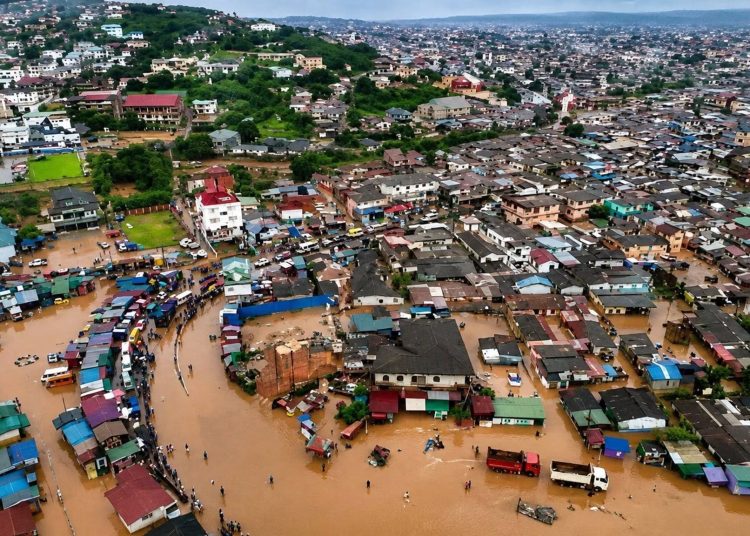
Head of Drainage at the Ministry of Works, Housing and Water Resources, Richard Kofi Amekor, has attributed the poor performance of drainage systems during heavy rains to widespread encroachment on wetlands, ponds and lagoons, as well as the indiscriminate disposal of waste into drains.
Speaking on Citi FM’s The Big Issue on Saturday, July 4, Mr. Amekor explained that many natural water retention areas that help manage stormwater have been reduced in size and capacity due to human activities.
According to him, Greater Accra currently has about 10 drainage basins, including the Kasoa-Okrudu basin, with each basin containing wetlands, ponds and lagoons that play a critical role in absorbing and storing excess water during rainfall.
“There are a lot of contributing factors to it. In all the basins there are these micro ponds. In Greater Accra we have about nine basins, even now it is 10 because of the Kasoa Okrudu. So in all these basins that we have there are micro ponds within, there are these pockets of wetlands also within and then the major one which is the lagoon,” he said.
He noted that many of these wetlands and lagoons have been heavily encroached upon, reducing their ability to contain large volumes of water during periods of intense rainfall.
“What happens is people have encroached on these wetlands within these ponds. Even the lagoons that we have in the outlets, they are all heavily encroached so they are diminished. They have reduced in capacity and even in size, so when it rains heavily you will think that the drains are inadequate.”
Mr. Amekor added that waste dumped into drains further worsens the situation by reducing the carrying capacity of drainage channels.
He blamed the shrinking size of wetlands and water retention areas on the actions of individuals who illegally acquire and develop protected lands.
“It is as a result of the behaviour of some people. At some places they even push it to direct the course. You could remember that some years back because of the landguard issues, you go to places where you are to enforce the law, the local authorities even don’t have the power to do that because everybody is afraid.”
He said wetlands and buffer zones have been sold and developed in some areas, leading to changes in the natural flow of water and increasing flood risks.
Mr. Amekor disclosed that engineers working with local assemblies are aware of many of the encroachments but often face challenges in enforcing regulations.
“We work closely with the assemblies and we know what is happening there. These engineers, they go in there and I can tell you majority of them, they relocate.”
He expressed optimism that the government’s anti-flood task force would help tackle the problem through stronger enforcement measures.
“So it is a whole lot of things. That is why I said I am a bit relieved with the taskforce this government has formed. The language we understand as Ghanaians. The taskforce in one way or the other might reduce the indiscipline a bit,” he added.