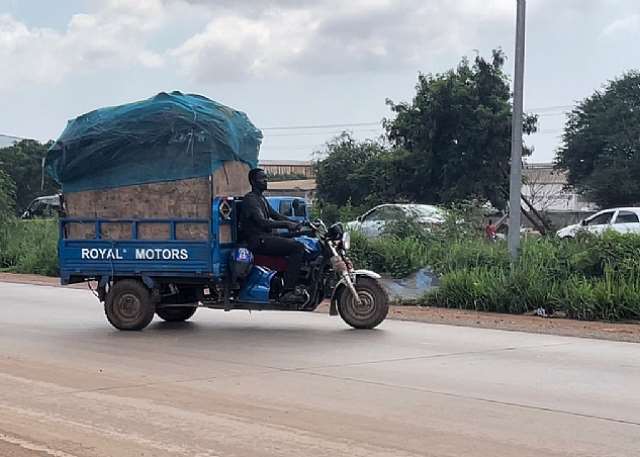
The Driver and Vehicle Licensing Authority (DVLA) says more than 90% of tricycles, popularly known as aboboyaa, operating in Accra do not have side mirrors, raising concerns about their roadworthiness and compliance with basic safety requirements.
Stephen Attu, a representative of the DVLA, disclosed this in an interview on the Citi Breakfast Show on Tuesday, July 22, 2026, during a discussion on the regulation of tricycles.
“I can tell you based on observation that over 90% of them don’t even have mirrors,” he said, adding, “I wouldn’t dispute that.”
Mr Attu, however, said tricycles are subject to roadworthiness inspections, just like other vehicles, and are required to meet minimum safety standards before they are permitted to operate on public roads.
He said the DVLA’s technical officers inspect tricycles for essential safety features, including functioning headlamps and good tyres.
“They equally need to have headlamps; they equally need to have good tyres under them. They must be in pristine condition to be able to function on our roads,” he said.
When asked whether the DVLA had the authority to remove unroadworthy tricycles from the roads, Mr Attu said the Authority conducts compliance exercises but works with the Motor Traffic and Transport Department (MTTD) of the Ghana Police Service where arrests are required.
“What we do is that in order to be able to cause an arrest, you have to do that in collaboration with the MTTD,” he said.
Mr Attu also acknowledged challenges in monitoring the compliance of motorcycles and tricycles, particularly because many of them were registered manually under the previous system.
He said the DVLA was undertaking reforms to improve monitoring and enforcement, including the introduction of a new registration system and smart number plates embedded with Radio Frequency Identification (RFID) technology.
The reforms, he said, are expected to strengthen the Authority’s ability to track vehicles and enforce road safety regulations.