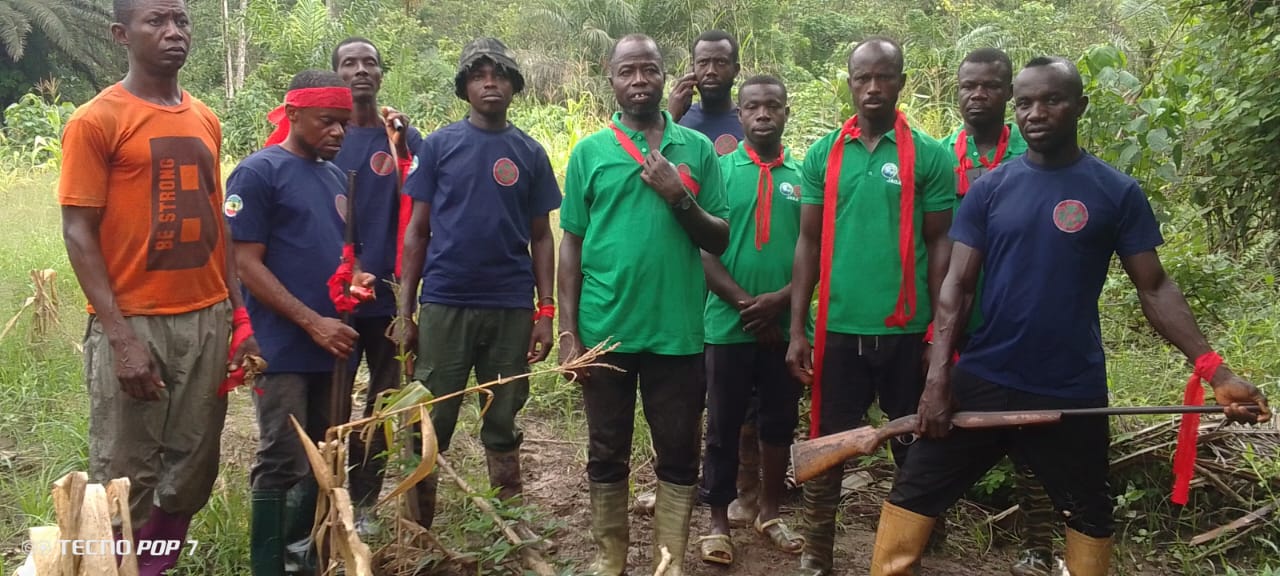
The Watch Committee of the Jema Anti-Galamsey Advocacy (JAGA) in Jema, Aowin Municipality, Western North Region, carried out two major border-monitoring operations on Tuesday, July 14, and Thursday, July 16, reaffirming the community’s unwavering zero-tolerance policy against illegal mining (galamsey).
The first operation was undertaken jointly with forest guards responsible for the Jema-Assemkrom Forest Reserve.
During routine patrols of Jema’s allodial lands, JAGA volunteers observed heavy pollution in the last river (Ehole) separating Jema from Boinso. Suspecting illegal mining activity upstream, the volunteers alerted officers of the Forestry Commission.
A joint team of six JAGA volunteers and two forest guards subsequently trekked more than 10 kilometres through dense forest to trace the source of the contamination. After hours of searching, the team observed miners—believed to be Ghanaian nationals—operating across the international boundary on the Côte d’Ivoire side of the forest.
According to members of the patrol team, illegal miners working in the area avoid crossing into Jema because of the community’s sustained resistance to galamsey and its active volunteer surveillance. The incident nevertheless underscored the constant pressure facing Jema’s borders and the need for continued vigilance.
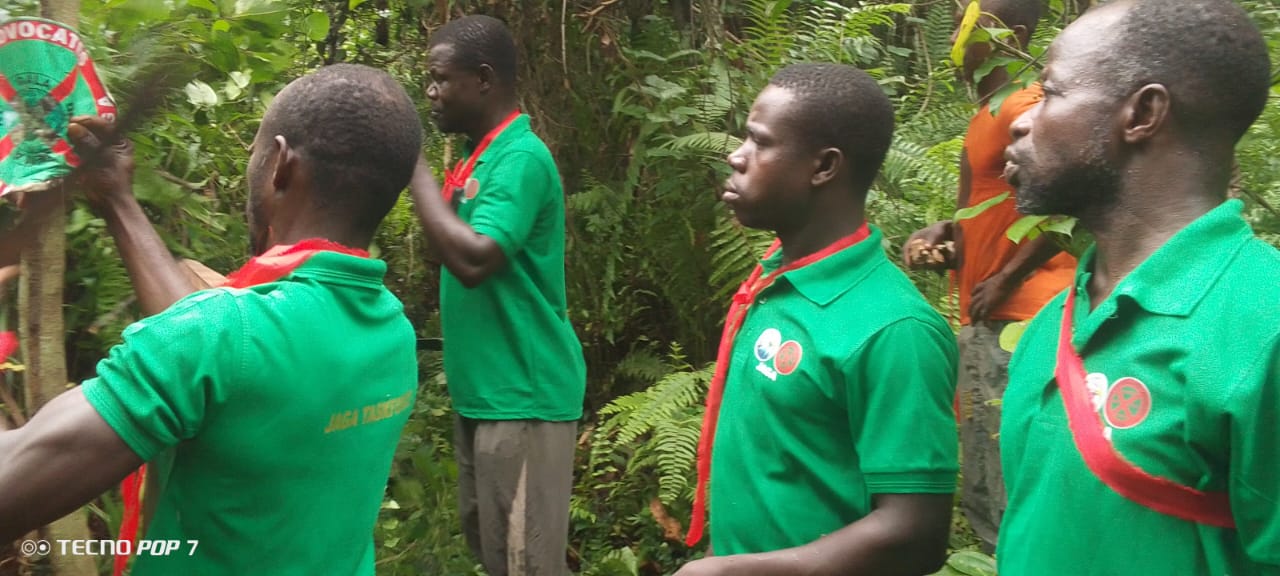
The second operation, conducted on July 16 by a 10-member JAGA volunteer team, focused on Jema’s boundaries with the neighbouring communities of Ngakain and Assemkrom.
The patrol confirmed that the community’s boundary signs bearing the inscription “Jema Land: No Galamsey,” remained intact. More significantly, Jema’s internal rivers and streams were found to be clean and unpolluted.
To demonstrate their confidence in the water quality, members of the patrol drank directly from one of the streams, and collected water samples for the community’s records.
Rather than waiting for illegal miners to invade its lands, JAGA has adopted a preventive strategy based on routine surveillance, early detection, and rapid community response. Local leaders believe this proactive model of environmental stewardship can be replicated in other vulnerable communities across Ghana.
Jema remains the only community among the settlements along the 72-kilometre Enchi-Elubo road that has successfully kept illegal mining out of its lands. In November last year, JAGA erected a large public awareness billboard illustrating the devastating environmental consequences of illegal mining while promoting conservation, sustainable livelihoods, and responsible stewardship of God’s creation.
The community’s environmental success is supported not only by observation but also by scientific evidence. In 2025, the Council for Scientific and Industrial Research (CSIR) analysed water samples from five rivers in Jema.
The laboratory tests found no detectable heavy metal contamination, confirming that the community’s freshwater resources remain free from pollution associated with illegal mining.
Although the Tano and Boin Rivers remain polluted because they receive water from upstream mining communities, Jema’s numerous internal rivers and streams continue to flow in their natural state.
Recent heavy rains have further highlighted the importance of environmental stewardship. While neighbouring communities affected by illegal mining—including Samreboi, Assemkrom, Boinso, and Omanpe—experienced severe flooding, Jema escaped such catastrophe.
Local leaders attribute this resilience to the community’s longstanding commitment to protecting its forests, wetlands, and waterways under the leadership of its ailing chief, Nana Enoku Annor II, who has consistently placed the welfare of future generations above short-term economic gain.
By resisting the lure of quick but destructive wealth from illegal mining, Jema has strengthened its agricultural economy, continues to supply food to neighbouring mining communities, and remains one of the leading cocoa-producing areas in the Aowin Municipality.
JAGA’s experience demonstrates that the fight against illegal mining cannot be won by the government alone but requires determined grassroots participation. Yet, despite its remarkable achievements, JAGA’s volunteer watchdogs have received no financial, logistical, or institutional support from any government agency, regional body, sector ministry, or development partner.
Every patrol undertaken since the formation of the Watch Committee has been financed entirely through the personal sacrifice and commitment of local volunteers.
Equally concerning, no state institution has formally recognised or supported the medical care of Jema’s ailing chief, Nana Enoku Annor II, whose courageous leadership has been instrumental in preserving one of Ghana’s few remaining galamsey-free communities.
JAGA believes that modest assistance in the form of boots, raincoats, protective clothing, communication equipment, and small operational stipends would greatly strengthen community-led efforts to safeguard Jema’s forests and rivers.
Such support would not simply benefit one community; it would represent an investment in protecting Ghana’s natural heritage and provide a practical model for community-led environmental conservation nationwide.
For the people of Jema, protecting the environment is more than a campaign against illegal mining. It is a solemn commitment to preserve God’s creation and safeguard the inheritance of future generations.
By Friar Joseph Kwame Blay