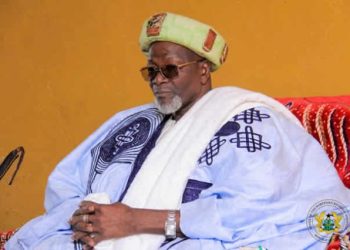
![Felicia Adjei, Kintampo South MP, [right], with President of the Presidential Council of Libya, Mohamed Al-Menfi [left]](https://www.citinewsroom.com/wp-content/uploads/2026/07/FELICIA.png)
The Member of Parliament for Kintampo South and a member of the Foreign Affairs Committee, Felicia Adjei, has undertaken a historic five-day working visit to meet Libyan authorities to find solutions to the plight of Ghanaian migrants and gather first-hand information about the challenges they face in the North African country.
The visit focused particularly on Ghanaians from the Bono East Region, including residents of the Bono Region, many of whom travelled to Libya through irregular and dangerous migration routes in search of employment and better economic opportunities.
During the visit, Felicia Adjei met with members of the Ghanaian community and listened to accounts of the difficulties they encounter, including unemployment, lack of legal documentation, poor working conditions, exploitation, limited access to healthcare and the constant threat of arrest and detention.
“Some of us face physical abuse, human trafficking, extortion, and forced labour. We will urge our friends from Ghana not to take the illegal route to Libya if you don’t have the documents,” said one of the irregular migrants.
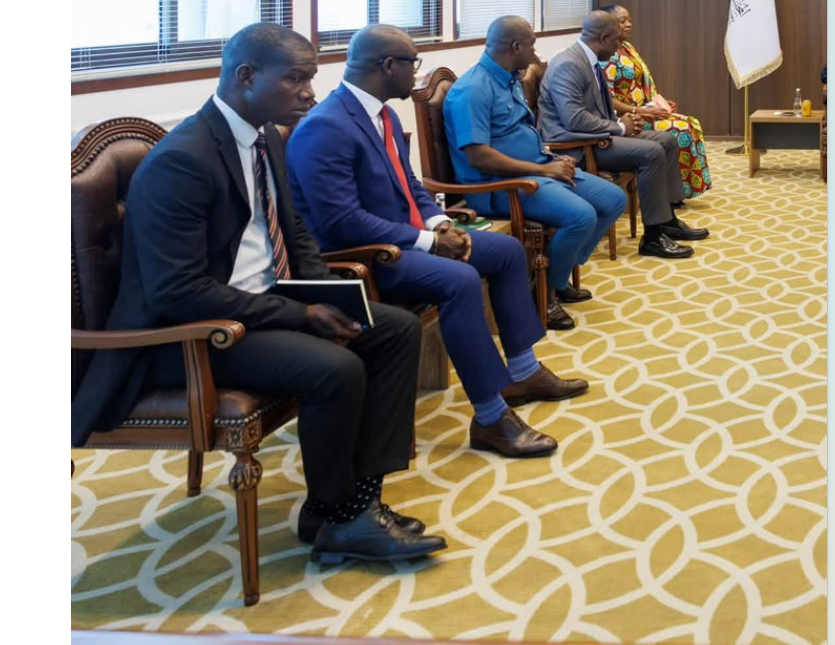
As part of her official engagements, Adjei held discussions with senior Libyan authorities, including the President of Libya, the President of the High State Council, and other key officials.
The discussions centred on the welfare, protection and legal status of Ghanaian citizens living in Libya, particularly those from the Bono East Region.
The MP also explored the possibility of establishing bilateral partnerships between relevant Ghanaian and Libyan institutions to promote safe, regular and properly documented travel between the two countries.
According to her, stronger cooperation between the authorities could help create legitimate employment opportunities, protect Ghanaian workers from exploitation and reduce the number of young people relying on smugglers and dangerous desert routes to enter Libya.
Adjei further announced plans to establish a skills training and migration resource centre in the Kintampo South Constituency.
The proposed centre would provide vocational and employable skills training for young people, while educating prospective migrants about regular migration procedures, employment opportunities, documentation requirements and the dangers associated with irregular migration.
The initiative is expected to equip young people with practical skills to help them secure employment or establish businesses in Ghana. It would also equip those seeking opportunities abroad with the knowledge and qualifications required to migrate through lawful, safer channels.
Adjei said the centre would work with government institutions, development partners, private-sector organisations and Libyan authorities to develop training programmes linked to available employment opportunities.
She pledged to advocate for bilateral labour arrangements that would allow qualified Ghanaians to travel to Libya legally, work under clearly defined contracts and receive appropriate protection from both countries.
For Ghanaians who choose to remain in Libya, she called for improved documentation, access to healthcare, fair employment conditions and stronger consular protection.
Adjei said the experiences shared by the migrants would be presented to policymakers and relevant institutions in Ghana to support the development of practical interventions on safe migration, youth employment and migrant reintegration.
She reaffirmed her commitment to transforming the lessons from the Libya visit into sustainable programmes that would provide young people in Kintampo South with skills, opportunities and accurate information before making decisions to travel abroad.
Libya has, for several years, served as both a destination and transit country for migrants from Ghana and other parts of sub-Saharan Africa. Some migrants travel through the Sahara Desert with the intention of working in Libya, while others hope to continue across the Mediterranean Sea to Europe.
The journeys are often organised by smugglers and expose migrants to dehydration, hunger, violence, abandonment in the desert and other life-threatening conditions.
Reports by international organisations have repeatedly documented serious human rights violations against migrants in Libya, including arbitrary detention, torture, sexual violence, trafficking and exploitation.
The scale of Ghanaian migration through Libya has also remained a major concern. In 2024, the International Organisation for Migration assisted 1,597 Ghanaian migrants to return safely from Libya through nine charter flights.
Since 2017, more than 8,000 Ghanaian migrants have reportedly received voluntary return support, with many of the beneficiaries returning from Libya after becoming stranded or experiencing hardship along irregular migration routes.
Felicia Adjei’s visit to Libya was backed by the Ministry of Foreign Affairs, the First Lady, H.E. Lordina Mahama, and the Chairman of Ghana Link Network Services, Nick Danso Adjei.