On June 29 2026, Accra got hit with rain the government’s own task force later called devastating. And devastating is the right word. The Greater Accra Region flooded. Houses collapsed. Streets turned into rivers. Businesses were wiped out. Lives were lost. Parts of the Volta and Central Regions took a hit too.
President Mahama flew over the damage, activated a National Post-Flood Mitigation Task Force, put Brigadier General Forster Okae-Yeboah of the Ghana Armed Forces in charge, and committed GHS 350 million to relief, recovery, and mitigation.
Give credit where it’s due: the response was fast by Ghanaian standards. The announcement was specific. The money was real and public. But here’s the thing; the images were familiar to every single Ghanaian watching, and not because we’ve seen them once or twice. We’ve seen them every year, practically unchanged, for more than two decades.
So before the task force finishes its work, before the drains are cleared and the debris hauled away, someone has to ask the question the task force’s mandate conveniently skips: why does this keep happening no matter who’s in government, and is what we’re doing about it actually proportionate to the problem?
The honest answer starts with a distinction Ghana’s political conversation has stubbornly refused to make. There are two kinds of flooding. One is natural; rainfall so extreme it would overwhelm even a well-governed city with serious infrastructure. The other is manufactured; flooding caused by years of human decisions that quietly strip away every natural and engineered defence a city has, against rainfall that is, frankly, manageable.
Accra’s flooding is the second kind. It’s been the second kind for more than twenty-five years. And until Ghana can say that out loud, in public, and actually act on it, the flooding keeps coming, the task forces keep multiplying, and that GHS 350 million-plus keeps getting spent, year after year, cleaning up a problem nobody’s willing to name honestly.
Now compare that to California as some try to explain
In January 2023, a weather station at Nordhoff Ridge in Ventura County, California, recorded 457 millimetres of rain in 48 hours and 778mm for the whole month. Not a season. Statewide, roughly 30 trillion gallons of water fell over 22 days, with many places getting 40 to 90 percent of their normal annual rainfall in that single stretch. The San Francisco Bay Area had its wettest three-week period in 161 years. The last time it rained that hard there, Abraham Lincoln was president!!
California flooded. People died. There were landslides, evacuations, and somewhere between five and seven billion dollars in damage. Nine consecutive atmospheric rivers, the longest such streak in 70 years of recorded data dumped enough water to test any city on the planet.
That was a natural disaster. The rain was the cause, full stop. Sure, there were governance failures too, development in flood-prone areas, aging levees, thin insurance coverage, but those were compounding factors, not the root cause. Nature genuinely overwhelmed human preparation that time.
So what about Accra?
The 169 millimetres that fell on June 29 was a significant rain event. It was not an unprecedented one. Accra’s rainy seasons throw numbers like this at the city on a fairly regular basis; 243mm on July 3, 1995; 212mm on June 3, 2015; 182mm in June 2016. Accra has been getting heavy rain for as long as it’s existed. June 29 didn’t ambush a well-prepared city with something it had never seen. It showed up, like it always does, and found a city that had spent 25-plus years making itself more vulnerable, not less.
The waterways that used to carry Accra’s rain out to sea now carry it straight into people’s living rooms, because buildings have gone up in their path, with permits that should never have been signed, by officials who owe the country an explanation. The wetlands that once soaked up excess water have become residential and commercial developments. The drainage corridors that once moved runoff safely away from communities are choked with structures, refuse, and the general fallout of a city that doesn’t enforce its own rules.
The weather provided the occasion. The governance failure provided the cause.
That’s not a rhetorical flourish. It’s an analytical finding. And the gap between those two framings, weather as cause versus weather as occasion is the same gap between a country managing a natural hazard and a country dodging accountability for a manufactured one.
The Malaysia deflection
Whenever you make this distinction, someone always brings up Malaysia. It’s a far more advanced country than Ghana, they say, and it still floods. So Ghana’s flooding isn’t unique, it’s just what happens when the rain comes hard enough, and no amount of governance reform will fully stop it.
Sounds reasonable. Doesn’t survive contact with the facts!!
Malaysia does flood. Kuala Lumpur has had serious flooding, including major events in 2021 and 2022 that displaced tens of thousands of people. That part is true. But Malaysia never responded to its flooding by shrugging and calling it inevitable. After brutal flooding in the 1970s and 80s, Malaysia poured serious money into flood mitigation.
Kuala Lumpur’s SMART Tunnel, a 9.7-kilometre dual-purpose structure that diverts floodwater away from the city centre during storms and doubles as a road tunnel the rest of the time cost roughly 514 million US dollars and stands as one of the most sophisticated urban flood systems on earth. Malaysia didn’t say “nothing unique here.” It named its flooding as a manufactured problem and built its way out of it.
There’s also this: the flooding that still overwhelms Malaysia’s system happens at a genuinely different threshold. The December 2021 event that displaced 70,000 people involved over 200 millimetres of rain in a single day in some spots, landing on top of an already-saturated monsoon season. Malaysia’s infrastructure failed at the edge of what it was built for. Even there, nature was doing real work, the rainfall was genuinely exceptional.
Accra’s infrastructure fails at 169 millimetres, well inside the normal range of a West African rainy season. There’s nothing exceptional about June 29’s rainfall except what it exposed about the city underneath it. Malaysia floods at the extreme. Accra floods at the routine. And when Malaysia floods, it investigates, reforms, and invests to stop the next one. When Accra floods, it cleans up, resets, and waits.
Look at the Malaysia comparison honestly, and it doesn’t comfort Ghana. It indicts it.
What the numbers are actually measuring
If rainfall alone explained Accra’s flooding, cities getting heavier rain should flood worse, and cities with similar rainfall should flood similarly. Neither holds up.
Professor Chris Gordon, an environmental scientist, made this exact comparison on Citi FM on June 30. Tokyo has a population over 20 million, four times Accra’s and gets rainfall that, in intensity and volume, beats what Accra sees. Tokyo doesn’t flood the way Accra floods. It manages, as Professor Gordon put it plainly, because it operates in a disciplined way.
That discipline isn’t some cultural mystique. It’s institutional. Tokyo enforces building regulations without political favouritism. It has drainage built for its actual rainfall and maintained consistently. Its land-use planning protects natural water-absorption zones from encroachment. It doesn’t hand out permits for waterways and then look away while the concrete gets poured. Tokyo has made different decisions than Accra, year after year, decade after decade, and those decisions have produced a different relationship between rainfall and flooding.
The difference between Tokyo and Accra isn’t the sky above them. It’s the decisions made beneath it.
Professor Gordon also floated relocating government institutions away from Accra, pointing to Indonesia and Tanzania as examples. That’s a serious long-term urban planning idea, and it deserves serious engagement. But it isn’t an answer to Accra’s flooding and it’s worth saying that plainly, because in Ghana’s political culture, big, sweeping announcements have a long history of standing in for the harder, more immediate work of enforcement and accountability.
Moving a ministry to Kumasi doesn’t remove a single illegal structure from a waterway in Accra. It doesn’t revoke one permit issued in violation of planning rules. It doesn’t unclog a single gutter, hold one official accountable for signing off on a flood plain, or change the Odaw River basin’s drainage capacity by a single millimetre the next time the heavens open. Decongestion is a decade-long project. The manufactured disaster is annual, acute, and getting worse. Both matter. Neither substitutes for the other.
What the task force can and can’t do
The National Post-Flood Mitigation Task Force under Brigadier General Okae-Yeboah deserves an honest look, not to knock the effort, but to be clear-eyed about what it actually is.
It’s cleaning up after a manufactured disaster. Clearing major drains, streams, rivers, and waterways. Removing refuse, silt, fallen trees, abandoned vehicles, collapsed structures. Restoring public safety. Heading off secondary health disasters; cholera, typhoid, waterborne disease. These are necessary jobs, and the Ghana Armed Forces has the discipline, engineering capacity, and organisation to do them well. The GHS 350 million signals the government understands the scale of the problem.
But clearing up the wreckage of a manufactured disaster doesn’t prevent the next one. It just resets the city to exactly where it was before the rain fell, buildings still sitting in waterways, permits for flood plains still valid, drainage corridors still half-blocked, and the governance decisions behind all of it still unaddressed and unaccounted for.
When Brigadier General Okae-Yeboah says illegal structures within waterways “may be removed where necessary,” those words “may” and “where necessary” carry the full weight of Ghana’s long history of selective enforcement. Which structures actually come down and which quietly survive will be watched closely by a public that’s seen this movie before and already knows the ending. If the pattern holds, the structures that fall belong to people without the connections to save them. The ones that stand belong to people who made the right calls.
The deeper question the task force’s mandate doesn’t touch: who authorised those structures, under what circumstances, with whose knowledge, and with what consequences for the officials who signed off? That’s not in the task force’s brief. It should be in somebody’s.
What Ghana’s intelligence architecture should have been doing
A serious intelligence and national security service treating Accra’s flooding as a sustained analytical problem instead of an annual incident to log and forget, would be giving government the kind of picture that drives prevention instead of reaction.
It would be building a longitudinal map, year over year, of the manufactured disaster’s spread, tracking which areas that didn’t flood in 2010 that started flooding by 2020 and are drowning today, and flagging which communities are engineering their own catastrophic exposure through ongoing encroachment and rule-breaking.
It would be producing an intelligence picture of the permit corruption network, the chain of decisions among developers, district assembly officials, and planning authorities where permissions get granted when they should be refused, inspections get skipped, and the proceeds of the violation flow right back to the people meant to be enforcing the rules.
It would be delivering pre-disaster assessments before the rains arrive, not after, flagging the most at-risk communities, the infrastructure most likely to fail, and the resource gaps that will show up the moment flooding hits. Get those assessments out in February instead of July, and decision-makers actually have time to act before the manufactured disaster finishes what it started.
This is exactly what California had that Accra didn’t. Before the atmospheric rivers hit land, California’s forecasting and early-warning systems gave authorities enough lead time to pre-position emergency resources and order evacuations in the highest-risk areas. California was up against a natural disaster of historic rarity and it still got a warning, because the institutions built to warn people were doing their job.
Accra’s manufactured disaster, by contrast, is entirely foreseeable as the meteo agency hinted of the rains. It’s foreseeable precisely because it’s manufactured by identifiable decisions, made by identifiable people, producing identifiable consequences that show up, like clockwork, every rainy season. And yet Accra finds out when the water is already in people’s homes. Not because it was unforeseeable. Because no institution was ever tasked with forecasting the manufactured disaster and getting that forecast to the people who needed the comprehensive analytic picture in time.
The honest accounting
A military task force mobilised after the fact, however well-led, however well-funded is a reactive instrument. It deals with what the disaster left behind. It doesn’t touch what caused it, or what will cause the next one.
What would actually bend the trajectory is harder, less visible, and far more politically costly than sending the Ghana Armed Forces out to clean up. It means saying, clearly and publicly, that Accra’s flooding is manufactured, not natural and that the people and institutions who manufactured it are responsible for it. It means enforcing building regulations without political favouritism. It means prosecuting the officials who signed off on permits for structures in waterways. It means protecting wetlands and drainage corridors from encroachment with the same energy applied to clearing market stalls from ordinary traders during city decongestion exercises. And it means building, inside Ghana’s intelligence architecture, the analytical capacity to map and monitor the governance failure that manufactures the flooding not just log its aftermath every year.
California took nearly three times Accra’s rainfall in 48 hours and flooded under genuinely extreme natural conditions. Malaysia built a 514-million-dollar tunnel rather than accept its manufactured flooding as fate. Tokyo gets more rain than Accra and handles it through disciplined governance and enforcement that plays no favourites.
Accra got 169 millimetres, heavy, but nowhere near historically exceptional and flooded catastrophically, the same way it does every single year, because every year the city is a little less prepared to receive the rain it already knows is coming.
The weather didn’t do this to Accra. Accra did this to Accra. And until that sentence can be said plainly in the rooms where decisions get made and acted on with the seriousness it demands, the manufactured disaster will keep getting mistaken for a natural one, the task forces will keep cleaning up what the governance failure keeps producing, and the GHS 350 million will keep getting spent on consequences instead of causes.
The rain will come back. It always does. And until every actor, including both major political parties, is pulling in the same direction, the question that matters is simple: when the rain comes, will it finally find a city that decided to stop manufacturing the flood?
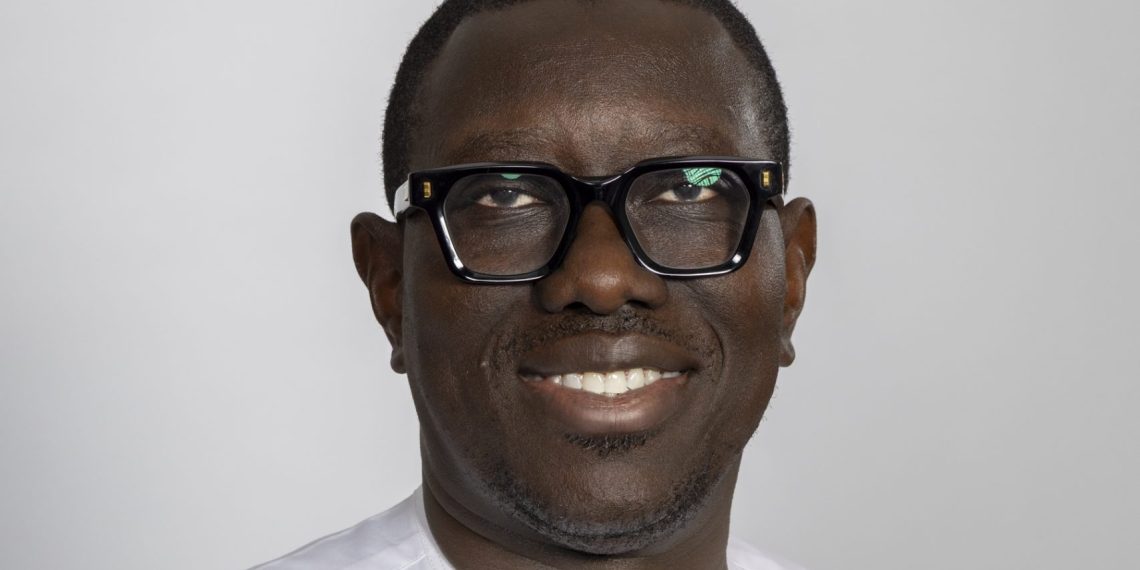
The author, Nana Attobrah Quaicoe served as Director General of Ghana’s Bureau of National Intelligence (2022–2025) and writes on national security, intelligence, risk, integrity assessment, and institutional governance in the Ghanaian context.