• About Us
  • Privacy Policy
  • Terms of Use
  • Breaking News
  • Explainers
  • Listen Live
Tuesday, July 21, 2026
Citinewsroom - Comprehensive News in Ghana
Advertisement
  • Home
  • News
    • Regional News
      • Ahafo Region
      • Ashanti Region
      • Bono East Region
      • Bono Region
      • Central Region
      • Eastern Region
      • Greater Accra Region
      • Northern Region
      • North East Region
      • Oti Region
      • Savanna Region
      • Upper East Region
      • Upper West Region
      • Volta Region
      • Western Region
      • Western North Region
  • Sports
    • World Cup
  • Politics
  • Business
  • Entertainment
  • Articles
  • Explainers
  • Editorials
No Result
View All Result
Citinewsroom - Comprehensive News in Ghana
  • Home
  • News
    • Regional News
      • Ahafo Region
      • Ashanti Region
      • Bono East Region
      • Bono Region
      • Central Region
      • Eastern Region
      • Greater Accra Region
      • Northern Region
      • North East Region
      • Oti Region
      • Savanna Region
      • Upper East Region
      • Upper West Region
      • Volta Region
      • Western Region
      • Western North Region
  • Sports
    • World Cup
  • Politics
  • Business
  • Entertainment
  • Articles
  • Explainers
  • Editorials
No Result
View All Result
Citinewsroom - Comprehensive News in Ghana
No Result
View All Result

Mid-year Budget: Cut GH¢1 fuel levy to 50 pesewas — COPEC urges Ato Forson

byDaniel Sackitey
July 21, 2026
Reading Time: 2 mins read
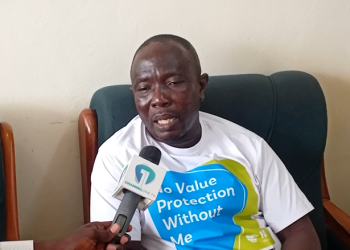
Executive Secretary of the Chamber of Petroleum Consumers, Duncan Amoah

Executive Secretary of the Chamber of Petroleum Consumers, Duncan Amoah

ShareShareShareShare

The Chamber of Petroleum Consumers (COPEC) has called on the Ministry of Finance to reduce the GH¢1 fuel levy to 50 pesewas as part of measures to ease pressure on fuel prices and reduce the cost burden on consumers and businesses.

The levy was introduced to support efforts to address challenges in the power sector, but COPEC Executive Secretary Duncan Amoah believes the charge should not remain indefinitely.

Speaking to Citi Business News ahead of the 2026 mid-year budget review, Mr Amoah said the levy could be gradually reduced while still generating revenue to support the power sector.

He argued that a reduction in the levy would provide relief to consumers while maintaining a balance between revenue mobilisation and affordability.

“I do not think that that levy should also remain in perpetuity. Up to a point, we should be able to ease down on it and tell the Ghanaian that we had a crisis situation. We have been able to stabilize that. Maybe we can reduce it to 50 pesewas at some point,” he said.

Duncan Amoah argued that reducing the levy would help bring down the cost of fuel, which has significant implications for government expenditure and the wider economy.

According to him, higher fuel prices increase the cost of government operations and contracts, putting additional pressure on public finances.

“Anytime fuel prices are higher, government will pay more. Government contracts would equally escalate. So it is in our collective interest as a people to bring down the cost of fuel so that government itself does not overspend or overrun its own budget,” he added.

COPEC’s call comes at a time when renewed geopolitical tensions have pushed up international crude oil prices and intensified pressure on Ghana’s ex-pump fuel prices.

The rise in global oil prices, coupled with movements in the cedi, has contributed to higher domestic pricing pressures, with oil marketing companies adjusting pump prices in response to developments in the international market.

The latest increases have also reflected higher price floors set by the National Petroleum Authority, raising concerns that continued geopolitical tensions could result in further increases in fuel prices in subsequent pricing windows.

Duncan Amoah therefore believes reducing domestic taxes and levies, particularly the GH¢1 charge on petroleum products, could provide some relief to consumers and businesses.

“So some of the taxes, particularly the GH¢1 [fuel levy], we could begin looking at ways to bring it down,” he stressed.

On the power sector, Duncan Amoah commended the relative stability in electricity supply but urged the Finance Ministry to maintain timely interventions to Independent Power Producers (IPPs).

He said continued payments to IPPs would be critical to reducing outstanding debt and maintaining confidence in the power sector.
Tags: COPECDuncan AmoahFuel LevyGhana Newsheadline
ShareTweetSendSend
Previous Post

Africa accounts for 95% of global malaria deaths — AU

Next Post

GEPA and Netherland’s CBI sign landmark MoU to boost Ghana’s export capacity

Related Posts

TUSAAG Chairman at the Accra Technical University, Dominic Amoah
Featured

TUSAAG accuses gov’t of breaching strike resolution deal

July 21, 2026
Director-General of NLA, Mohammed Abdul-Salam
Featured

NLA, Fidelity Bank partner to modernise lottery operations

July 21, 2026
Featured

HIV test kit shortage averted after gov’t intervention — Ghana AIDS Commission

July 21, 2026
Speaker of Parliament, Alban Bagbin
Featured

Bagbin: Ya-Na’s death should inspire greater unity in Dagbon

July 21, 2026
Member of Parliament for Bawku Central and Majority Leader, Mahama Ayariga
Featured

Mahama Ayariga: Ya-Na’s passing a great loss to Ghana

July 21, 2026
Featured

Ofori-Atta remains fugitive from justice despite US court ruling — OSP

July 21, 2026
Next Post

GEPA and Netherland’s CBI sign landmark MoU to boost Ghana’s export capacity

ADVERTISEMENT
Citinewsroom - Comprehensive News in Ghana

CitiNewsroom.com is Ghana's leading news website that delivers high quality innovative, alternative news that challenges the status quo.

Archives

Download App

Download

Download

  • About Us
  • Privacy Policy
  • Terms of Use
  • Breaking News
  • Explainers
  • Listen Live

© 2024 All Rights Reserved Citi Newsroom.

No Result
View All Result
  • Home
  • News
    • Regional News
      • Ahafo Region
      • Ashanti Region
      • Bono East Region
      • Bono Region
      • Central Region
      • Eastern Region
      • Greater Accra Region
      • Northern Region
      • North East Region
      • Oti Region
      • Savanna Region
      • Upper East Region
      • Upper West Region
      • Volta Region
      • Western Region
      • Western North Region
  • Sports
    • World Cup
  • Politics
  • Business
  • Entertainment
  • Articles
  • Explainers
  • Editorials

© 2024 All Rights Reserved Citi Newsroom.