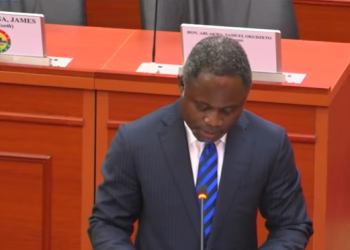
Parliament has passed the Community Service Bill, 2026, establishing a National Community Service Secretariat and introducing community service as an alternative to custodial sentences for persons convicted of specified categories of offences.
The legislation creates a legal and institutional framework for the implementation of community service, with the aim of expanding sentencing options available to the courts while reducing the country’s reliance on imprisonment for minor and specified offences.
The Bill was presented to Parliament by the Minister for the Interior, Mohammed-Mubarak Muntaka, on March 4, 2026, in accordance with Article 106(1) of the 1992 Constitution. It was subsequently referred to the Committee on Defence and Interior for consideration and a report.
According to the committee’s report, Ghana’s criminal justice system has traditionally relied heavily on custodial sentences as the primary form of punishment for convicted persons, a practice that has contributed to persistent overcrowding in prisons.
The report said the situation has placed considerable strain on the Ghana Prisons Service and increased government expenditure on inmate maintenance, healthcare, feeding and prison infrastructure.
It noted that the Community Service Bill forms part of broader criminal justice reforms being pursued by the Ministry of the Interior to prioritise non-custodial sentencing.
The objective, the report said, is to provide appropriate alternatives to imprisonment for minor and specified offences, promote the rehabilitation of offenders, reduce recidivism and facilitate their reintegration into society.
According to the committee, efforts to develop a structured non-custodial sentencing regime began in 2014 when the Ministry of the Interior, with support from the United Nations Children’s Fund (UNICEF), initiated the formulation of a non-custodial sentencing policy.
The report said the new law gives effect to non-custodial sentencing provisions under the Criminal and Other Offences (Procedure) Act, 1960 (Act 30), and the Interpretation Act, 2009 (Act 792).
It added that the legislation will broaden the range of sentencing options available to the judiciary, strengthen Ghana’s criminal justice system and improve the efficient management of correctional facilities.