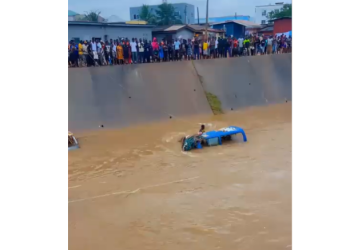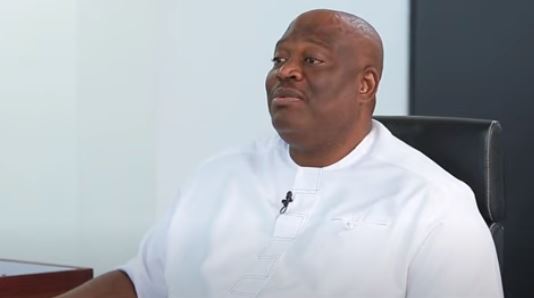
Former Greater Accra Regional Minister Henry Quartey says flooding in Accra could have been significantly reduced if earlier interventions to clear waterways and enforce planning regulations had been sustained.
Speaking on Citi Eyewitness News on Wednesday, July 1, he explained that while flooding cannot be completely eliminated, strong engineering systems and consistent enforcement can greatly reduce its impact.
He noted that in many advanced countries, heavy rainfall still occurs but does not cause severe destruction because of efficient drainage infrastructure.
“Even in advanced countries, it does rain and it does flood. But because they have good engineering systems in place, within a few minutes, the rain finds its way into where it has to go,” he said.
Mr. Quartey argued that while some flooding events may be described as force majeure, the situation in Accra is largely man-made due to human activities and poor enforcement of environmental regulations.
He explained that rainfall naturally flows from the Akuapem Hills through streams and tributaries into communities such as Abokobi, Haatso and Achimota, eventually reaching the sea through the Odaw and Korle Lagoon systems.
According to him, earlier efforts such as the relocation of traders from Agbogbloshie formed part of a broader strategy to improve drainage flow and reduce flooding in the capital.
He claimed that the relaxation of those enforcement measures over time has contributed to renewed flooding challenges in several parts of Accra.
Mr. Quartey also recalled that he had previously warned in 2021 that areas such as the motorway, Klagon and Boteyman risked severe flooding if the drainage challenges were not addressed.
He maintained that many of those predictions have now materialised, stressing that stronger and more consistent action is needed to prevent further damage.