For well over a decade Ghana was exalted as one of the most promising and fastest growing economies on the continent.
But recent reports of the country’s steep economic dip, high inflation and rolling blackouts, popularly referred to as “dumsor”, suggest the era of inconsistent electricity between 2012 and 2016 is back.
The west African nation is experiencing power rationing and electricity cuts. It has lost 10% of its total electricity generation capacity. Not only is the supply of clean energy insufficient in Ghana: access is also uneven. The rural poor rely on other forms of energy such as firewood or biomass to meet their needs. Biomass accounts for over 46% of energy use in Ghana’s rural areas.
The correlation between energy, economic growth and development is widely recognised. The ability of energy to power economies is also well known.
The gaps in electricity delivery in a nation typically lauded for its economic success and political stability are at odds with energy abundance that I note in my book on Ghana’s energy politics.
This latest crisis could upend Ghana’s previously notable economic gains.
The current energy paralysis is particularly worrying for two reasons. Ghana is frequently touted as a hub for foreign investment and tourism. Neither of these can flourish without energy. Secondly, it could prompt Ghanaians to leave the country and discourage people in the diaspora from returning.
Some history
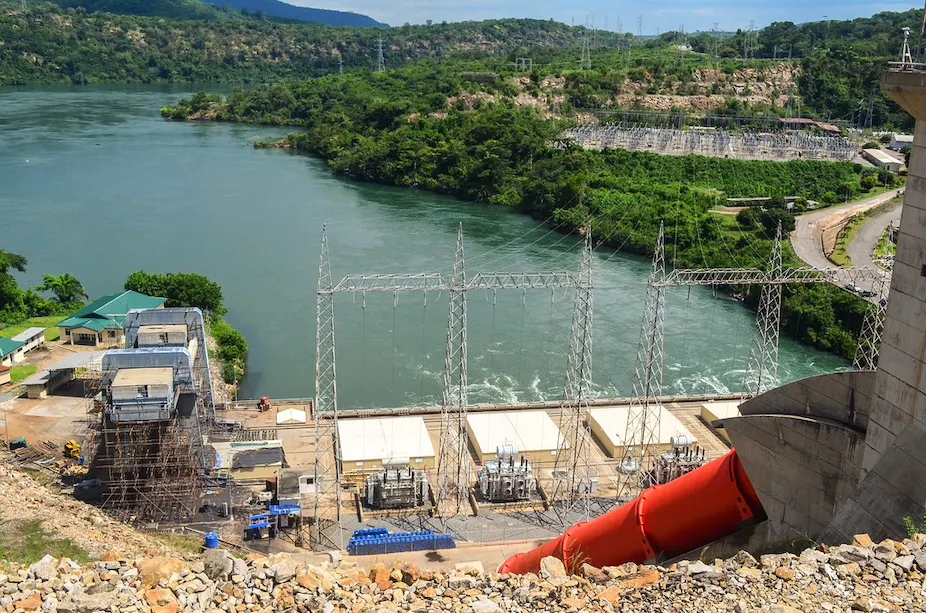
Understanding Ghana’s electricity conundrum requires a look at past policies. In less than a decade following independence in 1957, the country could boast of having one of the continent’s largest dams and hydroelectric projects, the Akosombo and Volta River Project.
Political upheaval in the following decades destroyed the vision of progress. A rapid succession of regimes and the ravages of structural adjustment policies in the 1980s and 1990s challenged the ability of Ghana to clean up decrepit energy institutions.
Poor energy supply and demand chain dynamics or forecasting produced deeply disparate outcomes. Energy institutions did not adequately capture heightened demand in urban and rural areas. This happened amid international financial institutional pressure to liberalise the energy sector as a condition for support. Utility sector reform inadvertently made it harder to supply energy to those who needed it the most. Added to this were insufficient funds and budgetary constraints which limited generation and transmission capacity.
Energy capacity
In 2019, an International Energy Association report noted that half of Ghana’s electricity came from hydropower, 30% from domestically produced gas and 23% from oil.
Ghana’s hydro-wealth includes an installed capacity of 1,580 megawatts of energy from three dams: Akosombo, Kpong and Bui, which account for roughly 54% of its total electricity generating capacity.
The completion of the Bui Dam by Chinese contractors in 2013 was intended to offset poor access. Additional thermal plants constructed since 2017 should have improved disparities in electricity delivery. Thermal plants draw from steam power that is generated by burning oil, liquid natural gas and coal.
The rural poor
But less than 60% of the population has access to electricity. This energy poverty has been acute since the 1990s. It’s especially alarming for a country that boasts a resource of a billion barrels of offshore oil.
The connections between rural development and electrification were noted in a Ministry of Energy report over a decade ago.
In my view, the use of electricity as a tool for political parties is incompatible with addressing provision to the rural poor. Around 2.99 million people in Ghana live in extreme poverty, the majority in rural areas.
The country’s energy “futures” appear tethered to donor-driven aid and investment. The political wherewithal or impetus to develop a framework that meets differing energy needs remains absent, as I demonstrate in my work.
Other implications
Ghanaians and international observers are asking what is to be done. Regional power sharing arrangements like the West Africa Power Pool, intended to boost long term energy security, have yielded little thus far.
In my view, a key step is to ask what kind of sustainable energy future the country wants.
Calling for donor-led and international financial assistance is not the answer. It is time to change expectations about grid connection, the preferred way of electricity delivery in Ghana, as previous studies have shown.
For Ghana, harnessing renewable energies that are sustainable, dependable and affordable, especially for the rural poor, is a key step.
Another strategy is to encourage public dialogue about the country’s energy futures.
Ghana must deploy a just and inclusive energy framework that attends to its rural populations just as much as its urbanites.
–
Author: , Associate Professor of Global and Intercultural Studies, Miami University.
This article is a republication from The Conversation under a Creative Commons license. Read the original article.